

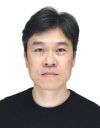
 Kuk-Jin Yoon
· 2 previous affiliations
- Full Professor · Since 2024
- Associate Professor · 2018–2024
- Associate Professor · 2008–2018
Research Overview
Kuk-Jin Yoon focuses on computer vision and machine learning, with specific emphasis on event-based vision, 3D scene reconstruction, and robust image restoration. His trajectory spans early foundational work in stereo matching and multi-object tracking to the development of deep learning architectures for neuromorphic sensors. Recently, his research addresses multi-task learning optimization, weakly supervised segmentation, and feed-forward 3D Gaussian splatting for autonomous driving and adverse weather conditions.
Research Trajectory
Yoon's early research concentrated on fundamental problems in computer vision, particularly stereo matching, 3D reconstruction, and object tracking. He introduced an Adaptive Support-Weight Approach for Correspondence Search, adjusting pixel weights based on color similarity and geometric proximity to resolve image ambiguity in stereo benchmarks. Expanding into 3D modeling, he developed a variational framework for the Joint Estimation of Shape and Reflectance using Multiple Images with Known Illumination Conditions, minimizing a global cost functional to recover surface properties consistently across classical stereovision and photometric stereo scenarios. His work also addressed dynamic scenes; he presented a framework for Robust Online Multi-object Tracking Based on Tracklet Confidence and Online Discriminative Appearance Learning, designed to maintain object identities through long-term occlusions in crowded environments. Returning to stereo vision, he later proposed Leveraging stereo matching with learning-based confidence measures, utilizing Random Forests to predict matching reliability and modulate optimization costs in challenging outdoor conditions such as sun flare, rain, and snow.
In the late 2010s, Yoon's laboratory shifted significant focus toward neuromorphic engineering, specifically exploring the research direction of Spatio-Temporal Aggregation for Event-Based Vision. Event cameras offer low latency and high dynamic range but produce asynchronous data streams rather than standard intensity frames. To bridge this gap, his group developed Event-Based High Dynamic Range Image and Very High Frame Rate Video Generation Using Conditional Generative Adversarial Networks., unlocking the ability to synthesize high-quality visual outputs from adjustable portions of event streams. This naturally extended into the broader area of High Dynamic Range Perception with Event Cameras and the related challenge of Overcoming Sensor Saturation and Dynamic Range Clipping. Building on these generative approaches, he led the design of architectures for Learning to Super Resolve Intensity Images From Events, capturing fine scene details while outperforming combinations of existing event-to-image and super-resolution methods.
Further addressing the challenge of end-task prediction with neuromorphic sensors, his team explored Dual Transfer Learning for Event-based End-task Prediction via Pluggable Event to Image Translation, contributing to the broader field of Learning to Translate Images Without Paired Data. He also collaborated on EvDistill: Asynchronous Events To End-Task Learning via Bidirectional Reconstruction-Guided Cross-Modal Knowledge Distillation, a framework that trains high-performance event-based networks without massive labeled datasets by transferring knowledge from standard image models. This work significantly advanced the direction of Complementary Fusion of Event Streams and Intensity Frames. Alongside these generative and translational tasks, his broader investigations into neuromorphic hardware encompass the area of Characterizing Noise Sensitivity in Neuromorphic Event Sensors.
More recently, Yoon's research has expanded to address the adaptation of foundation models, multi-task learning, and advanced 3D scene representations. In the domain of interactive segmentation, his lab introduced DC-TTA: Divide-and-Conquer Framework for Test-Time Adaptation of Interactive Segmentation, which partitions user clicks into coherent subsets to adapt the Segment Anything Model (SAM) in complex scenarios like camouflaged objects. He further leveraged SAM's latent space in WISH: Weakly Supervised Instance Segmentation using Heterogeneous Labels, unifying diverse, low-cost annotations—such as tags, points, and bounding boxes—into a single, cost-effective training process. To tackle negative transfer in multi-task architectures, he proposed Resolving Token-Space Gradient Conflicts: Token Space Manipulation for Transformer-Based Multi-Task Learning, utilizing Singular Value Decomposition to adaptively modulate tokens where task gradients clash.
Concurrently, Yoon has made contributions to robust perception and novel view synthesis using 3D Gaussian Splatting. His group developed VR-Drive: Viewpoint-Robust End-to-End Driving with Feed-Forward 3D Gaussian Splatting, a framework that simulates diverse camera angles during training to ensure autonomous driving models remain robust across different vehicle fleets. This interest in robust 3D reconstruction under challenging conditions led to ReSplat: Degradation-agnostic Feed-forward Gaussian Splatting via Self-guided Residual Diffusion, which integrates residual diffusion models with 3D geometry to perform high-quality novel view synthesis from degraded inputs like rain or haze. Addressing similar environmental degradations in 2D, his lab designed the SSGformer architecture in Robust Adverse Weather Removal via Spectral-based Spatial Grouping, clustering degradation patterns via spectral decomposition for localized image restoration. Finally, exploring the security of generative models, he oversaw Improving Black-Box Generative Attacks via Generator Semantic Consistency, introducing a framework that anchors early-stage adversarial perturbations to stable semantic features to boost attack transferability.
Expanding further into foundation model adaptation and dynamic embodied decision-making, Yoon's group introduced a preference-guided framework for Preference-Guided Adaptation for Open-Vocabulary Semantic Segmentation via Prompt Disagreement, exploiting cross-template uncertainty to mine localized preference queries and adapt models without pixel-level annotations. Turning to agent trajectory forecasting and Modeling Reciprocal Dynamics in Multi-Agent Trajectory Prediction, they developed SRA: Spatial Reasoning Adapter via Evolving Social Interaction Graphs for Trajectory Prediction, a modular graph denoiser that constructs evolving interaction graphs during diffusion and flow-matching rollouts to iteratively adjust predicted paths. In robotic policy execution, Yoon also guided the design of Triggering Generalist Reasoning via Predictive Uncertainty for Dual-System VLA, which uses action re-prediction dispersion to adaptively invoke generalist reasoning only when decision uncertainty rises.
Current Directions
Recent work investigates the intersection of robust 3D scene representation, foundation model adaptation, and multi-task learning. A primary focus is the application of 3D Gaussian Splatting to autonomous driving and novel view synthesis, specifically designing feed-forward architectures that remain resilient to viewpoint shifts and severe environmental degradations like rain and haze. In parallel, the lab is actively developing parameter-efficient methods to adapt large vision models using weakly supervised, heterogeneous label formats and test-time adaptation strategies. Other ongoing research addresses fundamental optimization challenges in multi-task transformers by resolving gradient conflicts directly within the token space, trajectory prediction via dynamic interaction graphs, and uncertainty-triggered adaptive reasoning for vision-language-action robotic systems.
Profile updated
Loading new papers…
Other researchers whose papers cluster into the same research directions — a proxy for overlapping technical interests and shared intellectual neighborhoods.
See something wrong? Report a mistake