

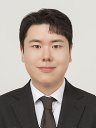
 Hoonhee Cho
· 1 previous affiliation
- Postdoc · Since 2026
- PhD student · 2022–2026
- MS student · 2020–2022
Research Overview
Hoonhee Cho focuses on event-based vision, multi-modal sensor fusion, and computational photography. His work leverages the high temporal resolution and dynamic range of neuromorphic sensors to address challenges in stereo depth estimation, video restoration, and 3D object detection under extreme conditions. Recently, he has expanded these techniques into robust perception frameworks for autonomous driving and continuous-time spatial intelligence.
Research Trajectory
His early work established foundational methods for depth estimation using neuromorphic sensors. In 2021, he introduced EOMVS: Event-Based Omnidirectional Multi-View Stereo, a multi-view stereo approach designed to reconstruct 3D scenes from event data captured by fisheye cameras. Recognizing the complementary strengths of different sensor types, he subsequently focused on the research direction of Complementary Fusion of Event Streams and Intensity Frames. This led to Selection and Cross Similarity for Event-Image Deep Stereo in 2022, which improved disparity map estimation by selectively weighting past events alongside current images. He further refined this hybrid approach in Event-Image Fusion Stereo Using Cross-Modality Feature Propagation, developing techniques to propagate features across modalities to generate dense disparity maps from spatially sparse event streams.
Moving beyond idealized sensor setups, his research in 2023 began addressing the practical challenges of deploying event cameras in real-world environments. A major hurdle in multi-modal fusion is the physical misalignment of sensors. To solve this, he developed Non-Coaxial Event-guided Motion Deblurring with Spatial Alignment, which aligns event and RGB data from cameras with different optical axes to recover sharp images from motion blur. He also tackled the scarcity of annotated event data. In Label-Free Event-based Object Recognition via Joint Learning with Image Reconstruction from Events, he proposed a joint formulation that reconstructs images from events and leverages Contrastive Language-Image Pretraining (CLIP) for object recognition without paired images or category labels. Concurrently, he addressed domain shift issues in Learning Adaptive Dense Event Stereo from the Image Domain, introducing an unsupervised domain adaptation framework that bridges the gap between image and event modalities without requiring target-domain ground truth.
By 2024, his focus expanded to exploit the continuous temporal nature of event data for dynamic tracking and video restoration. Contributing to the broader area of Overcoming the Exposure Noise Blur Trade-Off, he collaborated on A Benchmark Dataset for Event-Guided Human Pose Estimation and Tracking in Extreme Conditions, which introduced the EHPT-XC dataset to evaluate multi-person tracking in near-total darkness and high-speed scenarios. To fully utilize temporally dense event streams, he proposed Temporal Event Stereo via Joint Learning with Stereoscopic Flow, a framework that continuously integrates information from previous time steps. He also continued his work on label-efficient learning with Finding Meaning in Points: Weakly Supervised Semantic Segmentation for Event Cameras, utilizing sparse point annotations and asymmetric dual-student learning to generate dense semantic maps.
In the domain of video enhancement, he addressed the variability of event data distributions across different environments in TTA-EVF: Test-Time Adaptation for Event-based Video Frame Interpolation via Reliable Pixel and Sample Estimation. Advancing the research direction of Robust Temporal Alignment for Video Restoration, he introduced CMTA: Cross-Modal Temporal Alignment for Event-Guided Video Deblurring. This work aligns features within a single exposure and across multiple frames, contributing to the area of Eliminating Temporal Blind Spots with Event Cameras during extreme motion where traditional alignment fails.
His most recent work applies these temporal and multi-modal insights to high-level perception tasks, particularly in autonomous driving. In Ev-3DOD: Pushing the Temporal Boundaries of 3D Object Detection with Event Cameras, he fused event data with existing sensor suites to maintain accurate 3D object detection during periods when LiDAR or frame-based cameras are inactive. He further pushed the capabilities of event-only perception in Unleashing the Temporal Potential of Stereo Event Cameras for Continuous-Time 3D Object Detection, developing a fully asynchronous framework that operates independently of traditional sensors. Expanding his methodological repertoire, he also explored novel scene representations in VR-Drive: Viewpoint-Robust End-to-End Driving with Feed-Forward 3D Gaussian Splatting, which synthesizes diverse camera viewpoints during training to improve the robustness of self-driving models across different vehicle configurations. Additionally, he unified video frame interpolation and super-resolution in Unifying Low-Resolution and High-Resolution Alignment by Event Cameras for Space-Time Video Super-Resolution, leveraging the high temporal frequency of events to generate high-resolution intermediate frames.
Current Directions
The most recent papers in the evidence indicate a strong focus on continuous-time perception and robust autonomous driving frameworks. Recent work investigates the application of event cameras to 3D object detection, aiming to overcome the blind times inherent in traditional LiDAR and frame-based sensors. This includes developing both multi-modal fusion strategies and fully asynchronous, event-only detection pipelines that maintain accuracy during high-speed maneuvers. Additionally, his current research explores advanced scene representation techniques, such as 3D Gaussian Splatting, to synthesize novel viewpoints and improve the generalization of end-to-end driving models across diverse camera configurations. He also continues to advance space-time video super-resolution by unifying low- and high-resolution alignment using temporally dense event streams.
Profile updated
Loading new papers…
Other researchers whose papers cluster into the same research directions — a proxy for overlapping technical interests and shared intellectual neighborhoods.
See something wrong? Report a mistake