

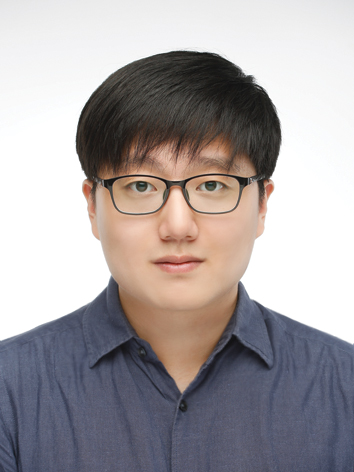
 Hyeokjun Kweon
· 2 previous affiliations
- ChungAng UniversitySince 2025
- Assistant Professor · Since 2025
- PhD student · 2020–2025
Research Overview
Hyeokjun Kweon focuses on computer vision, weakly supervised learning, and multi-modal representation learning. His research trajectory emphasizes reducing the annotation burden in visual recognition tasks across diverse sensing modalities, including 2D images, 3D point clouds, and event-based data. Recently, his work investigates the integration of foundation models to scale label-efficient perception systems.
Research Trajectory
Kweon’s early research established a strong foundation in weakly supervised semantic segmentation (WSSS), focusing on overcoming the limitations of Class Activation Maps (CAMs). In 2021, he introduced Unlocking the Potential of Ordinary Classifier: Class-specific Adversarial Erasing Framework for Weakly Supervised Semantic Segmentation, which demonstrated that pre-trained classifiers inherently possess the capacity to activate less discriminative object regions. Building on this adversarial erasing paradigm, he collaborated on Adversarial Erasing Framework via Triplet with Gated Pyramid Pooling Layer for Weakly Supervised Semantic Segmentation (2022). This work proposed a Gated Pyramid Pooling layer to capture global context and better align CAMs with object boundaries.
Recognizing that WSSS techniques were largely siloed within individual data modalities, Kweon expanded his focus to cross-domain learning. He developed Joint Learning of 2D-3D Weakly Supervised Semantic Segmentation (2022), a framework that leverages 2D class activation maps as self-supervision to enhance 3D semantic perception, and vice versa. This approach advanced the broader research direction of Multi-Modal Perception with Mismatched Sensor Fields of View.
In 2023, Kweon continued to refine adversarial learning techniques and address complex geometric challenges in computer vision. He proposed a novel adversarial "game" between a classifier and an image reconstructor in Weakly Supervised Semantic Segmentation via Adversarial Learning of Classifier and Reconstructor, framing precise segmentation as a state of mutual un-inferability between image regions. Concurrently, he addressed spatial misalignments in multi-view imaging with Pixel-Wise Warping for Deep Image Stitching, introducing a pixel-wise warp field to handle large parallax problems without relying on traditional homography-based methods.
His work also extended into label-efficient 3D geometry processing. He introduced a cycle-consistency-based framework in Learning Point Cloud Completion without Complete Point Clouds: A Pose-Aware Approach (2023), which restores 3D scenes by integrating multiple incomplete point clouds of various poses. This contribution aligns with the research direction of Pose Free 3D Reconstruction from Unconstrained Images.
By 2024, Kweon’s trajectory increasingly incorporated foundation models and alternative sensor modalities to scale weakly supervised systems. He explored the integration of the Segment Anything Model (SAM) directly into the WSSS training pipeline with From SAM to CAMs: Exploring Segment Anything Model for Weakly Supervised Semantic Segmentation, significantly reducing the noise typical of standard activation maps. Extending foundation models to 3D domains, he developed the REAL framework in Weakly Supervised Point Cloud Semantic Segmentation via Artificial Oracle. By utilizing a 2D image model as an artificial oracle within an active learning context, this work eliminated the need for manual human annotation, advancing the area of Cross-Modal Pseudo-Labeling for 3D Scene Understanding.
During this period, Kweon also applied sparse supervision techniques to novel sensor data. He participated in developing EV-WSSS, detailed in Finding Meaning in Points: Weakly Supervised Semantic Segmentation for Event Cameras (2024). This framework utilizes asymmetric dual-student learning to process temporal event data, contributing to research directions such as Contrast Maximization for Asynchronous Event-based Vision and Point-Based Supervision for Efficient Visual Learning. Additionally, he contributed to TALoS: Enhancing Semantic Scene Completion via Test-time Adaptation on the Line of Sight (2024), a test-time adaptation framework that uses the physical line of sight of LiDAR sensors as a self-supervisory signal. This work supports the broader area of Hallucinating Hidden Geometry for Semantic Scene Completion.
Most recently, Kweon has focused on optimizing interactive segmentation and heterogeneous label integration. He co-developed DC-TTA: Divide-and-Conquer Framework for Test-Time Adaptation of Interactive Segmentation (2025), which partitions user clicks into coherent subsets to adapt specialized model units, effectively handling complex scenarios like camouflaged objects. He also introduced WISH: Weakly Supervised Instance Segmentation using Heterogeneous Labels (2025), a framework that unifies diverse, low-cost annotations—such as image tags, points, and bounding boxes—into a single training process via SAM’s latent space.
Current Directions
The most recent papers in the evidence indicate a strong focus on test-time adaptation and the integration of heterogeneous weak supervision. Recent work investigates how foundation models, such as the Segment Anything Model (SAM), can be adapted on the fly to handle complex interactive segmentation tasks through divide-and-conquer strategies. Additionally, Kweon is exploring methods to unify diverse, low-cost annotations—including image tags, sparse points, and bounding boxes—into cohesive training pipelines. This approach aims to eliminate the reliance on expensive pixel-level masks for instance segmentation, creating more flexible and cost-effective perception systems for real-world applications.
Profile updated
Loading new papers…
Other researchers whose papers cluster into the same research directions — a proxy for overlapping technical interests and shared intellectual neighborhoods.
See something wrong? Report a mistake