

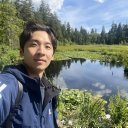
 Sung-Hoon Yoon
· 3 previous affiliations
- Assistant Professor · Since 2025
- PhD student · 2020–2025
- MS student · 2018–2020
- Postdoc · 2025
Research Overview
Sung-Hoon Yoon focuses on computer vision, weakly supervised learning, and generative image editing. His early trajectory concentrated on refining semantic segmentation models by addressing the limitations of class activation maps through self-supervision and adversarial erasing. More recently, his work has shifted toward text-to-image generation, specifically addressing gradient entanglement and inversion-free editing in latent spaces.
Research Trajectory
Sung-Hoon Yoon’s research initially centered on overcoming the inherent limitations of weakly supervised semantic segmentation (WSSS). A recurring challenge in this domain is the reliance on Class Activation Maps (CAMs), which typically suffer from impreciseness—yielding blurry object boundaries—and sparseness, as they tend to highlight only the most discriminative parts of an object rather than its entirety. In 2021, he addressed these flaws in Exploring Pixel-level Self-supervision for Weakly Supervised Semantic Segmentation. He developed a dual-network framework consisting of a "SupportNet" that provides pixel-level self-supervision to a primary "MainNet." This approach allowed for highly accurate segmentation using only image-level labels, contributing to the area of Expanding Sparse Activations for Weakly Supervised Segmentation. The methodology also intersected with the research direction of Prototypical Contrastive Learning for Structured Latent Spaces and the domain of Temporal Weight Averaging for Stable Self Supervision.
Continuing in the domain of WSSS, he collaborated on Unlocking the Potential of Ordinary Classifier: Class-specific Adversarial Erasing Framework for Weakly Supervised Semantic Segmentation. This work further investigated adversarial erasing techniques designed to force models to explore less discriminative regions of an image. The research demonstrated that ordinary classifiers, pre-trained on raw images, already possess the latent capability to activate these secondary regions when properly guided.
During the same period, his research extended into alternative imaging modalities. With collaborators, he participated in the development of EvDistill: Asynchronous Events To End-Task Learning via Bidirectional Reconstruction-Guided Cross-Modal Knowledge Distillation. Event cameras offer high dynamic range and reduced motion blur by sensing per-pixel intensity changes asynchronously, but they suffer from a lack of large, high-quality labeled datasets. To bridge this gap, the team proposed a cross-modal knowledge distillation approach that transfers learned representations from canonical active pixel sensor (APS) frames to unlabeled, unpaired event data.
In 2022, Yoon returned to the structural challenges of WSSS with Adversarial Erasing Framework via Triplet with Gated Pyramid Pooling Layer for Weakly Supervised Semantic Segmentation. To better align CAMs with actual object boundaries, he introduced a Gated Pyramid Pooling (GPP) layer as a substitute for the standard Global Average Pooling layer. By pooling CAMs at multiple spatial resolutions and aggregating them via gated convolution, the model was trained to capture global context more effectively. This was paired with an adversarial erasing framework, advancing the area of Deep Metric Learning with Triplet Loss.
By 2025, his focus expanded into generative artificial intelligence, specifically targeting the complexities of text-to-image editing. He introduced SplitFlow: Flow Decomposition for Inversion-Free Text-to-Image Editing, a framework designed to solve the "gradient entanglement" problem that occurs when models attempt to process complex, multi-faceted prompts. The system utilizes a large language model to decompose a target prompt into simpler sub-tasks. By intelligently aggregating the individual "flows" of these sub-tasks, the framework achieves high-fidelity edits and superior background preservation without requiring the image to be mapped back into latent noise. This work directly addresses the research direction of Balancing Reconstruction Fidelity and Editability in Generative Inversion and the broader area of Disentangled Control in Generative Latent Spaces.
Current Directions
Recent work investigates the control and manipulation of generative latent spaces, particularly in the context of text-to-image editing. The most recent papers in the evidence address the challenge of gradient entanglement, which often complicates the execution of complex prompts in diffusion models. To overcome this, current research explores inversion-free methodologies that leverage large language models to decompose intricate editing instructions into manageable, isolated sub-tasks. By aggregating these distinct semantic flows, this approach seeks to achieve high-fidelity image modifications while strictly preserving unedited background elements, bypassing the traditional, computationally expensive need to invert images back into latent noise.
Profile updated
Loading new papers…
Other researchers whose papers cluster into the same research directions — a proxy for overlapping technical interests and shared intellectual neighborhoods.
See something wrong? Report a mistake