

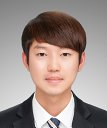
 Seungryong Kim
· 4 previous affiliations
- Associate Professor · Since 2024
- Korea University2020–2024
- Assistant Professor · 2020–2024
- Postdoc · 2019–2020
- Individual2012–2019
- Postdoc · 2018–2019
- PhD student · 2012–2018
Research Overview
Seungryong Kim focuses on dense visual correspondence, semi-supervised learning, and advanced generative modeling. Their trajectory spans early foundational work in semantic matching across intra-class variations to recent advancements in diffusion models, 3D synthesis, and video generation. Current research explores efficient training and inference for generative architectures, including real-time world generation and flow matching optimization.
Research Trajectory
The early phase of Kim’s research concentrated heavily on establishing robust visual correspondence between images, particularly in challenging conditions involving multi-modal data and semantic variations. This work began with the introduction of DASC: Dense adaptive self-correlation descriptor for multi-modal and multi-spectral correspondence, which addressed the difficulty of finding reliable matches across different imaging modalities by utilizing an adaptive self-correlation similarity measure. Building on this foundation, Kim expanded into the broader research area of Dense Semantic Correspondence Across Intra-Class Variations. This shift toward semantic matching was marked by FCSS: Fully Convolutional Self-Similarity for Dense Semantic Correspondence, which formulated a descriptor using local self-similarity to remain insensitive to intra-class appearance changes, and Recurrent Transformer Networks for Semantic Correspondence, which utilized an iterative process to estimate spatial transformations and generate aligned convolutional activations. This line of inquiry culminated in the development of CATs: Cost Aggregation Transformers for Visual Correspondence, a novel network that leveraged self-attention mechanisms to explore global consensus and disambiguate noisy correlation maps in the presence of severe geometric deformations.
Following these contributions to visual correspondence, Kim’s focus broadened to include semi-supervised learning and the optimization of generative models. In the domain of semi-supervised learning, they addressed the research direction of Overcoming Confirmation Bias in Semi-Supervised Learning and the related area of Adaptive Thresholds for Pseudo Label Filtering with ConMatch: Semi-supervised Learning with Confidence-Guided Consistency Regularization. This framework intelligently weighted consistency regularization using learned confidence measures for pseudo-labels derived from strongly-augmented views. Simultaneously, Kim began exploring the internal mechanics of denoising diffusion models. Improving Sample Quality of Diffusion Models Using Self-Attention Guidance introduced a plug-and-play guidance scheme that extracted intermediate attention maps to selectively blur inputs, drastically boosting the performance of existing models without retraining.
As generative models evolved, Kim’s research increasingly targeted 3D synthesis and novel view generation. To tackle the research direction of Viewpoint Distribution Bias in Generative 3D Synthesis, they developed Debiasing Scores and Prompts of 2D Diffusion for View-consistent Text-to-3D Generation. This work identified the embedded biases in 2D diffusion models that cause the Janus problem (where canonical views appear from multiple angles) and proposed score and prompt debiasing techniques to improve 3D consistency. Concurrently, Neural Radiance Fields with Geometric Consistency for Few-Shot Novel View Synthesis introduced a geometry-based consistency regularization method for NeRFs, leveraging rendered depth maps to warp source images and impose them as pseudo ground truths in few-shot settings.
Most recently, Kim’s trajectory has expanded into complex, multi-modal generative tasks, video diffusion, and real-time rendering. In the realm of video and action modeling, DreamX: Video Diffusion Model is a Universal Latent Action Learner repurposed pretrained video diffusion models to extract compact latent actions, enabling zero-shot action transfer across diverse embodiments. Addressing the research direction of Overcoming the Static Scene Assumption, L3G-World: Real-Time Infinite World Generation with Latent 3D Gaussian Memory combined a video diffusion transformer with a rapidly renderable latent 3D Gaussian memory to generate spatially consistent, interactive worlds in real time.
Kim has also continued to refine the application and efficiency of generative models across various domains. PLAYGROUND: Progressive Layout Generation with Render-Grounded Planning introduced a dynamic framework for editable graphic design that adapts to the rendered canvas at each step. For identity-preserving generation, Attribute-Preserving Pseudo-Labeling for Diffusion-Based Face Swapping proposed a teacher-student framework to maintain fine-grained target attributes without relying on degraded masked inputs. Similarly, CORAL: Correspondence Alignment for Improved Virtual Try-On explicitly aligned query-key matching within diffusion transformers to preserve fine garment details in unpaired settings. Finally, foundational improvements to generative training and sampling were explored in A Noise is Worth Diffusion Guidance, which refined initial Gaussian noise to achieve high-fidelity synthesis without the computational overhead of classifier-free guidance, and Better Source, Better Flow: Learning Condition-Dependent Source Distribution for Flow Matching, which demonstrated that optimizing the source distribution in flow matching significantly accelerates convergence and improves generation quality.
Current Directions
Based on their most recent publications, Kim’s current research focuses on the efficiency, consistency, and real-time capabilities of advanced generative models. A major theme is the development of interactive and spatially consistent world models, utilizing novel memory structures like latent 3D Gaussians to enable real-time generation without the scaling limitations of traditional temporal contexts. Additionally, their work investigates foundational optimizations for generative pipelines, such as refining noise initialization to bypass the computational costs of diffusion guidance, and learning condition-dependent source distributions to accelerate flow matching. Across these efforts, there is a consistent emphasis on disentangling representations—whether extracting universal latent actions from video models or aligning precise correspondences in diffusion transformers for tasks like virtual try-on and face swapping.
Profile updated
Loading new papers…
Other researchers whose papers cluster into the same research directions — a proxy for overlapping technical interests and shared intellectual neighborhoods.
See something wrong? Report a mistake