

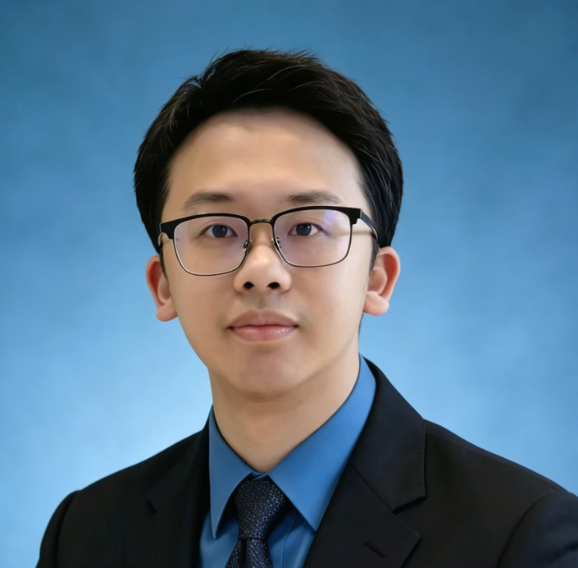
 Jintai Chen
· 5 previous affiliations
- Assistant Professor · Since 2025
- Assistant Professor · Since 2024
- Assistant Professor · Since 2024
- 美国伊利诺伊大学香槟分校2023–2024
- Postdoctoral Researcher · 2023–2024
- Postdoc · 2023–2024
- Zhejiang University2018–2023
- PhD student · 2018–2023
Research Overview
Jintai Chen focuses on artificial intelligence for healthcare, generative modeling for physiological signals, and deep learning architectures for tabular data. His early work developed novel neural components for medical imaging and structured data representation, leading to advanced frameworks for electrocardiogram synthesis. Currently, he investigates multimodal large language models and foundation models to address complex clinical reasoning and medical perception tasks.
Research Trajectory
Jintai Chen’s research arc is characterized by parallel advancements in medical image and signal processing, and the design of specialized neural architectures for structured tabular data. In 2020, he addressed the challenge of noisy annotations in clinical practice by developing Flow-Mixup: Classifying Multi-labeled Medical Images with Corrupted Labels, a regularization approach for multi-labeled medical image interpretation. Concurrently, he explored spatial representations in 3D vision, proposing A Hierarchical Graph Network for 3D Object Detection on Point Clouds, which utilized shape-attentive graph convolutions to capture local geometry in sparse point clouds.
His interest in structural representations extended to the area of Scaling Capsule Networks Beyond Iterative Routing. In 2021, he addressed the computational bottlenecks inherent in capsule network routing algorithms by introducing A Receptor Skeleton for Capsule Neural Networks.
A major and enduring theme in his trajectory is the generative modeling of physiological signals. He pioneered the concept of visualizing electrocardiograms from arbitrary viewpoints with Electrocardio Panorama: Synthesizing New ECG views with Self-supervision. By modeling an underlying electrocardio field, this work allowed clinicians to query ECG signals beyond standard lead positions. This foundational concept evolved into the broader research direction of Synthetic Data and Knowledge Injection for Clinical AI. In 2022, he advanced this domain with ME-GAN: Learning Panoptic Electrocardio Representations for Multi-view ECG Synthesis Conditioned on Heart Diseases, a generative adversarial network that synthesizes high-fidelity 12-lead ECGs to improve the performance of downstream diagnostic classifiers.
Parallel to his work in medical signals, he has consistently developed deep learning architectures tailored for structured data, challenging the dominance of tree-based models. In 2022, he proposed DANets: Deep Abstract Networks for Tabular Data Classification and Regression, introducing an "Abstract Layer" to explicitly group correlative features. He continued to shape the field of Tabular Foundation Models for Heterogeneous Data throughout 2023. He introduced ExcelFormer: A Neural Network Surpassing GBDTs on Tabular Data, which utilized novel attention mechanisms to outperform Gradient Boosting Decision Trees. That same year, he bridged his prior work on capsule networks with tabular learning in TabCaps: A Capsule Neural Network for Tabular Data Classification with BoW Routing, encapsulating heterogeneous scalar features into vectorial representations for more robust prediction. His group later adapted pre-trained language models for these tasks, developing TP-BERTa in Making Pre-trained Language Models Great on Tabular Prediction (2024) to transfer knowledge across highly diverse tables.
Moving into 2024 and 2025, his focus expanded to the intersection of large language models (LLMs) and clinical applications. To address the lack of domain-specific knowledge in generic LLMs, he developed SERVAL: Synergy Learning between Vertical Models and LLMs towards Oracle-Level Zero-shot Medical Prediction, a mutual enhancement pipeline for unsupervised vertical capability development. He also published a comprehensive methodological overview in A Survey on Ordinal Regression: Applications, Advances and Prospects. To support complex clinical tasks, he collaborated on the creation of benchmark datasets, participating in TrialBench: Multi-Modal AI-Ready Datasets for Clinical Trial Prediction, which contributes to the broader area of Multimodal Representation Learning for Electronic Health Records.
His recent work heavily features multimodal medical AI and agentic reasoning. He directed the development of MedSAM3: Delving into Segment Anything with Medical Concepts (2025), shifting medical image segmentation from manual geometric prompting to natural language-driven concept segmentation. Returning to tabular data, he proposed the LRTab framework in Utilizing Training Data to Improve LLM Reasoning for Tabular Understanding, allowing LLMs to learn from their own reasoning errors via retrieved prompt conditions. He also advanced the simulation of virtual clinical trials by combining diffusion models with cardiac physics in Generation of Drug-Induced Cardiac Reactions towards Virtual Clinical Trials.
In 2026, his research addresses the reasoning and geometric capabilities of medical models in real-world settings. He participated in the development of Ophiuchus: Incentivizing Tool-augmented ''Think with Images'' for Joint Medical Segmentation, Understanding and Reasoning, a framework that transforms static multimodal models into active agents capable of autonomously invoking segmentation tools. He also led Med-Scout: Curing MLLMs' Geometric Blindness in Medical Perception via Geometry-Aware RL Post-Training, introducing a reinforcement learning approach to improve the spatial grounding of medical language models. Finally, he revisited his earlier ECG synthesis work, directing Nef-Net v2: Adapting Electrocardio Panorama in the wild to handle real-world clinical challenges such as electrode misplacement and device variability. In neural decoding, Chen contributed to EVD-Bench: A Comprehensive Benchmark for EEG-to-Image Decoding, standardizing visual retrieval evaluation across distinct participant-access regimes. Continuing to advance tabular foundation models, Chen also led the development of TabXLLM: Unlocking Zero- and Few-Shot Tabular Prediction in LLMs via Structural-Prior Reinforcement Learning, introducing permutation relative policy optimization to instill column-invariance priors into LLM post-training.
Current Directions
The most recent papers in the evidence indicate a strong focus on refining the reasoning, geometric perception, and real-world applicability of Multimodal Large Language Models (MLLMs) in healthcare. Recent work investigates how to cure "geometric blindness" in medical perception models using reinforcement learning and proxy tasks, ensuring that generated clinical text is accurately grounded in the physical properties of medical images. Additionally, ongoing research explores agentic AI frameworks that allow medical models to autonomously use external tools for fine-grained segmentation and visual reasoning. Alongside these advances in vision-language models, current efforts continue to push the boundaries of generative AI for physiological signals, specifically simulating drug-induced cardiac reactions for virtual clinical trials, benchmarking participant-access regimes in non-invasive neural decoding, and unlocking tabular prediction in LLMs via structural-prior reinforcement learning.
Profile updated
Loading new papers…
Other researchers whose papers cluster into the same research directions — a proxy for overlapping technical interests and shared intellectual neighborhoods.
See something wrong? Report a mistake