

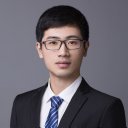
 Haochao Ying
· 1 previous affiliation
- Zhejiang UniversitySince 2014
- Associate Professor · Since 2024
- Assistant Professor · 2019–2023
- PhD student · 2014–2019
Research Overview
Haochao Ying focuses on computing for healthcare, robust machine learning, and recommender systems. His trajectory spans from early work in sequential recommendation and human activity recognition to advanced multimodal frameworks for clinical diagnostics and medical image analysis. Recently, his research emphasizes handling noisy, imbalanced data in medical applications and developing predictive models for complex biological and environmental systems.
Research Trajectory
Haochao Ying’s early research addressed sequential data and user preferences, beginning with his 2019 work on Time-aware metric embedding with asymmetric projection for successive POI recommendation. This foundation in modeling complex temporal patterns soon extended into broader machine learning applications. In 2021, he expanded into human activity recognition, developing an adaptive gating mechanism to optimize learning across multiple tasks and data sources. This framework was detailed across two companion papers, both titled ASM2TV: An Adaptive Semi-Supervised Multi-Task Multi-View Learning Framework and ASM2TV: An Adaptive Semi-Supervised Multi-Task Multi-View Learning Framework. By exploiting the temporal coherence of unlabeled data, these works advance the research direction of Multi-Task Learning with Uncertainty Based Loss Weighting and the broader area of Robust Learning through Multi-view Consensus Regularization.
Concurrently, Ying began applying deep learning to clinical diagnostics, introducing A semi-supervised deep convolutional framework for signet ring cell detection in 2021. His interest in robust learning under imperfect data conditions subsequently extended to graph neural networks. In 2022, he designed Robust Training of Graph Neural Networks via Noise Governance, a framework that uses graph augmentation and dual-network consistency to prevent error propagation when labels are scarce and noisy. This contributed significantly to the area of Mitigating Noise Propagation in Graph Neural Networks and Recovering Signal from Extreme Label Noise. That same year, he applied sequence modeling to intelligent transportation, guiding the development of Recurrent Neural Network Based Collaborative Filtering for QoS Prediction in IoV to optimize service selection in connected vehicle networks.
Moving deeper into computer vision for healthcare, Ying tackled the challenges of class imbalance and category overlap in image ordinal regression. He presented Robust Image Ordinal Regression with Controllable Image Generation (2023), which utilizes synthetic training data to boost performance on rare minority categories. This aligns with broader work in the research direction of Learning Fuzzy Boundaries in Ordinal Regression and Deep Learning for Long-Tailed Distributions. In 2024, his focus on the area of Computational Pathology for Objective Tissue Analysis yielded MFIF-Net: A Multi-Focal Image Fusion Network for Implantation Outcome Prediction of Blastocyst. Here, his team developed an attention-based architecture that fuses multiple focal-plane images to predict in vitro fertilization (IVF) embryo implantation success.
In 2025, Ying expanded his scope to complex multimodal clinical data. He proposed Decouple, Reorganize, and Fuse: A Multimodal Framework for Cancer Survival Prediction, integrating radiology, pathology, and genomics to advance the direction of Non-linear Interaction and Decomposition for Multimodal Fusion and Disentangling Shared and Specific Multimodal Representations. He also continued his work in ordinal regression with Dual-level Fuzzy Learning with Patch Guidance for Image Ordinal Regression, combining fuzzy logic and co-teaching to improve medical disease grading and age estimation, further contributing to the area of Addressing Class Imbalance in Clinical Machine Learning. Additionally, he collaborated on robotics research, participating in the development of AutoRing: Imitation Learning-based Autonomous Intraocular Foreign Body Removal Manipulation with Eye Surgical Robot. This system addresses the area of Submillimeter Robotic Guidance for High Precision Surgery and Action Chunking for Robust Robotic Control. Most recently, in 2026, he applied his expertise in noise governance to environmental systems, exploring water quality prediction in Trend-aware structure relearning framework for water quality prediction with coupled noise governance. Ying also contributed to surgical planning with GeoSurge: Geometry-Grounded Multimodal Reasoning for Auditable Liver Resection Planning, an anatomy-grounded framework combining mask metrics and structure-aware point-cloud tokens to generate executable and editable resection surfaces under hard clinical constraints.
Current Directions
Recent work investigates the integration of highly heterogeneous data sources for complex predictive tasks, particularly in healthcare and environmental modeling. The most recent papers in the evidence address multimodal fusion techniques that decouple and reorganize radiological, pathological, and genomic data for cancer survival prediction. Concurrently, ongoing research explores dual-level fuzzy learning to handle label ambiguity in medical image grading, as well as the application of noise governance frameworks to trend-aware water quality prediction. He is also involved in advancing submillimeter robotic guidance for autonomous microsurgery and geometry-grounded multimodal reasoning for auditable surgical resection planning.
Profile updated
Loading new papers…
Other researchers whose papers cluster into the same research directions — a proxy for overlapping technical interests and shared intellectual neighborhoods.
See something wrong? Report a mistake