

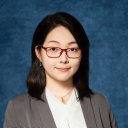
 Hongxia Xu
· 1 previous affiliation
- Zhejiang UniversitySince 2014
- Researcher · Since 2024
- Postdoc · 2019–2023
- PhD student · 2014–2019
Research Overview
Hongxia Xu focuses on medical artificial intelligence, clinical data fusion, and the evaluation of medical language models. Their research spans from foundational clinical studies on perioperative care to the development of advanced generative models and reinforcement learning frameworks for healthcare applications. Recent work investigates geometric perception in multimodal models and efficient reasoning architectures for complex medical tasks.
Research Trajectory
The earliest work in the trajectory dates to 1995, focusing on genomics and cDNA mapping. In A Search for Genes from the Dark Band Regions of Human Chromosome 21, Xu led an effort to isolate genes from the long arm of human chromosome 21, utilizing cDNA selection to map yeast artificial chromosomes and analyze transcribed sequences.
Following a gap in the available record, the research trajectory resumes in 2024 with a strong focus on clinical care optimization and medical artificial intelligence. In the clinical domain, Xu investigated perioperative patient experiences and sleep management. This included Cognition and Experience About Surgical Incisions in Patients Undergoing Minimally Invasive Abdominal Surgery: A Qualitative Study and the development of a sleep management program detailed in Development and application of a multi-modal sleep management program for general surgery based on the optimal healing environment model. This clinical intervention research was further validated in 2025 with Multimodal sleep management reduces perioperative insomnia in general surgery patients through optimal healing environments.
Concurrently, Xu contributed to several collaborative efforts in machine learning applied to healthcare and chemistry. In 2024, they participated in the development of AnyECG: Foundational Models for Multitask Cardiac Analysis in Real-World Settings, a model designed to extract robust representations from heterogeneous electrocardiogram data. They also contributed to TWIN-GPT : Digital Twins for Clinical Trials via Large Language Model, exploring personalized synthetic data generation for clinical trial outcome prediction, and Retrosynthesis prediction with an iterative string editing model, which reframed single-step retrosynthesis as a molecular string editing task.
In 2025, the focus on medical AI deepened, particularly in the area of Evaluating Medical Language Models Beyond Lexical Overlap. Xu oversaw Generative Models in Medical Visual Question Answering: A Survey, which examined the paradigm shift from discriminative to generative systems in interpreting medical images. They also directed research on automated screening tools, presenting WDT-MD: Wavelet Diffusion Transformers for Microaneurysm Detection in Fundus Images to improve early diabetic retinopathy detection. Additional 2025 contributions included OmniFuse: A general modality fusion framework for multi-modality learning on low-quality medical data and a Mendelian randomization study, Lipids, lipid-lowering drug target genes and pancreatic cancer: a Mendelian randomization study.
Moving into 2025 and 2026, Xu's work increasingly addressed the reasoning capabilities and perceptual grounding of large language models. They contributed to Med-U1: Incentivizing Unified Medical Reasoning in LLMs via Large-scale Reinforcement Learning, advancing the research direction of General Purpose Reasoning from Specialized Reinforcement Learning. To address perceptual deficits in multimodal models, they participated in Med-Scout: Curing MLLMs' Geometric Blindness in Medical Perception via Geometry-Aware RL Post-Training, which aligns with the broader area of Cross-Modality Generalization in Medical Artificial Intelligence.
Further work in 2026 explored reward modeling and efficient reasoning architectures. Xu co-authored RightDiff: Learning Generative Reward Models to Judge by the Right Differences, which structures pairwise evaluation to prevent models from exploiting superficial shortcuts. They also contributed to Sep-Latent: Separator Tokens as Natural Compression Anchors for Implicit Reasoning, proposing an adaptive framework to reduce computational overhead in complex reasoning tasks. In computer vision, Xu directed Geometric Gradient Rectification for Safe Open-Set Semi-Supervised Learning, introducing a gradient-level control framework to manage out-of-distribution outliers, and contributed to DeBoneDiT: Depth-Driven Conditional Bridge Diffusion Transformers for Bone Suppression in Chest X-Ray Images, leveraging diffusion models for high-resolution medical image enhancement.
Current Directions
Recent work investigates the intersection of reinforcement learning, geometric perception, and efficient reasoning in large language models. The most recent papers address the limitations of multimodal models in medical perception, utilizing geometry-aware reinforcement learning to ground outputs in objective constraints rather than linguistic fluency alone. Additionally, current research explores adaptive implicit reasoning frameworks that compress logic into structural semantic anchors, aiming to maintain the performance of explicit chain-of-thought processes while significantly reducing token verbosity and computational overhead.
Profile updated
Loading new papers…
Other researchers whose papers cluster into the same research directions — a proxy for overlapping technical interests and shared intellectual neighborhoods.
See something wrong? Report a mistake