

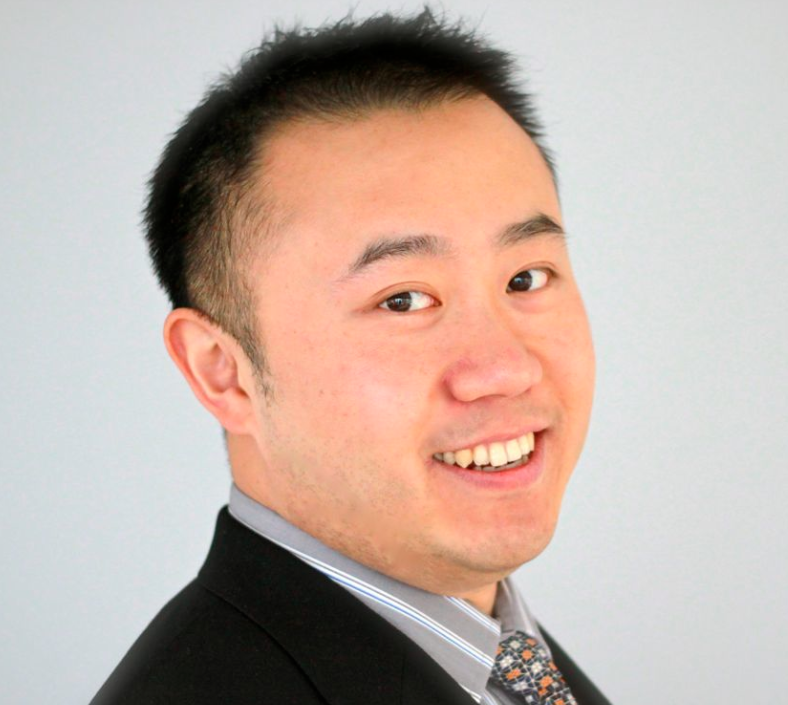
 Jimeng Sun
· 7 previous affiliations
- Georgia Institute of TechnologySince 2013
- Associate Professor · Since 2014
- Associate Professor · 2013–2020
- University of Illinois Urbana-ChampaignSince 2020
- Health Innovation Professor · Since 2021
- Professor · Since 2020
- Keiji AISince 2025
- Co-Founder · Since 2025
- Global Head of AI Research · 2021
- Research Staff Member · 2007–2009
- Carnegie Mellon University2003–2007
- PhD, Computer Science · 2003–2007
- Master of Philosophy (M.Phil.), Computer Science · 2002–2003
Research Overview
Jimeng Sun focuses on clinical artificial intelligence, machine learning for healthcare analytics, and computational drug discovery. Early research developed scalable tensor analysis methods for streaming data, which subsequently evolved into deep learning architectures for electronic health records. Current work investigates the integration of large language models and foundation models into clinical workflows, as well as advanced biosignal interpretation.
Research Trajectory
The early trajectory of this research centered on mining and summarizing complex, high-velocity data streams. Initial collaborative work included participation in Streaming Pattern Discovery in Multiple Time-Series, which introduced the SPIRIT algorithm for incrementally identifying hidden trends and correlations in real-time data. Building on this foundation, Sun introduced dynamic tensor analysis (DTA) in Beyond streams and graphs: dynamic tensor analysis. This work provided a scalable, space-efficient method for summarizing high-order, high-dimensional data, contributing significantly to the broader research direction of Online Tensor Decomposition for Streaming Multidimensional Data.
By the mid-2010s, the focus shifted toward applying these advanced analytical techniques to healthcare, specifically electronic health records (EHRs). In Rubik: Knowledge Guided Tensor Factorization and Completion for Health Data Analytics, Sun and collaborators developed a constrained non-negative tensor factorization method for computational phenotyping that incorporated medical knowledge to handle noisy and missing EHR data. Recognizing the need for both accuracy and interpretability in clinical settings, the lab developed RETAIN: Interpretable Predictive Model in Healthcare using Reverse Time Attention Mechanism. RETAIN utilized a two-level neural attention model that processed EHR data in reverse time order, mimicking physician practice to highlight influential past visits. Concurrently, Doctor AI: Predicting Clinical Events via Recurrent Neural Networks leveraged recurrent neural networks on longitudinal EHR data to predict subsequent diagnoses and medication categories. To address data insufficiency and improve clinical alignment, GRAM: Graph-based Attention Model for Healthcare Representation Learning was introduced, supplementing EHR data with hierarchical information from medical ontologies via an attention mechanism.
Subsequent research expanded into computational drug discovery and the generation of synthetic healthcare data. In the area of Substructural Granularity in Molecular Interaction Modeling, Sun developed CASTER: Predicting Drug Interactions with Chemical Substructure Representation, a framework that utilized sequential pattern mining and dictionary learning to predict adverse drug-drug interactions while providing interpretable coefficients for functional sub-structures. Addressing the need for privacy-preserving data sharing, ConSequence: Synthesizing Logically Constrained Sequences for Electronic Health Record Generation introduced a rule-based formulation to ensure synthetic patient records adhered to domain-specific knowledge, advancing the research direction of Enforcing Logical Constraints in Synthetic Data Generation.
Recently, the trajectory has heavily emphasized the integration of large language models (LLMs) and multimodal architectures into medical and chemical domains. GT2Vec: Large Language Models for Knowledge Graph Augmented Text Embedding proposed a framework to jointly encode text and graph data using LLMs, improving embeddings for retrieval and classification. In clinical applications, Survivorship Navigator: Personalized Survivorship Care Plan Generation using Large Language Models automated the creation of guideline-compliant cancer survivorship care plans. Further exploring clinical text, Integration of Large Language Models and Traditional Deep Learning for Social Determinants of Health Prediction combined LLMs with traditional deep learning to efficiently extract social determinants of health. To tackle out-of-distribution reasoning in administrative tasks, Reinforcement Learning for Out-of-Distribution Reasoning in LLMs: An Empirical Study on Diagnosis-Related Group Coding applied large-scale reinforcement learning to automate DRG coding from clinical notes. In the molecular domain, MolTextQA: A Question-Answering Dataset and Benchmark for Evaluating Multimodal Architectures and LLMs on Molecular Structure–Text Understanding provided a comprehensive benchmark for evaluating structure-directed questions and text-based molecule retrieval.
The most recent work extends foundation models to complex biosignals and rigorous uncertainty quantification. Contributing to the area of Conformal Inference under Exchangeability Violations, ConfHit: Conformal Generative Design with Oracle-Free Guarantees introduced a distribution-free framework providing validity guarantees for generative molecule design without requiring an experimental oracle. To lower barriers in clinical AI research, Sun led the development of PyHealth 2.0: A Comprehensive Open-Source Toolkit for Accessible and Reproducible Clinical Deep Learning, unifying diverse datasets, models, and modalities into a single accessible framework. Finally, research into electroencephalography (EEG) foundation models produced Neural Signals Generate Clinical Notes in the Wild, which developed an EEG-to-Language model capable of summarizing long-duration recordings into clinical reports, and Test-Time Adaptation for EEG Foundation Models: A Systematic Study under Real-World Distribution Shifts, which systematically evaluated adaptation methods for neural data across heterogeneous clinical settings.
Current Directions
The most recent papers in the evidence indicate a strong focus on adapting large-scale foundation models for specialized healthcare applications. One major direction involves bridging the gap between complex physiological signals and clinical documentation, as seen in the development of multimodal models that translate long-term EEG recordings directly into structured clinical reports. A parallel effort investigates the robustness of these biosignal foundation models, specifically exploring test-time adaptation strategies to handle real-world distribution shifts across different clinical devices and patient populations.
Additionally, current work addresses the reliability and efficiency of generative AI in medicine and drug discovery. This includes developing conformal prediction frameworks that provide statistical guarantees for generative molecule design without relying on expensive experimental oracles. In the clinical text domain, recent research focuses on optimizing the deployment of large language models for knowledge-intensive, out-of-distribution tasks—such as automated medical coding and personalized care plan generation—by combining reinforcement learning techniques with traditional deep learning to balance accuracy, explainability, and computational efficiency.
Profile updated
Loading new papers…
Other researchers whose papers cluster into the same research directions — a proxy for overlapping technical interests and shared intellectual neighborhoods.
See something wrong? Report a mistake