

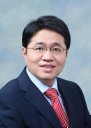
 Jingyuan Wang
· 1 previous affiliation
- Beihang UniversitySince 2021
- Full Professor · Since 2022
- Full Professor · Since 2021
4 other authors named Jingyuan Wang: Jingyuan Wang (6 papers), Jingyuan Wang (New York University · 3 papers), Jingyuan Wang (1 paper), Jingyuan Wang (Beihang University · 1 paper)
Research Overview
Jingyuan Wang focuses on spatio-temporal data mining, urban computing, and the application of deep learning to complex networked systems. His trajectory spans from early work in network congestion control to foundational architectures for traffic forecasting and financial market modeling. Most recently, his research investigates physics-guided neural networks, parameter-efficient fine-tuning for language models, and cross-city representation learning.
Research Trajectory
Wang's early research addressed fundamental networking challenges. He introduced TCP-FIT: An improved TCP congestion control algorithm and its performance in 2011, designing a congestion control algorithm to perform robustly across wireless and high bandwidth-delay product networks. Transitioning toward data-driven modeling of complex systems, his focus shifted to urban computing, demonstrated by his 2016 work on Traffic Speed Prediction and Congestion Source Exploration: A Deep Learning Method.
This interest in complex temporal dynamics soon extended to financial markets. He developed AlphaStock: A Buying-Winners-and-Selling-Losers Investment Strategy using Interpretable Deep Reinforcement Attention Networks, a reinforcement learning-based investment strategy utilizing interpretable deep attention networks to balance risk and return while resisting extreme losses. Returning to urban systems, he explored spatial and temporal patterns through tensor factorization. His work on Understanding Urban Dynamics via Context-Aware Tensor Factorization with Neighboring Regularization provided managerial insights by regularizing high-quality Tucker factorizations to discover interpretable urban dynamics, contributing to the broader area of Unified Representation Learning for Multi-Modal Urban Mobility.
Recognizing the rapid proliferation of traffic prediction models, Wang addressed the critical need for reproducibility and benchmarking by developing LibCity: An Open Library for Traffic Prediction. This comprehensive framework encapsulates dozens of models and spatial-temporal datasets, advancing the research direction of Standardized Evaluation Protocols for Machine Learning Research. Building on this standardized foundation, his subsequent work introduced sophisticated architectures for traffic flow prediction. He guided the development of PDFormer: Propagation Delay-Aware Dynamic Long-Range Transformer for Traffic Flow Prediction, a model that captures dynamic spatial dependencies while explicitly modeling propagation delays. Concurrently, he addressed spatial and temporal heterogeneity in urban environments with Spatio-Temporal Self-Supervised Learning for Traffic Flow Prediction. This framework utilizes adaptive graph augmentation to account for unique traffic signatures across different functional zones, contributing to the research direction of Functional Similarity Graphs for Spatiotemporal Forecasting and the broader area of Fusing Exogenous Context into Spatio-Temporal Neural Networks. Beyond urban mobility, he also contributed to recommender systems, participating in the design of Curriculum Pre-training Heterogeneous Subgraph Transformer for Top-N Recommendation, which leverages interaction-specific subgraphs to advance work in the area of Graph Contrastive Learning for Sparse Recommendation.
Wang's expertise in data analytics subsequently expanded into new domains, including public health surveillance, as seen in his 2024 work on Information practices in data analytics for supporting public health surveillance. He also began integrating fundamental physical principles into deep learning architectures. He oversaw the creation of AirPhyNet: Harnessing Physics-Guided Neural Networks for Air Quality Prediction, a hybrid model that combines graph neural networks with the structural constraints of diffusion and advection differential equations to deliver physically interpretable forecasts.
In recent years, Wang has pursued diverse applications of representation learning across graphs, finance, and natural language processing. Returning to urban infrastructure, he introduced Hierarchical Frequency-Decomposition Graph Neural Networks for Road Network Representation Learning, which unifies spatial and spectral graph neural networks to capture both global trends and local fluctuations, advancing the area of Cross-Domain Generalization for Spatio-Temporal Foundation Models. In finance, he developed the Learning Universal Multi-level Market Irrationality Factors to Improve Stock Return Forecasting model, which mines temporary price deviations to enhance quantitative trading strategies.
He has also addressed the computational efficiency of language models. He proposed RoSA: Enhancing Parameter-Efficient Fine-Tuning via RoPE-aware Selective Adaptation in Large Language Models, a framework that selectively targets low-frequency dimensions of attention states to reduce trainable parameters. For resource-constrained edge devices, he designed MiniRAG: Towards Extremely Simple Retrieval-Augmented Generation, which replaces complex indexing with a lightweight heterogeneous graph of text chunks and entities.
Most recently, his research has tackled fundamental scientific and cross-domain challenges. He collaborated on OrthoSolver: A Neural Proper Orthogonal Decomposition Solver For PDEs, reframing classical decomposition as a mutual information maximization problem to learn nonlinear basis modes. In urban computing, he contributed to Seeking Commonality, Preserving Specificity: A Spectral-Aware Hierarchical Framework for Cross-City Road Representation Learning, disentangling universal functional patterns from city-specific geometric features. Finally, he integrated multi-modal approaches into transportation with the Spatio-Temporal Data Enhanced Vision-Language Model for Traffic Scene Understanding, which enhances pre-trained vision-language models with dynamic context from vehicle trajectories and road networks.
Current Directions
The most recent papers in the evidence indicate a dual focus on scaling efficient machine learning architectures and advancing multi-modal spatio-temporal understanding. Recent work investigates parameter-efficient fine-tuning for large language models and lightweight retrieval-augmented generation (RAG) frameworks designed specifically for resource-constrained edge devices. Concurrently, Wang is exploring the intersection of deep learning and the physical sciences, developing neural solvers for partial differential equations that adaptively learn nonlinear basis modes. In the urban and transportation domains, his current research addresses cross-city representation learning—disentangling universal functional patterns from city-specific geometries—and the integration of spatio-temporal data into vision-language models to improve complex traffic scene understanding in few-shot settings.
Profile updated
Loading new papers…
Other researchers whose papers cluster into the same research directions — a proxy for overlapping technical interests and shared intellectual neighborhoods.
See something wrong? Report a mistake