

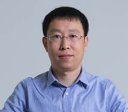
 Senzhang Wang
· 4 previous affiliations
- Central South UniversitySince 2021
- Full Professor · Since 2021
- Associate Professor · 2016–2021
- Hong Kong Polytechnic University2018–2020
- Postdoc · 2018–2020
- Beihang University2011–2016
- PhD student · 2011–2016
Research Overview
Senzhang Wang focuses on spatial-temporal data mining, graph neural networks, and the analysis of large-scale social and information networks. His early work explored information diffusion and heterogeneous network alignment, gradually evolving to encompass robust graph representation learning and urban computing. Recently, his research addresses multimodal graph learning, conversational recommendation systems, and coordinated multi-agent reinforcement learning.
Research Trajectory
Wang’s early research focused on the dynamics of information diffusion within social networks. He developed a greedy algorithmic approach to minimize the spread of negative information, such as rumors, by identifying and blocking critical uninfected nodes in Negative Influence Minimizing by Blocking Nodes in Social Networks. Expanding on diffusion dynamics, he introduced methods to infer multi-aspect diffusion networks from cascade traces, capturing the heterogeneous interactions and diverse spreading patterns inherent in social media in MMRate: inferring multi-aspect diffusion networks with multi-pattern cascades.
As his focus broadened to more complex network structures, Wang contributed to the area of Meta-Path Analysis for Heterogeneous Information Networks. With collaborators, he developed NeuACF, a neural network-based model for aspect-level collaborative filtering that leverages heterogeneous information networks to understand the multi-faceted reasons behind user preferences in Aspect-Level Deep Collaborative Filtering via Heterogeneous Information Networks. He also addressed the challenge of linking user accounts across different platforms by proposing an adversarial learning framework for weakly-supervised social network alignment, which aligns the global distribution of users rather than relying heavily on manual annotations (Adversarial Learning for Weakly-Supervised Social Network Alignment).
Moving into the 2020s, Wang’s work increasingly integrated deep learning with graph structures and spatial-temporal data. He participated in developing HE-AGCRCNN, a framework for large-scale multi-label text classification that captures diverse textual semantics and hierarchical label relationships (Hierarchical Taxonomy-Aware and Attentional Graph Capsule RCNNs for Large-Scale Multi-Label Text Classification). In the research direction of Dual Role Node Embeddings for Directed Networks, he co-authored work on a generative adversarial network framework that jointly learns source and target vectors to create robust embeddings for directed graphs (Adversarial Directed Graph Embedding). Synthesizing advancements in another core area of his expertise, he published a comprehensive survey categorizing deep learning techniques and tasks in spatial-temporal data mining (Deep Learning for Spatio-Temporal Data Mining: A Survey).
Wang’s subsequent research addressed robustness and knowledge integration in complex systems. He introduced V-InFoR, a graph neural network explainer designed to be robust against structurally corrupted graphs containing noisy or adversarial edges (V-InFoR: A Robust Graph Neural Networks Explainer for Structurally Corrupted Graphs). Expanding into multi-domain challenges, he led the creation of a knowledge-enriched dataset to support fine-grained fake news detection across diverse topics and platforms (FineFake: A Knowledge-Enriched Dataset for Fine-Grained Multi-Domain Fake News Detection). As a senior investigator, he guided the development of HN-GCCF, a model that enhances collaborative filtering by leveraging high-order neighbor information through embedding propagation (HN-GCCF: High-order neighbor-enhanced graph convolutional collaborative filtering). He also oversaw work in generative image editing, culminating in a diffusion-based framework for fine-grained, multi-reference facial part swapping (FuseAnyPart: Diffusion-Driven Facial Parts Swapping via Multiple Reference Images).
In his most recent trajectory, Wang has focused on the intersection of large language models (LLMs), multimodal graphs, and multi-agent systems. He directed the development of MAGB, a benchmark evaluating graph neural networks and vision-language models on multimodal attributed graphs (When Graph Meets Multimodal: Benchmarking and Meditating on Multimodal Attributed Graph Learning). In conversational recommendation, his lab proposed STEP, a stepwise curriculum learning framework that bridges structured knowledge graphs and natural language dialogue using LLMs (STEP: Stepwise Curriculum Learning for Context-Knowledge Fusion in Conversational Recommendation). He further explored LLM capabilities in sequential recommendation by coordinating dual dynamic index mechanisms to better integrate semantic and collaborative information (Unleash LLMs Potential for Sequential Recommendation by Coordinating Dual Dynamic Index Mechanism). Returning to urban computing, he supervised the design of a role-aware multi-agent reinforcement learning approach to coordinate traffic lights and vehicles during emergencies (Role-aware Multi-agent Reinforcement Learning for Coordinated Emergency Traffic Control). Most recently, he collaborated on Rel-MOSS, a framework addressing class imbalance in relational deep learning (Rel-MOSS: Towards Imbalanced Relational Deep Learning on Relational Databases), and contributed to a paradigm shift in GNN explainability by moving from label space matching to prototypical representation space matching (Paradigm Shift of GNN Explainer from Label Space to Prototypical Representation Space).
Current Directions
Wang’s most recent work investigates the integration of large language models and multimodal data with structured graph learning. A primary focus is bridging the semantic gap between structured knowledge graphs and natural language, particularly to enhance conversational and sequential recommendation systems. Additionally, his research addresses the evaluation of vision-language models on multimodal attributed graphs, exploring how different modalities contribute to zero-shot reasoning in low-data scenarios.
In the domain of urban computing and intelligent transportation, current directions include deploying multi-agent reinforcement learning to dynamically coordinate emergency and regular traffic. He is also actively exploring foundational improvements to graph neural networks, specifically targeting class imbalance in relational databases and advancing the interpretability of GNNs through prototypical representation spaces.
Profile updated
Loading new papers…
Other researchers whose papers cluster into the same research directions — a proxy for overlapping technical interests and shared intellectual neighborhoods.
See something wrong? Report a mistake