

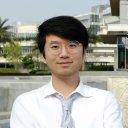
 Yuxuan Liang
· 7 previous affiliations
- Assistant Professor · Since 2023
- Assistant Professor · Since 2023
- Current
- National University of Singapore2019–2023
- Research Fellow · 2022–2023
- PhD student · 2019–2022
- Research Intern · 2021
- Jingdong (China)2018
- Algorithm Engineer · 2018
- Microsoft (United States)2017–2018
- Research Intern · 2017–2018
- Computer Science (Outstanding Class)
1 other author named Yuxuan Liang: Yuxuan Liang (Fudan University · 9 papers)
Research Overview
Yuxuan Liang focuses on spatio-temporal data mining, urban computing, and time series analysis. His trajectory spans from foundational modeling of dynamic physical systems to the integration of large language models for complex urban reasoning. Currently, he investigates multimodal learning and physics-informed neural networks to build generalizable, robust systems for smart city applications.
Research Trajectory
Liang’s research addresses the fundamental challenges of modeling complex, dynamic environments, particularly in urban and geographic contexts. A major theme of his recent work is the transition from task-specific deep learning models to general-purpose architectures. He has extensively mapped this transition, authoring a primary tutorial and review on Foundation Models for Spatio-Temporal Data Science: A Tutorial and Survey while also contributing to parallel collaborative efforts under the same title, Foundation Models for Spatio-Temporal Data Science: A Tutorial and Survey. These works explore how large language models and custom pretrained foundation models can unify the data lifecycle, from initial sensing to complex reasoning.
To capture the underlying mechanics of real-world environments, Liang has developed physics-informed neural networks that enforce scientific constraints. He introduced FlowNet: Modeling Dynamic Spatio-Temporal Systems via Flow Propagation, an architecture that treats systemic interactions as quantifiable "flow tokens" governed by physical conservation laws. Expanding on this physics-inspired perspective, he collaborated on Enabling arbitrary inference in spatio-temporal dynamic systems: A physics-inspired perspective. This framework bridges discrete sensor observations with the continuous nature of physical systems, utilizing graph-based neural operators to predict values at unobserved locations. Together, these projects advance the broader area of Continuous Field Representations for Spatio-Temporal Dynamics.
In the domain of urban computing—a community he actively supports, recently organizing The 14th International Workshop on Urban Computing—Liang applies these spatial modeling techniques to critical infrastructure and environmental challenges. To address the high cost of physical monitoring stations, his lab developed AirRadar: Inferring Nationwide Air Quality in China with Deep Neural Networks, which reconstructs air quality features in unmonitored regions by adjusting for spatial correlations and distribution shifts. Recognizing that traditional discrete sampling fails to capture geographic continuity, he also proposed Nature Makes No Leaps: Building Continuous Location Embeddings with Satellite Imagery from the Web. This framework generates continuous location embeddings that resist the semantic distortions often caused by confounding factors in satellite imagery. Both efforts reflect his ongoing contributions to the research direction of Conditioning Spatiotemporal Models with Static Environmental Metadata.
Liang also tackles the operational side of urban environments, particularly how limited resources are distributed during demand spikes. He designed A Game-Theoretic Spatio-Temporal Reinforcement Learning Framework for Collaborative Public Resource Allocation, which models urban dispatch as a potential game to guarantee convergence to a near-Nash equilibrium, significantly improving coordination among independent agents.
More recently, Liang has focused on integrating multimodal foundation models into time series and spatial analysis, driving progress in the area of Large Language Models as Zero-Shot Time Series Analyzers. He developed Time-VLM: Exploring Multimodal Vision-Language Models for Augmented Time Series Forecasting, a novel approach that converts temporal data into images and text to leverage the pre-aligned knowledge of frozen vision-language models, particularly for data-scarce scenarios. To ensure these models reason fairly across different geographic regions, he introduced Urban-R1: Reinforced MLLMs Mitigate Geospatial Biases for Urban General Intelligence, utilizing reinforcement learning and Group Relative Policy Optimization to correct regionally skewed predictions. He also contributed to Sonar-TS: Search-Then-Verify Natural Language Querying for Time Series Databases, a framework that translates complex natural language queries into symbolic searches and Python-based verification steps for massive temporal databases.
Parallel to his work on large models, Liang investigates robust and efficient architectures for time series forecasting. He introduced DropoutTS: Sample-Adaptive Dropout for Robust Time Series Forecasting, a model-agnostic plugin that dynamically adjusts dropout rates based on real-time spectral noise detection. This approach throttles learning capacity for noisy samples while preserving clean signals, aligning with his broader interest in work in Channel Independence for Robust Multivariate Time Series Forecasting and the area of Lightweight Architectures for Time Series Foundation Models.
Current Directions
The most recent papers in the evidence indicate a strong focus on Urban General Intelligence (UGI) and the adaptation of multimodal large language models for complex spatio-temporal reasoning. Liang is actively investigating methods to ground vision-language models in geographic reality, mitigating geospatial biases through reinforcement learning and region profiling. Simultaneously, he continues to refine physics-informed neural networks, seeking highly efficient, resolution-independent operators that can perform arbitrary inference across continuous physical systems like traffic networks and atmospheric conditions.
Additionally, his recent methodological work emphasizes robustness and efficiency in time series analysis, exploring dynamic regularization techniques and natural language interfaces for temporal databases. Across these domains, his overarching goal remains the development of adaptable, general-purpose models capable of handling the noise, scale, and continuous nature of real-world urban data. His broader research portfolio also encompasses the research direction of Privacy Preserving Synthetic Trajectory Generation, ensuring that the next generation of spatial foundation models can be trained and deployed securely.
Profile updated
Loading new papers…
Other researchers whose papers cluster into the same research directions — a proxy for overlapping technical interests and shared intellectual neighborhoods.
See something wrong? Report a mistake