

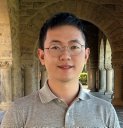
 Ming Jin
· 4 previous affiliations
- Griffith UniversitySince 2024
- Assistant Professor · Since 2024
- Monash University2020–2023
- PhD student · 2020–2023
- The University of Melbourne2018–2019
- MS student · 2018–2019
- Hebei University of Technology2013–2017
- Undergrad student · 2013–2017
4 other authors named Ming Jin: Ming Jin (Virginia Tech · 36 papers), Ming Jin (Hefei University of Technology · 3 papers), Ming Jin (University of Chinese Academy of Sciences · 3 papers), Ming Jin (International Computer Science Institute · Virginia Tech · 1 paper)
Research Overview
Ming Jin focuses on time series analysis, graph neural networks, and the development of foundation models for temporal data. His trajectory spans from representation learning on continuous-time dynamic graphs to reprogramming large language models for zero-shot forecasting. Most recently, his work addresses the scalability, transferability, and robustness of time series foundation models in complex, non-stationary environments.
Research Trajectory
Jin’s early research explored the intersection of temporal dynamics and graph structures. In 2022, he developed Neural Temporal Walks: Motif-Aware Representation Learning on Continuous-Time Dynamic Graphs, introducing a method that utilizes spatiotemporal-biased random walks to capture both topological properties and temporal dependencies in continuous-time dynamic graphs. He subsequently provided a comprehensive overview of this intersection in A Survey on Graph Neural Networks for Time Series: Forecasting, Classification, Imputation, and Anomaly Detection. Building on these graph-based abstractions, he later formalized the theoretical underpinnings of such methods in Towards Expressive Spectral-Temporal Graph Neural Networks for Time Series Forecasting, establishing a framework to bound the expressive power of linear spectral-temporal GNNs.
Around 2024, Jin’s focus expanded to the adaptation of large language models (LLMs) for temporal data. He introduced Time-LLM: Time Series Forecasting by Reprogramming Large Language Models, a framework that repurposes frozen, pre-trained LLMs for general-purpose forecasting by translating time series patches into text-like representations. This work contributed significantly to the area of Lightweight Architectures for Time Series Foundation Models and the broader direction of Aligning Continuous Time Series with Language Models. He articulated the broader vision for this paradigm in Position: What Can Large Language Models Tell Us about Time Series Analysis, arguing for a shift toward interactive agents capable of cross-modality reasoning and advancing the research direction of Large Language Models as Zero-Shot Time Series Analyzers.
In 2025, Jin’s work increasingly addressed the scalability, deployment, and robustness of time series foundation models. With collaborators, he investigated scaling behaviors in Towards Neural Scaling Laws for Time Series Foundation Models, contributing to the broader area of Neural Scaling Laws for Time Series Foundation Models. He also directed research on general-purpose predictive architectures, overseeing TimeMixer++: A General Time Series Pattern Machine for Universal Predictive Analysis. To address the challenge of selecting appropriate pre-trained models for specific downstream tasks, he proposed TimeTic in Estimating Time Series Foundation Model Transferability via In-Context Learning, which frames model selection as an in-context learning problem.
Concurrently, Jin tackled the challenges of non-stationary environments and concept drift. He developed EventTSF: Event-Aware Non-Stationary Time Series Forecasting, a framework that integrates external textual events—such as news reports or weather alerts—to predict sudden shifts in data patterns. He further addressed recurring concept drift in online forecasting with Continuous Evolution Pool: Taming Recurring Concept Drift in Online Time Series Forecasting. In the realm of unsupervised domain adaptation, he introduced From Entanglement to Alignment: Representation Space Decomposition for Unsupervised Time Series Domain Adaptation, a framework that isolates domain-invariant features from domain-specific noise to improve generalization across shifting distributions.
By 2026, his research expanded into natural language interfaces, model robustness, and specialized medical applications. He oversaw Sonar-TS: Search-Then-Verify Natural Language Querying for Time Series Databases, a framework that combines SQL-based symbolic indexing with Python verification to handle complex, shape-based queries. He also participated in applied medical research, contributing to Learning Cardiac Latent Representations in Vectorcardiogram Space, which models the heart's electrical activity as a unified three-dimensional trajectory to improve generalization and robustness. Additionally, he collaborated on evaluating the security of temporal models in Exposing Vulnerabilities in Explanation for Time Series Classifiers via Dual-Target Attacks, demonstrating how adversarial interventions can manipulate predictions while maintaining seemingly normal explanations. Jin also contributed to OATS: Online Data Augmentation for Time Series Foundation Models, which introduces a diffusion-based online data augmentation strategy that dynamically generates synthetic samples conditioned on informative training instances across different training stages.
Current Directions
The most recent papers in the evidence indicate a focus on bridging natural language processing with time series databases, as well as ensuring the robustness and interpretability of temporal models. Recent work investigates search-then-verify frameworks that allow users to query massive time series databases using natural language, translating complex shape-based queries into executable code. Additionally, current research addresses the security of time series classifiers by exposing vulnerabilities in their explanation mechanisms, advances dynamic online data augmentation for time series foundation models, and explores specialized representation learning techniques for complex physiological signals, such as modeling cardiac activity in three-dimensional latent spaces.
Profile updated
Loading new papers…
Other researchers whose papers cluster into the same research directions — a proxy for overlapping technical interests and shared intellectual neighborhoods.
See something wrong? Report a mistake