

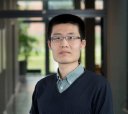
 Bin Yang
· 5 previous affiliations
- Aalborg UniversitySince 2014
- Full Professor · Since 2018
- Associate Professor · 2015–2018
- Assistant Professor · 2014–2015
- East China Normal UniversitySince 2022
- Full Professor · Since 2022
- Aarhus University2011–2014
- Research Assistant Professor · 2011–2014
- Postdoc · 2010
- Fudan University2007–2010
- PhD student · 2007–2010
11 other authors named Bin Yang: Bin Yang (Wuhan University · 62 papers), Bin Yang (University of Stuttgart · 25 papers), Bin Yang (University of Toronto · 12 papers), Bin Yang (Alibaba Group (China) · 3 papers), Bin Yang (Central South University · 3 papers), and 6 more
Research Overview
Bin Yang focuses on artificial intelligence, data governance, and the analysis of time series and spatio-temporal data. His early trajectory addressed spatial network routing and trajectory mining, evolving into a comprehensive focus on robust, generalizable machine learning for temporal data. Currently, his research emphasizes foundation models for time series forecasting, multi-agent reinforcement learning, and physics-guided neural networks for complex physical systems.
Research Trajectory
Bin Yang's early research addressed the challenges of managing and querying spatial and moving-object data. He introduced methods for probabilistic threshold k-nearest neighbor queries in symbolic indoor spaces, defining minimal indoor walking distances to account for the unique constraints of indoor positioning in Probabilistic threshold k nearest neighbor queries over moving objects in symbolic indoor space. Expanding to outdoor road networks, his work tackled data sparsity in trajectory mining. He developed Markov model-based approaches for Travel Cost Inference from Sparse, Spatio-Temporally Correlated Time Series Using Markov Models and methods for Using Incomplete Information for Complete Weight Annotation of Road Networks. This research laid the groundwork for context-aware systems, culminating in frameworks Toward personalized, context-aware routing. These contributions advanced the broader area of Traffic State Estimation and Control with Sparse Sensing and the research direction of Reconstructing Continuous Mobility from Sparse Spatiotemporal Data.
Building on his routing research, Yang shifted toward data-driven models that capture actual driver behavior rather than relying on static heuristics. He developed the "Learn-to-Route" framework in Learning to Route with Sparse Trajectory Sets - Extended Version, which utilizes graph-based transduction to transfer driving preferences to regions lacking historical data. He further advanced this paradigm with PathRank: A Multi-Task Learning Framework to Rank Paths in Spatial Networks, combining spatial network embeddings with multi-task learning to predict path preferences. Together, these papers significantly contributed to the research direction of Learning Latent Human Preferences for Personalized Navigation.
In recent years, Yang's focus has expanded into complex multivariate time series forecasting, multi-agent systems, and the integration of large language models (LLMs) into temporal analysis. He participated in outlining a vision for LLMs as universal analytical engines in Position: What Can Large Language Models Tell Us about Time Series Analysis, exploring their zero-shot reasoning capabilities. To address distribution shifts and complex channel correlations in multivariate forecasting, his lab introduced a dual clustering framework in DUET: Dual Clustering Enhanced Multivariate Time Series Forecasting, advancing the broader area of Temporal Mixture of Experts for Heterogeneous Time Series. He also proposed lightweight, adaptive architectures, such as the Selective Representation Space module in Enhancing Time Series Forecasting through Selective Representation Spaces: A Patch Perspective, which dynamically reorders informative historical patches, contributing to the research direction of Time Series Forecasting in the Frequency Domain.
His work increasingly incorporates physical constraints and complex environments. In the domain of public health and urban planning, he guided the development of Air Quality Prediction with Physics-Guided Dual Neural ODEs in Open Systems, bridging the gap between computationally expensive physics-based models and purely data-driven approaches. Concurrently, he explored offline multi-agent reinforcement learning, developing methods to train cooperative policies capable of generalizing to novel team compositions in Learning Generalizable Skills from Offline Multi-Task Data for Multi-Agent Cooperation.
Yang's most recent work centers on generative approaches for time series and spatio-temporal dynamics, making significant contributions to the area of Foundation Models for General Time Series Analysis. To address the computational burden of evaluating numerous pre-trained models, he introduced SwiftTS: A Swift Selection Framework for Time Series Pre-trained Models via Multi-task Meta-Learning. He also developed TimeID, a framework for source-free domain adaptation detailed in Invariant Representation Learning for Source-Free Time Series Forecasting with LLM-Centric Proxy Denoising, which uses proxy denoising to correct LLM hallucinations in data-scarce environments.
Further integrating LLMs with temporal data, he developed PATRA: Pattern-Aware Alignment and Balanced Reasoning for Time Series Question Answering, a framework that aligns textual queries with physical patterns like trends and seasonality. For forecasting with exogenous variables, he proposed GCGNet: Graph-Consistent Generative Network for Time Series Forecasting with Exogenous Variables, enforcing structural consistency between generated and real-world data. Finally, applying these advanced temporal models to global challenges, his group developed ARROW: An Adaptive Rollout and Routing Method for Global Weather Forecasting, which utilizes a reinforcement learning agent to dynamically select optimal time steps.
Yang's subsequent research deepens foundation model design and attention mechanisms for temporal and irregular data. He participated in building HORAI, introduced in Empowering Time Series Analysis with Large-Scale Multimodal Pretraining, a frequency-enhanced multimodal foundation model pretrained on multimodal time series corpora combining endogenous views and exogenous news. For lightweight generative modeling, his group developed FLAME: Flow Enhanced Legendre Memory Models for General Time Series Forecasting, which pairs Legendre memory adaptation with normalizing flows to advance Cross Task Generalization in Time Series Modeling. To model asynchronous and non-uniformly sampled series, Yang also oversaw the creation of Rubato: Signature Attention for Irregular Multivariate Time Series Forecasting, which scores similarity directly on raw irregular inputs using path signatures and structured random projections.
Current Directions
Recent work investigates the intersection of large language models and time series forecasting, as well as the development of foundation models for complex spatio-temporal systems. The most recent papers in the evidence address how to efficiently select pre-trained models for specific temporal tasks and how to perform source-free domain adaptation using LLM-centric proxy denoising. Additionally, his research tackles global-scale physical modeling, such as adaptive rollout scheduling for weather forecasting and physics-guided neural ordinary differential equations for open-system environmental predictions. A major ongoing theme is enforcing structural and physical consistency in generative networks to handle exogenous variables and non-stationary environments.
Profile updated
Loading new papers…
Other researchers whose papers cluster into the same research directions — a proxy for overlapping technical interests and shared intellectual neighborhoods.
See something wrong? Report a mistake