

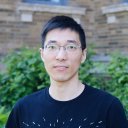
 Bin Yang
· 3 previous affiliations
- University of TorontoSince 2018
- PhD student · Since 2018
- Waabi2021–2022
- Researcher · 2021–2022
- Uber AI (United States)2017–2021
- Researcher · 2017–2021
11 other authors named Bin Yang: Bin Yang (Aalborg University · East China Normal University · 307 papers), Bin Yang (Wuhan University · 62 papers), Bin Yang (University of Stuttgart · 25 papers), Bin Yang (Alibaba Group (China) · 3 papers), Bin Yang (Central South University · 3 papers), and 6 more
Research Overview
Bin Yang focuses on computer vision and machine learning, with a primary emphasis on 3D object detection, multi-sensor fusion, and efficient neural network architectures for autonomous driving. His work addresses the computational challenges of processing high-dimensional spatial data, such as LiDAR point clouds and multi-camera streams, to enable real-time perception in robotic systems. By developing novel methods for feature integration and spatial representation, Yang has contributed to the evolution of end-to-end learnable frameworks that jointly reason about detection, tracking, and motion forecasting.
Research Trajectory
Yang’s early research, spanning 2015 to 2016, centered on 2D object detection and the integration of deep learning with traditional computer vision techniques. During this period, he explored methods to combine the representational power of Convolutional Neural Networks (CNNs) with the efficiency of ensemble methods like boosting forests. This work sought to bridge the gap between high-performance deep models and the flexibility of filtered channel features, aiming to create unified frameworks that could benefit from both low-level feature transfer and robust classification.
Starting in 2017, Yang’s focus shifted toward the spatial and temporal challenges inherent in autonomous driving. He participated in the development of large-scale urban datasets, such as the TorontoCity benchmark, which provided a foundation for seeing the world through multiple perspectives, including aerial and ground-level views. This period marked a transition from 2D image understanding to 3D perception. A significant portion of his work during this time involved optimizing 3D object detection from LiDAR data, specifically through the use of Bird’s Eye View (BEV) representations. This approach allowed for more efficient processing of point clouds compared to traditional 3D volumetric methods, balancing the need for high accuracy with the strict real-time constraints of self-driving vehicles.
Between 2018 and 2019, Yang expanded his research into multi-sensor fusion and multi-task learning. He developed architectures capable of fusing LiDAR and camera data at multiple scales, improving localization accuracy and robustness to sensor noise. His work also moved toward holistic perception systems that perform detection, tracking, and motion forecasting within a single unified network. By sharing computation across these tasks, these models reduced the latency and error propagation inherent in traditional cascaded pipelines.
In recent years, Yang has continued to explore efficiency in deep learning and the potential for unsupervised learning in 3D environments. He has participated in research aimed at reducing the computational cost of CNNs through sparse activation masks and has investigated methods for unsupervised object discovery. This latter direction seeks to mitigate the reliance on expensive manual labeling for 3D datasets by exploiting temporal consistency and self-supervision, allowing models to improve their detection capabilities without extensive human intervention.
Representative Work
In Convolutional Channel Features, Yang as first author proposed a unified framework (CCF) that integrates filtered channel features with CNNs. The method transfers low-level features from pre-trained CNN models to feed a boosting forest model. This approach was designed to address the high computational cost and limited flexibility of standard deep learning methods in certain visual problems. By combining the strengths of CNN representations and the efficiency of boosting forests, the work demonstrated improved performance across several computer vision benchmarks.
As first author of CRAFT Objects from Images, Yang introduced the Cascade Region-proposal-network And FasT-rcnn (CRAFT) framework. This research pushed the "divide and conquer" strategy in object detection by further decomposing the tasks of proposal generation and classification into sub-tasks. The method utilized a cascaded structure to refine object proposals and improve classification accuracy, addressing the limitations of the standard R-CNN framework and its variants in handling complex image understanding tasks.
In PIXOR: Real-Time 3D Object Detection From Point Clouds, Yang served as first author to address the problem of real-time 3D detection for autonomous driving. Recognizing that the high dimensionality of point clouds often leads to expensive computation, the paper proposed representing the scene from a Bird’s Eye View (BEV). PIXOR is a proposal-free, single-stage detector that outputs oriented 3D object estimates directly from pixel-wise neural network predictions. The architecture and optimization strategies were specifically designed to maintain high accuracy while meeting the speed requirements necessary for vehicle safety.
As second author of Deep Continuous Fusion for Multi-sensor 3D Object Detection, Yang contributed to a novel 3D object detector that exploits both LiDAR and camera data. The research introduced a continuous fusion layer that encodes both discrete-state image features and continuous geometric information. This end-to-end learnable architecture allows for the fusion of feature maps at different resolutions, leading to significant improvements in localization accuracy on benchmarks such as KITTI.
In Fast and Furious: Real Time End-to-End 3D Detection, Tracking and Motion Forecasting With a Single Convolutional Net, Yang as second author helped develop a deep neural network capable of joint reasoning across three critical tasks: detection, tracking, and motion forecasting. By performing 3D convolutions across space and time over a BEV representation, the model achieves high efficiency in terms of memory and computation. This holistic approach proved more robust to occlusions and sparse data at range compared to systems that treat these tasks independently.
In Multi-Task Multi-Sensor Fusion for 3D Object Detection, Yang again served as second author, proposing an architecture that integrates 2D and 3D object detection with ground estimation and depth completion. The research demonstrated that these related tasks are complementary, helping the network learn more robust representations by fusing information at various levels. The resulting system achieved state-of-the-art performance on multiple detection benchmarks while maintaining real-time inference speeds.
Beyond these primary contributions, Yang has participated in research regarding the efficiency of neural networks. As a third author on SBNet: Sparse Blocks Network for Fast Inference, he contributed to the development of a method that uses low-cost computation masks to reduce the overhead of convolution operators in high-resolution networks. He also participated in work on Towards Unsupervised Object Detection from LiDAR Point Clouds, which introduced the OYSTER method for discovering objects in a zero-shot manner by leveraging spatio-temporal refinement and self-supervision.
Profile updated
| Paper | Venue | Year |
|---|---|---|
| SBNet: Sparse Blocks Network for Fast InferenceGitHububer-research/ | CVPR | 2018 |
Loading new papers…
Other researchers whose papers cluster into the same research directions — a proxy for overlapping technical interests and shared intellectual neighborhoods.
See something wrong? Report a mistake