

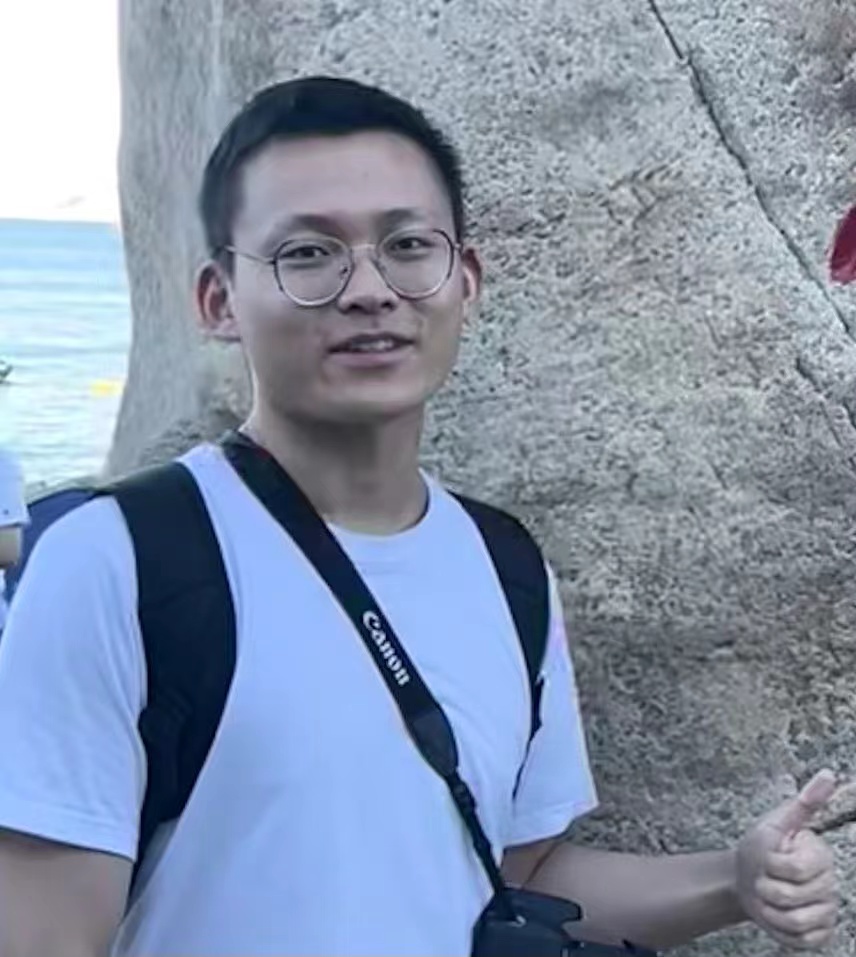
 Jiahao Ji
· 2 previous affiliations
- Meituan (China)Since 2025
- Researcher · Since 2025
- Beihang University2015–2025
- PhD student · 2021–2025
- MS student · 2019–2021
- Undergrad student · 2015–2019
Research Overview
Jiahao Ji focuses on spatio-temporal data mining, interpretable machine learning, and urban computing. His early work developed physics-guided neural networks and graph decomposition techniques for robust traffic forecasting and urban anomaly detection. Recently, his research has expanded to integrate large language models with spatio-temporal reasoning and advance neural solvers for partial differential equations.
Research Trajectory
Ji’s early research concentrated on improving the accuracy and interpretability of urban computing models, particularly for traffic flow prediction. He introduced STDEN: Towards Physics-Guided Neural Networks for Traffic Flow Prediction, which bridges rigid physics-based models and deep learning by treating traffic flow as a latent potential energy field governed by a continuity equation. This work contributed to the broader area of Continuous Time Dynamics for Graph Neural Networks. He further advanced urban forecasting with Multi-Factor Spatio-Temporal Prediction based on Graph Decomposition Learning, developing a framework that decomposes complex city graphs into specialized subgraphs to simplify entangled data and improve interpretability.
Addressing the vulnerability of predictive models to out-of-distribution challenges, Ji formalized causal graphs for spatio-temporal shifts in Self-Supervised Deconfounding Against Spatio-Temporal Shifts: Theory and Modeling. He subsequently tackled the problem of unseen external factors—such as sudden weather changes or accidents—in Seeing the Unseen: Learning Basis Confounder Representations for Robust Traffic Prediction (and its earlier preprint Seeing the Unseen: Learning Basis Confounder Representations for Robust Traffic Prediction). This self-supervised framework learns a flexible bank of basis vectors to represent hidden confounders, decoupling these influences from direct traffic patterns to maintain accuracy during major distribution shifts.
In parallel with his urban computing focus, Ji directed research into natural language processing challenges. He oversaw the development of Enhancing New Intent Discovery via Robust Neighbor-based Contrastive Learning, which proposed a framework to identify out-of-domain intents in dialogue systems. This work advanced the research direction of Adaptive Neighborhood Selection for Non-Uniform Data by utilizing diverse neighborhood sampling and boundary distance constraints to filter noisy training pairs.
By 2024, Ji expanded his methodological focus to financial time series and economic management. He investigated the domain of Modeling Non-Linear Dynamics in Financial Time Series through Research on Stock Price Prediction and Quantitative Stock Picking Strategy Based on Deep Learning. Drawing on work in Bidirectional Context for Time Series Forecasting and the field of Metaheuristic Optimization for Machine Learning Hyperparameters, this research combined bidirectional memory networks with attention mechanisms and automated hyperparameter tuning to tackle stock market volatility. He also examined the broader impact of data-driven strategies in Application of Big Data Statistical Analysis Methods in the Field of Economic Management, analyzing how statistical methods outperform traditional intuition in market trend prediction and internal operations.
In his most recent work, Ji has focused on scaling predictive architectures and integrating foundational models with specialized reasoning. To address the scalability limits of modern sensor networks, his research group developed HSTMixer: A Hierarchical MLP-Mixer for Large-Scale Traffic Forecasting. Bridging the gap between high-level reasoning and analytical precision, he designed A Modular Multitask Reasoning Framework Integrating Spatio-temporal Models and LLMs. This framework acts as an automated data scientist, translating natural language queries into executable programs for multi-task inference, thereby contributing to the research direction of Modular Decomposition for Auditable Reasoning Pipelines.
Ji has also contributed to foundational education and advanced neural solvers. He authored A Tutorial on Regression Analysis: From Linear Models to Deep Learning - Lecture Notes on Artificial Intelligence, providing a comprehensive roadmap that deconstructs model construction into functions, loss, and estimation. Additionally, he participated in the development of OrthoSolver: A Neural Proper Orthogonal Decomposition Solver For PDEs, a deep learning framework that reframes classical decomposition as a mutual information maximization problem to efficiently solve partial differential equations.
Current Directions
The most recent papers in the evidence indicate a dual focus on neuro-symbolic integration and advanced physical modeling. A primary theme is the synthesis of large language models with specialized spatio-temporal tools, aiming to create modular, auditable pipelines that can autonomously execute complex data science tasks like anomaly detection and forecasting. Concurrently, ongoing work investigates parameter-efficient neural operators for partial differential equations, moving beyond fixed linear basis modes to adaptively learn nonlinear representations for complex physical systems.
Profile updated
Loading new papers…
Other researchers whose papers cluster into the same research directions — a proxy for overlapping technical interests and shared intellectual neighborhoods.
See something wrong? Report a mistake