

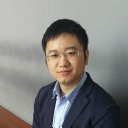
 Jianmin Ji
· 2 previous affiliations
- Associate Professor · Since 2012
- PhD student · 2005–2010
- Postdoc · 2010–2012
Research Overview
Jianmin Ji focuses on knowledge representation, robotic task planning, and perception systems for autonomous driving. His trajectory spans foundational work in answer set programming to modern applications of deep reinforcement learning and 3D scene reconstruction. Currently, he investigates neuro-symbolic reasoning and multimodal perception to improve the safety and adaptability of autonomous agents in complex environments.
Research Trajectory
Jianmin Ji’s early research concentrated on logic programming and the theoretical foundations of Answer Set Programming (ASP). His initial collaborative work explored the computational properties of ASP, specifically Computing Loops with at Most One External Support Rule. He subsequently advanced this domain by proposing alternative definitions for elementary loops, introducing "proper loops" to optimize SAT-based answer set computation in Elementary Loops Revisited. Expanding the theoretical tools available for logic programs, he generalized Lifschitz and Turner's splitting set theorem to allow programs to be divided by arbitrary sets of atoms in Splitting a Logic Program Revisited. He also formalized knowledge forgetting operators, contributing to the area of Logical Simplification through Redundancy and Strong Equivalence by identifying the precise conditions under which forgetting postulates can be satisfied in On Forgetting Postulates in Answer Set Programming.
Concurrently, he applied these formal reasoning frameworks to cognitive service robots. With collaborators, he integrated ASP and natural language processing into a layered architecture for the service robot Ke Jia, enabling spoken dialog and human-robot collaboration in Developing high-level cognitive functions for service robots. To handle novel user requests, he developed mechanisms for robots to autonomously acquire and utilize open-source knowledge provided in semi-structured natural language, as detailed in Handling Open Knowledge for Service Robots.
Moving into the 2020s, his focus expanded to incorporate deep learning techniques for complex decision-making and navigation. He guided research on deep reinforcement learning (DRL) for robot navigation in unknown environments, proposing an Adaptive Forward Simulation Time approach within a Semi-Markov Decision Process to overcome local minima in Reinforcement Learning for Robot Navigation with Adaptive ExecutionDuration (AED) in a Semi-Markov Model. This work naturally extended to dynamic environments, where his team developed map-based DRL methods for crowd-aware navigation among pedestrians employing diverse collision avoidance strategies in Crowd-Aware Robot Navigation for Pedestrians with Multiple Collision Avoidance Strategies via Map-based Deep Reinforcement Learning. In parallel, he explored the area of Hierarchical Inductive Biases for Sequence Modeling, introducing a distillation method that transfers structural patterns from a self-attention language model to improve sequence-to-sequence semantic parsing without relying on manually defined grammars in Transferring Knowledge from Structure-aware Self-attention Language Model to Sequence-to-Sequence Semantic Parsing.
Recently, his research has heavily emphasized autonomous driving and advanced robotic manipulation, bridging high-level reasoning with continuous control. Addressing the area of Temporal Consistency and Smoothness in Continuous Control, his group developed PathRL: An End-to-End Path Generation Method for Collision Avoidance via Deep Reinforcement Learning, a framework that generates smooth Bezier curve paths rather than relying on jittery low-level velocity commands. He also surveyed the landscape of multimodal 3D object detection, analyzing strategies for fusing LiDAR and camera data—work relevant to the broader area of Multimodal Fusion through Feature Level Concatenation in Multi-Modal 3D Object Detection in Autonomous Driving: A Survey.
Returning to his roots in logic programming, he spearheaded work in the area of Neuro-Symbolic Planning with Large Language Models by introducing CLMASP: Coupling Large Language Models with Answer Set Programming for Robotic Task Planning. This two-tiered framework couples the flexible reasoning of LLMs with the rigorous physical constraints of ASP to dramatically improve robotic task execution. In the autonomous driving domain, he led the creation of SDAC: A Multimodal Synthetic Dataset for Anomaly and Corner Case Detection in Autonomous Driving, designed to evaluate perception models against unexpected road hazards and advancing the area of Robust 3D Detection of Sparse and Small LiDAR Objects. He further explored the area of Hierarchical Decoupling of Discrete and Continuous Motion Planning by designing a framework that integrates high-level logical guidance with low-level trajectory planning for safe, personalizable autonomous driving in Safe and Personalizable Logical Guidance for Trajectory Planning of Autonomous Driving.
His most recent trajectory focuses on efficient 3D scene representations for robotics and infrastructure. He directed the development of MSGField: A Unified Scene Representation Integrating Motion, Semantics, and Geometry for Robotic Manipulation, utilizing 2D Gaussian Splatting to enable robots to interact with dynamic, non-rigid objects. To improve infrastructure perception, he contributed to the area of Automated Calibration of Distributed Sensor Networks with a framework for automatically registering roadside camera images to 3D point clouds using neighbor rendering and foundation models in Rendering-Enhanced Automatic Image-to-Point Cloud Registration for Roadside Scenes. Pushing the boundaries of the area of Pose-Free Sparse-View 3D Reconstruction, his team introduced SpatialSplat: Efficient Semantic 3D from Sparse Unposed Images, a feedforward architecture that reconstructs semantic 3D scenes while drastically reducing memory requirements through a selective Gaussian pruning mechanism.
Current Directions
The most recent papers in the evidence indicate a strong focus on efficient 3D scene understanding and the safety of autonomous systems. A major current direction involves advancing 3D Gaussian Splatting techniques to reconstruct dynamic, semantic environments from sparse or unposed images, drastically reducing memory overhead while preserving intricate geometric details for robotic manipulation. In parallel, he continues to investigate neuro-symbolic architectures that ground the broad reasoning capabilities of large language models in the strict logical constraints of answer set programming. Finally, his work addresses critical safety gaps in autonomous driving, particularly through the generation of synthetic datasets for anomaly detection and ongoing research in the direction of Integrating Vulnerable Road Users into Autonomous Driving Systems, ensuring that vehicles can reliably navigate unpredictable road hazards and complex pedestrian interactions.
Profile updated
Loading new papers…
Other researchers whose papers cluster into the same research directions — a proxy for overlapping technical interests and shared intellectual neighborhoods.
See something wrong? Report a mistake