

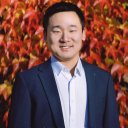
 Guangming Wang
· 3 previous affiliations
- University of CambridgeSince 2023
- Postdoc · Since 2023
- Shanghai Jiao Tong University2018–2023
- PhD student · 2018–2023
- Central South University2014–2018
- Undergrad student · 2014–2018
1 other author named Guangming Wang: Guangming Wang (1 paper)
Research Overview
Guangming Wang focuses on robust robot perception, 3D computer vision, and autonomous localization and mapping. His research trajectory spans from unsupervised depth estimation and point cloud processing to advanced neural implicit representations for dynamic environments. Currently, he investigates vision-language-action models and multi-modal sensor fusion to enable intelligent, safe, and efficient robotic interaction with the real world.
Research Trajectory
Wang’s early work concentrated on extracting reliable geometric and motion information from monocular video sequences without relying on dense ground-truth annotations. In 2019, he introduced Unsupervised Learning of Monocular Depth and Ego-Motion Using Multiple Masks, a framework that filters out problematic pixels caused by occlusions and camera movement. This work contributed significantly to the area of Geometric Occlusion Masking for Self-Supervised 3D Vision and advanced the research direction of Overcoming the Static Scene Assumption. He later expanded on these principles in Unsupervised Learning of Depth, Optical Flow and Pose With Occlusion From 3D Geometry (2022), which explicitly segmented occluded regions to jointly train depth, pose, and optical flow models, ensuring that reconstructed images remained valid even in non-rigid or occluded areas.
Parallel to his work in monocular vision, Wang developed highly efficient architectures for processing raw 3D point clouds, particularly for LiDAR odometry and scene flow. He proposed PWCLO-Net: Deep LiDAR Odometry in 3D Point Clouds Using Hierarchical Embedding Mask Optimization (2021), which utilized a Pyramid, Warping, and Cost volume (PWC) structure to hierarchically refine pose estimates in a coarse-to-fine manner. Building on the need for computational efficiency, he subsequently developed Efficient 3D Deep LiDAR Odometry (2022), which introduced a projection-aware representation to organize raw point clouds into an ordered format, aligning with research in the broader field of Range Image Projection for 3D Deep Learning. To capture the 3D motion of dynamic environments, he also designed Hierarchical Attention Learning of Scene Flow in 3D Point Clouds (2021), utilizing a double-attention neural network to learn point feature correlations across adjacent frames.
By 2022, Wang’s research increasingly emphasized the integration of multiple sensor modalities and the extraction of semantic information from unstructured data. He addressed the limitations of traditional 3D convolutions with Spherical Interpolated Convolutional Network With Distance-Feature Density for 3-D Semantic Segmentation of Point Clouds, a method that improved feature extraction robustness for semantic segmentation. To bridge the gap between different sensor types, he developed FusionNet: Coarse-to-Fine Extrinsic Calibration Network of LiDAR and Camera with Hierarchical Point-pixel Fusion (2022), an end-to-end solution for online decalibration detection and correction. These efforts contributed to the overarching research direction of Unifying Camera and LiDAR for Robust 3D Perception.
In 2023, Wang began exploring neural implicit representations and robust geometric optimization. He introduced SC-NeRF: Self-Correcting Neural Radiance Field with Sparse Views, a framework that enabled high-quality novel view synthesis in complex outdoor environments from as few as three images by utilizing multi-head attention for geometry and appearance correction. That same year, he reimagined classic robust estimation techniques in RLSAC: Reinforcement Learning enhanced Sample Consensus for End-to-End Robust Estimation, framing the RANSAC sampling process as a reinforcement learning problem to navigate extremely noisy data with a state-aware agent.
Wang’s recent trajectory has heavily focused on the intersection of Neural Radiance Fields (NeRFs), SLAM, and robotic control. After co-authoring a comprehensive overview, NeRF in Robotics: A Survey (2024), he developed sophisticated SLAM systems designed for complex real-world conditions. He proposed DVN-SLAM: Dynamic Visual Neural SLAM Based on Local-Global Encoding (2024), which fused continuous global encodings with discrete local feature grids to maintain high-fidelity tracking in high-dynamic scenes, directly addressing the challenge of Mitigating Dynamic Object Interference in Visual SLAM. He further expanded on this with SNI-SLAM: Semantic Neural Implicit SLAM (2024), which intelligently fused semantic, geometric, and appearance features for robust indoor reconstruction. Concurrently, he advanced 3D motion estimation by applying diffusion probabilistic models in DifFlow3D: Toward Robust Uncertainty-Aware Scene Flow Estimation with Iterative Diffusion-Based Refinement (2024), achieving millimeter-level accuracy by reframing flow refinement as a conditional denoising process.
Most recently, Wang has extended his perception and mapping expertise into the domain of robotic action and foundation models. In 2024, he explored deep reinforcement learning for manipulation in Learning of Long-Horizon Sparse-Reward Robotic Manipulator Tasks With Base Controllers, improving sample efficiency by integrating pre-existing controllers. This work aligns with the broader research area of Zero-Shot Sim-to-Real Transfer for Robotic Control. In 2025, his work continued to push the boundaries of self-supervised learning and multi-modal integration with Unsupervised Learning of 3D Scene Flow With LiDAR Odometry Assistance and End-to-End 2D-3D Registration Between Image and LiDAR Point Cloud for Vehicle Localization, which introduced a novel 2D-3D cost volume module for intrinsic-independent feature association. He also addressed the challenge of catastrophic forgetting in robotic foundation models with Continually Evolving Skill Knowledge in Vision Language Action Model (2025), utilizing a knowledge-guided Mixture-of-Experts architecture to sequentially learn robotic skills.
Current Directions
Wang’s most recent research focuses on bridging the gap between high-fidelity 3D perception and actionable robotic intelligence. A primary direction involves the development of Vision-Language-Action (VLA) models capable of continual learning. By employing self-evolving knowledge spaces and dynamic routing architectures, this work aims to allow robots to acquire new skills sequentially without degrading their performance on previously learned tasks.
Additionally, he continues to advance multi-modal sensor fusion for autonomous navigation. Recent projects investigate end-to-end 2D-3D registration techniques that directly associate camera images with LiDAR point clouds, bypassing the need for camera intrinsics during feature matching to improve vehicle localization in complex environments. He is also exploring novel self-supervised paradigms for 3D scene flow estimation, utilizing LiDAR odometry assistance to overcome the traditional reliance on dense, point-level motion annotations in real-world driving scenarios.
Profile updated
Loading new papers…
Other researchers whose papers cluster into the same research directions — a proxy for overlapping technical interests and shared intellectual neighborhoods.
See something wrong? Report a mistake