

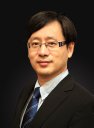
 Hesheng Wang
· 2 previous affiliations
- Shanghai Jiao Tong UniversitySince 2009
- Full Professor · Since 2009
- Chinese University of Hong Kong2004–2007
- PhD student · 2004–2007
Research Overview
Hesheng Wang focuses on visual servoing, robotic control systems, and computer vision for autonomous navigation. His early research established methods for adaptive image-based trajectory tracking using uncalibrated cameras. More recently, his work has expanded into robust 3D perception, simultaneous localization and mapping (SLAM), and zero-shot learning for complex embodied AI and multi-agent systems.
Research Trajectory
Hesheng Wang’s early research concentrated on the precise control of robotic manipulators and mobile platforms using visual feedback, particularly in environments where camera parameters are unknown. He developed adaptive algorithms for mapping image errors to joint space, as detailed in Dynamic Visual Tracking for Manipulators Using an Uncalibrated Fixed Camera. This approach was subsequently extended to eye-in-hand camera configurations utilizing both point and line features in Adaptive Visual Servoing Using Point and Line Features With an Uncalibrated Eye-in-Hand Camera. His work in control systems also adapted to novel robotic morphologies, addressing the complex kinematic modeling required for highly flexible systems in Visual servo control of cable-driven soft robotic manipulator. Applying these visual servoing principles to mobile robotics, his research enabled efficient path following from general camera viewpoints in Adaptive Image-Based Trajectory Tracking Control of Wheeled Mobile Robots With an Uncalibrated Fixed Camera.
As data-driven computer vision advanced, Wang’s focus expanded to include 3D point cloud processing and spatial perception. He contributed to the extraction of generalizable global descriptors for large-scale environments in LPD-Net: 3D Point Cloud Learning for Large-Scale Place Recognition and Environment Analysis. He also collaborated on hierarchical coarse-to-fine pose estimation techniques for motion tracking in PWCLO-Net: Deep LiDAR Odometry in 3D Point Clouds Using Hierarchical Embedding Mask Optimization. To systematically evaluate the robustness of visual perception under varying environmental conditions, his group introduced a comprehensive benchmark in SeasonDepth: Cross-Season Monocular Depth Prediction Dataset and Benchmark under Multiple Environments. Further bridging 2D and 3D modalities, his team explored converting stereo imagery into dense point clouds to estimate object motion in 3D Scene Flow Estimation on Pseudo-LiDAR: Bridging the Gap on Estimating Point Motion. Advancing the research direction of Range Image Projection for 3D Deep Learning, his lab developed FFPA-Net: Efficient Feature Fusion with Projection Awareness for 3D Object Detection, a framework designed to accelerate sensor fusion between LiDAR and cameras without sacrificing detection accuracy.
In recent years, Wang has made significant contributions to dense visual mapping and SLAM. He introduced a memory-efficient system utilizing learnable masking and geometry codebooks in Compact 3D Gaussian Splatting For Dense Visual SLAM, which aligns with the broader area of Mitigating Dynamic Object Interference in Visual SLAM. He also participated in the development of SNI-SLAM: Semantic Neural Implicit SLAM, a system that leverages the area of Fusing 2D Semantic Features with 3D Geometric Representations to construct robust indoor reconstructions. To address data loss during spatial projection, his team proposed a novel sparse convolution approach in Spherical Frustum Sparse Convolution Network for LiDAR Point Cloud Semantic Segmentation, contributing to the area of Unifying Camera and LiDAR for Robust 3D Perception. Returning to LiDAR-based mapping, he integrated semantic object relationships to improve relocalization and map consistency in Leveraging Semantic Graphs for Efficient and Robust LiDAR SLAM.
Wang’s most recent trajectory incorporates foundation models, embodied AI, and temporal video analysis. He explored the integration of multimodal large language models for perception tasks in MovSAM: A Single-image Moving Object Segmentation Framework Based on Deep Thinking, achieving segmentation without relying on temporal priors. In the domain of multi-agent reinforcement learning, his group addressed the "Noisy-TV" problem of curiosity-driven exploration in Wonder Wins Ways: Curiosity-Driven Exploration through Multi-Agent Contextual Calibration. For visual navigation, they formulated a learning-to-optimize framework that translates noisy neural predictions into statistically grounded uncertainty sets in Seeing through Uncertainty: Robust Task-Oriented Optimization in Visual Navigation. His work on video understanding includes Zero-Shot Temporal Interaction Localization for Egocentric Videos, which uses 3D hand velocity and closed-loop feedback for precise action grounding. Finally, he addressed long-range temporal modeling in ARFlow: Auto-regressive Optical Flow Estimation for Arbitrary-Length Videos via Progressive Next-Frame Forecasting, enabling constant-memory processing for continuous video streams.
Continuing these advances in temporal modeling, Wang's group developed MemReg: Streaming Outdoor LiDAR Point Cloud Registration with Hybrid Memory Buffers, leveraging explicit pose and implicit feature buffers for continuous multi-frame point cloud alignment. In dynamic 3D motion tracking, Wang contributed to MESSENGER: Memory-Enhanced Sequential Scene Flow Estimation via Autoregressive Next-Frame Forecasting, introducing memory-buffered history retrieval for long-horizon flow forecasting. In embodied manipulation, Wang's lab introduced GIVLA: Deep Geometry Internalization for A Lightweight VLA via Geometry Instruction and Gradient-Informed Training, internalizing geometric priors to achieve parameter-efficient spatial precision in vision-language-action architectures, as well as Continually Evolving Skill Knowledge in Vision Language Action Model, which prevents parameter explosion in continual imitation learning through posterior-guided routing over a shared knowledge space. In generative visual modeling, Wang also participated in Breaking the Static: Dynamic Text Conditioning for Diverse Image Generation, improving diffusion sampling diversity by dynamically interpolating prompt semantics across the denoising process.
Current Directions
Wang’s current research focuses on the intersection of robust decision-making, zero-shot perception, and efficient temporal modeling for autonomous systems. A major theme in his recent work is bridging the gap between noisy, high-dimensional sensory inputs and reliable robotic action, particularly through frameworks that quantify uncertainty and enforce hard constraints during visual navigation. This naturally extends into the research direction of Zero-Shot Sim-to-Real Transfer for Robotic Control, as his lab develops methods that generalize to unseen environments without requiring extensive fine-tuning.
Additionally, his group is actively investigating the integration of large vision-language models into traditional robotic perception pipelines. By leveraging "deep thinking" mechanisms and semantic graphs, they are working to resolve ambiguities in static images and complex 3D environments. In reinforcement learning, his team is exploring the area of Scaling Robotic Learning Beyond Expert Demonstrations, focusing on multi-agent systems and curiosity-driven exploration strategies that remain robust against environmental noise. Finally, his ongoing work in optical flow and egocentric video analysis emphasizes auto-regressive and streaming memory architectures, aiming to process arbitrary-length temporal data with minimal computational overhead.
Profile updated
Loading new papers…
Other researchers whose papers cluster into the same research directions — a proxy for overlapping technical interests and shared intellectual neighborhoods.
See something wrong? Report a mistake