

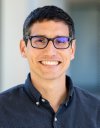
 Javier Duarte
· 4 previous affiliations
- University of California San DiegoSince 2019
- Associate Professor · Since 2023
- Assistant Professor · 2019–2023
- Lederman Fellow · 2016–2019
- California Institute of Technology2011–2016
- PhD student · 2011–2016
- Doctor of Philosophy - PhD, Physics · 2011–2014
- Technical Instructor · 2010–2011
- Undergrad student · 2006–2010
Research Overview
Javier Duarte focuses on artificial intelligence for high-energy particle collisions, hardware-accelerated machine learning, and geometric deep learning. His work spans the development of ultra-low-latency neural networks for real-time data filtering at the Large Hadron Collider to the reconstruction of complex particle interactions. Currently, he investigates scalable transformer architectures and automated hardware synthesis to deploy efficient deep learning models directly into extreme-throughput experimental environments.
Research Trajectory
Javier Duarte’s research arc is defined by the intersection of high-energy particle physics and advanced machine learning, with a particular emphasis on deploying sophisticated algorithms in extreme, resource-constrained hardware environments. His early work involved foundational detector hardware, such as his contributions to a Precision timing calorimeter for high energy physics in 2015. However, as particle physics experiments began generating unprecedented volumes of data, his focus shifted toward computational bottlenecks. In 2018, he and his collaborators introduced hls4ml in Fast inference of deep neural networks in FPGAs for particle physics. This open-source compiler automatically translates deep learning models from standard software frameworks into digital circuit designs for Field-Programmable Gate Arrays (FPGAs), achieving sub-microsecond inference latencies and significantly advancing the research direction of Automated Hardware Synthesis from High Level Specifications.
Building on this hardware-acceleration paradigm, his research expanded to explore how these technologies could be integrated into broader computing infrastructures. In 2019, he explored FPGA-Accelerated Machine Learning Inference as a Service for Particle Physics Computing, demonstrating how FPGAs could be utilized as a cloud or edge service to accelerate tasks like top quark identification without disrupting existing experimental workflows. Simultaneously, Duarte began developing more expressive neural network architectures to model the complex physics of particle collisions. In 2020, he applied graph neural networks (GNNs) to particle physics in Interaction networks for the identification of boosted <mml:math xmlns:mml="http://www.w3.org/1998/Math/MathML" display="inline"><mml:mi>H</mml:mi><mml:mo stretchy="false">→</mml:mo><mml:mi>b</mml:mi><mml:mover accent="true"><mml:mi>b</mml:mi><mml:mo stretchy="false">¯</mml:mo></mml:mover></mml:math> decays. By modeling the relational interactions between particles and secondary vertices, this approach drastically improved identification performance, contributing to the broader area of Extracting Rare Particle Signals from Large Scale Collider Data. Bridging his work in GNNs and hardware, he also participated in developing Accelerated Charged Particle Tracking with Graph Neural Networks on FPGAs, leveraging the hls4ml toolset to bring complex tracking algorithms down to sub-microsecond latencies.
By 2022, this synthesis of fast hardware and deep learning enabled entirely new experimental capabilities. Duarte contributed to the deployment of Autoencoders on field-programmable gate arrays for real-time, unsupervised new physics detection at 40 MHz at the Large Hadron Collider. This unsupervised approach allowed the LHC to flag potentially groundbreaking anomalies in real time, a major milestone in the field of Real-Time Hardware Triggers for Extreme-Throughput Data Streams. The growing momentum of these techniques was captured in a comprehensive 2022 review, Applications and Techniques for Fast Machine Learning in Science, which surveyed the landscape of real-time experimental data processing and highlighted ongoing efforts in Cross Layer Co Design for Deep Learning Accelerators and Compressing Deep Neural Networks for Edge Deployment.
In recent years, Duarte’s trajectory has increasingly focused on the automated codesign of neural networks and the adaptation of transformer architectures for particle physics. In 2024, his group presented an End-to-end codesign of Hessian-aware quantized neural networks for FPGAs, integrating advanced quantization techniques with the hls4ml workflow to make efficient hardware implementation accessible to non-experts. On the modeling front, he explored self-supervised learning in Large-Scale Pretraining and Finetuning for Efficient Jet Classification in Particle Physics, showing how models pretrained on massive unlabeled jet datasets achieve faster convergence and better background rejection. His work on event reconstruction also matured with Improved particle-flow event reconstruction with scalable neural networks for current and future particle detectors, which introduced a portable GNN framework that scales linearly and operates across diverse hardware architectures, touching upon themes relevant to the Data-Driven Discovery of Adaptive Graph Topologies. Additionally, his group began dissecting the internal mechanics of these complex models, as seen in Interpreting Transformers for Jet Tagging, which revealed the surprisingly sparse, binary attention patterns learned by the Particle Transformer (ParT).
Moving into 2025, the hls4ml ecosystem reached a new level of maturity, detailed in hls4ml: A Flexible, Open-Source Platform for Deep Learning Acceleration on Reconfigurable Hardware. To further streamline the deployment of models to this hardware, Duarte’s lab introduced automated pipelines such as Neural architecture codesign for fast physics applications and the Surrogate Neural Architecture Codesign Package (SNAC-Pack). These frameworks replace slow hardware synthesis with fast surrogate models, allowing researchers to optimize for latency, resource usage, and accuracy simultaneously. Concurrently, his team developed highly specialized architectures for complex physics tasks. Reconstruction of boosted and resolved multi-Higgs-boson events with symmetry-preserving attention networks introduced SPA-Net to solve the jet assignment problem in multi-Higgs events. To address the quadratic complexity of transformers in high-throughput environments, they proposed the Spatially Aware Linear Transformer (SAL-T) for Particle Jet Tagging, which maintains linear attention by partitioning particles based on kinematic features. Finally, continuing their interpretability research, Why Is Attention Sparse In Particle Transformer? demonstrated how physics-inspired interaction matrices act as critical tie-breakers during inference, enabling models to recognize physical jet substructures effectively.
Current Directions
Recent work in the evidence highlights a dual focus on hardware-aware neural architecture search and the design of physics-informed transformer models. A major current direction involves automating the codesign of machine learning models for edge deployment. By utilizing surrogate models to predict hardware metrics like latency and resource consumption, recent frameworks allow for the rapid discovery of neural architectures that are inherently optimized for the strict constraints of FPGA environments.
Simultaneously, the most recent papers investigate how to adapt the powerful but computationally expensive transformer architecture for the extreme data rates of particle colliders. This includes developing spatially aware linear transformers that reduce computational complexity by focusing attention on regions of physical significance, as well as symmetry-preserving networks designed to disentangle complex multi-particle decay topologies. Alongside architecture design, there is an ongoing effort to interpret the internal attention mechanisms of these models, ensuring that the representations learned by deep neural networks align with underlying physical principles.
Profile updated
| Paper | Venue | Year |
|---|---|---|
| RINO: Renormalization Group Invariance with No LabelsGitHubzichunhao/ | arXiv | 2025 |
Loading new papers…
Other researchers whose papers cluster into the same research directions — a proxy for overlapping technical interests and shared intellectual neighborhoods.
See something wrong? Report a mistake