

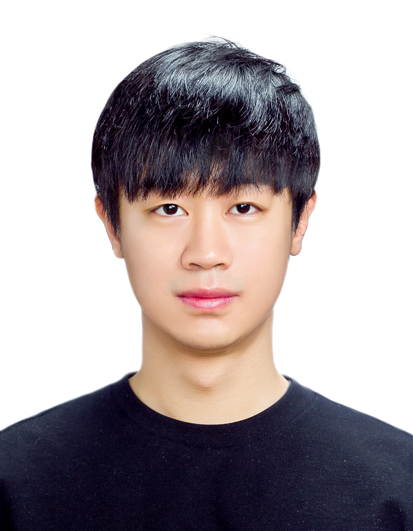
 Sehoon Kim
6 previous affiliations
- xAI (United States)2025–2026
- Researcher · 2025–2026
- Narada2022–2025
- Machine Learning Engineer · 2022–2025
- University of California, Berkeley2020–2024
- Doctor of Philosophy - PhD, Computer Science · 2020–2024
- PhD student · 2020–2024
- Research Internship · 2024
- Seoul National University2015–2020
- Undergrad student · 2015–2020
Research Overview
Sehoon Kim focuses on artificial intelligence systems, efficient model inference, and the optimization of large language models. His work spans the full stack of machine learning efficiency, from low-bit quantization and structural pruning to parallel execution frameworks for autonomous agents. Recently, his research addresses inference-time scaling and context management to accelerate advanced reasoning capabilities.
Research Trajectory
Sehoon Kim’s early research explored the intersection of traditional machine learning and deep neural networks. In 2019, he collaborated on Making Classical Machine Learning Pipelines Differentiable: A Neural Translation Approach, which introduced a framework to translate non-differentiable components like decision trees into neural modules. This allowed entire pipelines to be optimized jointly via backpropagation, contributing to the broader research direction of Differentiable Decision Trees.
During his doctoral studies at UC Berkeley, his focus shifted toward the efficiency of Transformer architectures. In 2021, he developed I-BERT: Integer-only BERT Quantization, a novel quantization scheme that approximated complex non-linear functions with lightweight polynomials, enabling models like BERT to perform inference using entirely integer arithmetic. He subsequently expanded this efficiency mandate to speech and vision domains. With Squeezeformer: An Efficient Transformer for Automatic Speech Recognition (2022), he systematically re-examined the macro- and micro-architecture of the Conformer model, proposing a Temporal U-Net structure that reduced the cost of multi-head attention for long-form audio. Concurrently, he investigated structural pruning techniques to remove redundant network components. This work included Hessian-Aware Pruning and Optimal Neural Implant, which leveraged second-order sensitivity to identify less important components while using low-rank approximations to mitigate accuracy degradation, and Learned Token Pruning for Transformers. Together, these projects advanced the areas of Why Weight Magnitude Fails as a Pruning Heuristic and Hierarchical Token Pruning for Efficient Transformers.
By 2023, his research increasingly emphasized hardware-software co-design. He synthesized these principles in Full Stack Optimization of Transformer Inference: a Survey, detailing how architectural adjustments, scheduling, and hardware design must be aligned to overcome the limitations of traditional accelerators. Applying these insights to generative models, he introduced Speculative Decoding with Big Little Decoder. This plug-and-play framework paired a fast, small model for standard token generation with a larger model that verified outputs in parallel, significantly reducing inference latency and driving forward the area of The Memory Bandwidth Bottleneck in Transformer Decoding.
In 2024, as he transitioned to a role as a Member of Technical Staff at xAI, his publication record reflected a massive expansion into the systems challenges of deploying Large Language Models (LLMs) at scale. He continued to address fundamental hardware bottlenecks, publishing high-level perspectives on the growing compute-memory gap in AI and Memory Wall and Full Stack Approach for Efficient Deep Learning Inference. To tackle these bottlenecks practically, he developed SqueezeLLM: Dense-and-Sparse Quantization, a post-training framework that achieved near-lossless 3-bit compression by isolating sensitive weights.
Simultaneously, he began addressing the orchestration of LLM-based agents. He introduced An LLM Compiler for Parallel Function Calling, which treated tool use as a compilation problem to execute function calls in parallel rather than sequentially. This work significantly accelerated agentic workflows, contributing to the research directions of Parallel Execution for LLM Agents and Directed Acyclic Graph Planning for Autonomous Agents. He further improved agent capabilities with Efficient and Scalable Estimation of Tool Representations in Vector Space, shifting from description-based to usage-driven embeddings to help LLMs retrieve the correct tools from massive libraries.
His 2024 work also explored the data and serving infrastructure surrounding LLMs. He proposed Learned Best-Effort LLM Serving, utilizing deep reinforcement learning to dynamically route user requests between models of varying sizes based on system load. To improve model performance in low-data regimes, he developed LLM2LLM: Boosting LLMs with Novel Iterative Data Enhancement, a targeted augmentation framework where a teacher model generates synthetic examples specifically addressing a student model's errors. Additionally, he conducted a systematic evaluation of context management in Characterizing Prompt Compression Methods for Long Context Inference, demonstrating that simple extractive compression often outperforms complex token-pruning techniques.
Moving into 2025, his research has focused on optimizing the memory and compute costs of advanced reasoning. In Squeezed Attention: Accelerating Long Context Length LLM Inference, he addressed the massive memory bandwidth required for long, fixed contexts by clustering the Key-Value (KV) cache offline, allowing the model to dynamically retrieve only the most relevant tokens. He also introduced ETS: Efficient Tree Search for Inference-Time Scaling, an algorithm that uses integer linear programming to prune redundant reasoning paths. This approach enables LLMs to "think longer" to solve complex problems while strictly managing the KV cache footprint and maintaining high throughput.
Current Directions
The most recent papers in the evidence indicate a strong focus on inference-time scaling and the efficient management of massive context windows. A primary current direction involves optimizing search-based reasoning algorithms—allowing models to explore multiple reasoning paths for complex problem-solving without overwhelming memory bandwidth or KV cache budgets. Alongside this, recent work investigates semantic clustering and dynamic retrieval mechanisms within the attention layer itself, aiming to drastically reduce the computational overhead of processing long documents and persistent agent contexts. Finally, the development of parallel execution frameworks and usage-driven vector representations suggests an ongoing interest in scaling the speed and reliability of autonomous LLM agents interacting with external tools.
Profile updated
Loading new papers…
Other researchers whose papers cluster into the same research directions — a proxy for overlapping technical interests and shared intellectual neighborhoods.
See something wrong? Report a mistake