

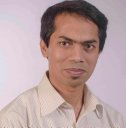
 Firoj Alam
· 5 previous affiliations
- Qatar Computing Research InstituteSince 2016
- Senior Scientist · Since 2024
- Current
- Scientist · 2019–2024
- Postdoctoral Researcher · 2018–2019
- Postdoc · 2016–2019
- University of Trento2010–2016
- PhD student · 2011–2016
- MS, Human Language Technology and Interface · 2010–2011
- CRBLP2010–2012
- Research Fellow · 2010–2012
- Research Intern · 2011
- BRAC University2007–2010
- Research Programmer · 2007–2010
Research Overview
Firoj Alam focuses on computational approaches to crisis informatics, disinformation detection, and the interpretability of deep language models. His trajectory spans from semi-supervised learning for disaster response to comprehensive frameworks for analyzing the global infodemic across multiple modalities and languages. Most recently, his work investigates the latent representational spaces of pre-trained models and the automated detection of political bias and propaganda.
Research Trajectory
Firoj Alam’s early research concentrated on crisis informatics, specifically addressing the challenge of extracting actionable information from social media streams during disasters. He developed methods to classify crisis-related data when labeled examples are scarce, introducing Graph Based Semi-Supervised Learning with Convolution Neural Networks to Classify Crisis Related Tweets. This work utilized graph-based semi-supervised learning to improve classification in data-scarce regimes during emergent events. Recognizing the fragmented nature of disaster datasets, he subsequently led the development of CrisisBench: Benchmarking Crisis-related Social Media Datasets for Humanitarian Information Processing. By consolidating eight annotated data sources and providing hundreds of thousands of categorized tweets, this work established standardized benchmarks to help humanitarian organizations plan rapid responses.
With the onset of the COVID-19 pandemic, his focus expanded to address the massive surge in online misinformation. He provided a comprehensive analysis of this phenomenon in Fighting the COVID-19 Infodemic in Social Media: A Holistic Perspective and a Call to Arms, detailing how medical and political disinformation blended to create a global infodemic involving fake cures, conspiracy theories, and mistrust in authorities. He further explored this ecosystem by modeling the distinct needs of various stakeholders—including journalists, fact-checkers, and policymakers—in Fighting the COVID-19 Infodemic: Modeling the Perspective of Journalists, Fact-Checkers, Social Media Platforms, Policy Makers, and the Society.
Continuing this trajectory, he oversaw broader analyses of the disinformation landscape, such as the overview presented in Fact-Checking, Fake News, Propaganda, Media Bias, and the COVID-19 Infodemic. His research also extended into multimodal analysis, surveying techniques to identify deceptive content across text, images, and video in A Survey on Multimodal Disinformation Detection, a study that intersects with the broader research direction of Temporal Signatures of Information Cascades. Additionally, he addressed multilingual challenges by organizing the Overview of the WANLP 2022 Shared Task on Propaganda Detection in Arabic. This effort contributed to the research area of Detecting Propaganda through Rhetorical and Discourse Structures and advanced work in the direction of The Performance Advantage of Localized Language Pretraining.
In parallel with his work on disinformation, Alam has extensively investigated the interpretability of deep neural networks, focusing on the inner mechanics of pre-trained language models. He participated in research on the unsupervised extraction of model knowledge in Discovering Latent Concepts Learned in BERT, which analyzed how novel concepts are encoded within transformer architectures rather than relying solely on pre-defined linguistic knowledge. Building on these insights, he introduced ConceptX: A Framework for Latent Concept Analysis, a human-in-the-loop system designed to interpret and annotate the latent representational spaces of pre-trained models using traditional linguistic ontologies.
His investigations into model representations also include examining how these spaces evolve during training. He directed research on this topic in On the Transformation of Latent Space in Fine-Tuned NLP Models. Furthermore, he collaborated on evaluating methods to refine these representations in Effect of Post-processing on Contextualized Word Representations, a study that aligns with the research areas of Restoring Isotropy in Geometric Embedding Spaces and The Geometry of Embedding Anisotropy.
Current Directions
The most recent papers in the evidence indicate an ongoing focus on the rigorous evaluation of automated fact-checking and bias detection systems. Through collaborative benchmarking efforts like The CLEF-2023 CheckThat! Lab: Checkworthiness, Subjectivity, Political Bias, Factuality, and Authority, recent work investigates the development of standardized tasks for identifying political bias, assessing the factuality of claims, and determining the authority of sources across multiple languages. This suggests a continued commitment to building robust, multilingual tools that assist journalists and platforms in mitigating the spread of deceptive online content while advancing the interpretability of the models that power them.
Profile updated
Loading new papers…
Other researchers whose papers cluster into the same research directions — a proxy for overlapping technical interests and shared intellectual neighborhoods.
See something wrong? Report a mistake