

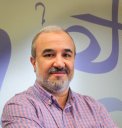
 Tamer Elsayed
· 5 previous affiliations
- Qatar UniversitySince 2012
- Full Professor · Since 2024
- Associate Professor · 2018–2024
- Assistant Professor · 2012–2018
- Microsoft (United States)2011–2012
- Researcher · 2011–2012
- Post-Doctoral Fellow · 2010–2011
- University of Maryland, College Park2002–2010
- Post-Doctoral Researcher · 2009–2010
- Graduate Research Assistant · 2004–2009
- Ph.D., Computer Science · 2002–2005
- Graduate Teaching Assistant · 2002–2004
- Software Engineer Intern · 2007
Research Overview
Tamer Elsayed focuses on information retrieval, automated fact verification, and natural language processing, particularly in multilingual and social media contexts. His trajectory spans early work in cross-lingual text mining to a sustained leadership role in developing evaluation frameworks for computational fact-checking. Most recently, his research addresses complex verification pipelines, including check-worthiness estimation, subjectivity analysis, and the detection of previously fact-checked claims across diverse languages.
Research Trajectory
Elsayed’s early research focused on foundational problems in information retrieval and text mining, with a particular emphasis on cross-lingual applications and real-time social media search. In 2011, he contributed as second author to No free lunch: brute force vs. locality-sensitive hashing for cross-lingual pairwise similarity, which explored techniques for extracting similar document pairs across different languages. By leveraging cross-language information retrieval (CLIR) and locality-sensitive hashing (LSH), this work demonstrated the necessity of operating at lower similarity thresholds in multilingual contexts compared to monolingual tasks. He later served as senior author on QweetFinder: Real-Time Finding and Filtering of Question Tweets (2017), developing a web-based search engine designed to continuously index and retrieve answer-seeking posts from live Twitter streams.
Around 2018, Elsayed’s focus shifted decisively toward the computational verification of information, coinciding with the rise of global misinformation. He became a core organizer of the CLEF CheckThat! Lab, an evaluation campaign that has significantly shaped the research direction of Decomposing Fact Verification into Retrieval and Inference Stages. Rather than treating fact-checking as a single classification task, this work breaks the problem down into sequential, evaluable steps. Elsayed took a leading role as first author on the Overview of the CLEF-2019 CheckThat! Lab: Automatic Identification and Verification of Claims. This iteration of the lab formalized tasks in both English and Arabic, challenging systems to first predict which claims in political debates warranted fact-checking, and subsequently to rank, classify, and extract useful passages from web pages to predict a claim's factuality.
During this period, Elsayed also participated in research on the methodological aspects of data annotation, a critical component of training retrieval and verification systems. He was a co-author on Your Behavior Signals Your Reliability: Modeling Crowd Behavioral Traces to Ensure Quality Relevance Annotations (2018), which investigated how the behavioral traces of crowdsourced workers could be modeled to predict label correctness without relying solely on traditional peer-agreement methods.
As the CheckThat! Lab evolved, Elsayed continued to help steer its expansion into new domains and languages. He was second author on the Overview of CheckThat! 2020: Automatic Identification and Verification of Claims in Social Media, which broadened the pipeline to address social media content directly. This 2020 edition introduced tasks specifically aligned with the broader area of Detecting Previously Fact-Checked Claims, reflecting a growing recognition in the field that many viral rumors are recycled and can be debunked by matching them against existing fact-check databases.
Current Directions
The most recent papers in the evidence indicate Elsayed’s continued involvement in the CLEF CheckThat! Lab, participating as a co-organizer as the initiative scales in both linguistic breadth and task complexity. Recent iterations of the lab (2023–2024) have expanded to support up to fifteen languages, including code-mixed datasets.
Beyond the foundational pipeline of check-worthiness and evidence retrieval, recent work investigates more nuanced dimensions of online information. This includes evaluating the subjectivity of news articles, detecting political bias, and analyzing the authority of news sources. The most recent evaluation frameworks also introduce challenges related to persuasion techniques, the roles of different actors in spreading claims, and the adversarial robustness of verification models. Through these collaborative benchmarking efforts, Elsayed continues to contribute to the infrastructure that allows the natural language processing community to measure and improve automated fact-checking systems.
Profile updated
Loading new papers…
Other researchers whose papers cluster into the same research directions — a proxy for overlapping technical interests and shared intellectual neighborhoods.
See something wrong? Report a mistake