

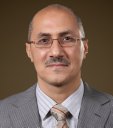
 Hamdy Mubarak
· 1 previous affiliation
- Current
- Researcher · 2014–2025
Research Overview
Hamdy Mubarak focuses on natural language processing for Arabic, addressing the unique morphological complexities and dialectal variations of the language. His trajectory spans foundational tools for segmentation and diacritization, community question answering, and the evaluation of multilingual models on noisy social media data. Recently, his work investigates the benchmarking and fact-checking of large language models, alongside the development of Arabic-centric multimodal generative AI platforms.
Research Trajectory
Mubarak’s early research addressed core challenges in processing regional variations of Arabic. In 2014, he demonstrated the limitations of standard approaches to dialect identification. The paper Verifiably Effective Arabic Dialect Identification showed that simple unigram models fail to generalize across datasets because they tend to overfit to specific topics rather than capturing true linguistic differences. The work established that robust dialect detection requires accounting for distinct lexical, morphological, and phonological phenomena, which significantly improved classification accuracy. The following year, he explored information retrieval in user-generated forums with Answer Selection in Arabic Community Question Answering: A Feature-Rich Approach, developing methods to identify the most relevant responses to user queries.
Recognizing the need for efficient preprocessing pipelines in Arabic NLP, he helped introduce Farasa: A Fast and Furious Segmenter for Arabic in 2016. This provided a foundational tool for breaking down complex Arabic morphology, enabling downstream applications to process text more effectively.
By 2019, his research expanded into automated diacritization, a critical task for resolving phonetic and semantic ambiguities in Arabic text. He presented A System for Diacritizing Four Varieties of Arabic and further advanced the state of the art by applying neural architectures in Highly Effective Arabic Diacritization using Sequence to Sequence Modeling. During this period, he also continued his work on community question answering, focusing on specialized domains. The paper Arabic community question answering analyzed the CQA-MD corpus, highlighting the difficulties of processing medical forum data that mixes formal Arabic with various dialects and informal phrasing.
In 2020, his focus broadened to include multilingual challenges and social media moderation. He was part of the organizing team for SemEval-2020 Task 12: Multilingual Offensive Language Identification in Social Media (OffensEval 2020), which introduced a large-scale dataset for detecting offensive language across several languages, including Arabic. This work aligns with his broader contributions to research directions such as Robust Natural Language Processing for Code-Mixed Communication and Cross-Lingual Transfer for Low-Resource Language Adaptation. To synthesize the rapid advancements and persistent hurdles in the field, he co-authored A panoramic survey of natural language processing in the Arab world in 2021, providing a comprehensive overview of the landscape of Arabic NLP.
In 2022, he investigated the complexities of evaluating mixed-language audio, participating in Benchmarking Evaluation Metrics for Code-Switching Automatic Speech Recognition. This study developed a reference benchmark to determine which metrics best correlate with human judgments when evaluating code-switched speech. That same year, he co-organized the Overview of the WANLP 2022 Shared Task on Propaganda Detection in Arabic, advancing the research area of The Performance Advantage of Localized Language Pretraining by focusing on the detection of manipulative rhetorical structures in regional texts.
Most recently, his trajectory has centered on the evaluation and deployment of large language models (LLMs). In 2024, he collaborated on LAraBench: Benchmarking Arabic AI with Large Language Models, a comprehensive evaluation revealing how models like GPT-4 perform on diverse Arabic NLP and speech tasks compared to state-of-the-art specialized models. Addressing the reliability of generative models, he contributed to Fact-Checking the Output of Large Language Models via Token-Level Uncertainty Quantification, which introduced a novel method for identifying factual hallucinations by measuring internal model uncertainty. In 2025, he participated in the development of Fanar: An Arabic-Centric Multimodal Generative AI Platform, a system integrating specialized LLMs, speech, and image generation with retrieval-augmented generation to ensure cultural relevance and factual accuracy for Arabic users. Extending his multimodal work into educational document processing, Mubarak led the development of ArEssays: Towards Robust Arabic Handwritten Text Understanding in Educational Settings in 2026, introducing a benchmark of authentic student essays across Egypt with verbatim and corrected transcriptions to evaluate vision-language and OCR systems on children's handwriting.
Current Directions
The most recent papers in the evidence point toward a strong focus on the benchmarking, reliability, and cultural alignment of large language models. A primary theme is the rigorous evaluation of generative AI across diverse Arabic NLP and speech tasks, measuring how well these models handle local linguistic nuances compared to traditional architectures. Concurrently, there is an emphasis on mitigating hallucinations in LLMs through advanced fact-checking mechanisms, such as token-level uncertainty quantification. This foundational work supports the broader goal of building robust, multimodal generative platforms that are specifically tailored to the linguistic and cultural context of the Arab world, integrating text, speech, and image generation with reliable retrieval-augmented systems.
Profile updated
Loading new papers…
Other researchers whose papers cluster into the same research directions — a proxy for overlapping technical interests and shared intellectual neighborhoods.
See something wrong? Report a mistake