

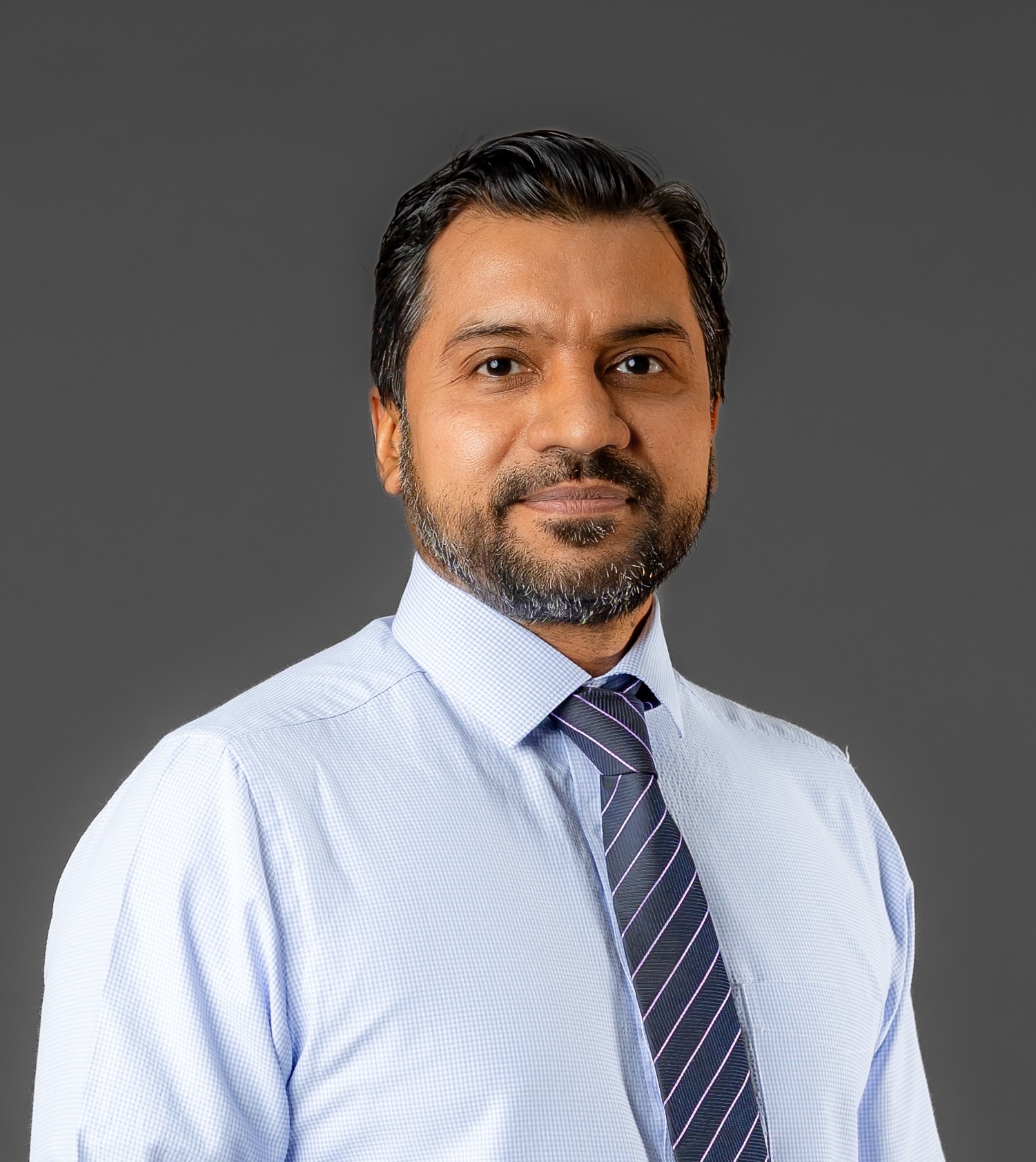
 Muhammad Imran
· 5 previous affiliations
- Qatar Computing Research InstituteSince 2014
- Principal Scientist · Since 2025
- Senior Scientist · 2021–2025
- Scientist · 2014–2021
- Research Associate · 2012
- Hamad bin Khalifa UniversityCurrent
- Current
- University of Trento2009–2013
- PhD · 2009–2013
- Teaching Assistant · 2009–2012
- NUST Business School2007–2008
- Database Administrator/Developer · 2007–2008
- Mohammad Ali Jinnah University2005–2007
- MSc, Computer Science · 2005–2007
1 other author named Muhammad Imran: Muhammad Imran (University of Missouri–Kansas City · 1 paper)
Research Overview
Muhammad Imran focuses on crisis informatics, applied machine learning, and the extraction of actionable intelligence from social media streams during emergencies. His trajectory spans early work in natural language processing for disaster response to recent large-scale computer vision datasets for incident detection. Currently, he investigates multimodal approaches to mapping vulnerable populations and mitigating geographic bias in global machine learning models.
Research Trajectory
Imran’s early research established foundational methods for processing the massive influx of unstructured data generated during natural hazards and mass convergence events. In 2013, he introduced techniques for Extracting information nuggets from disaster- Related messages in social media, tackling the noise and volume inherent to microblogging platforms during crises. He synthesized these computational challenges in Processing Social Media Messages in Mass Emergency: A Survey, detailing the hurdles of parsing informal text, prioritizing critical updates, and mitigating information overload. This period anchored his contributions to the broader area of Extracting Actionable Intelligence from Crisis Social Media Streams. During this time, he also explored the area of Credibility Filtering for Social Media Sensor Networks to ensure the reliability of crowdsourced information used by first responders.
As the field evolved, Imran’s methodological focus shifted toward deep learning to handle the scale and variability of emergency data. He collaborated on Robust Classification of Crisis-Related Data on Social Networks Using Convolutional Neural Networks, applying neural architectures to text classification. Recognizing that emerging crises rarely offer abundant labeled training data, he advanced techniques in the area of Machine Learning for Emergent Events with Scarce Labeled Data. A key contribution to this problem was Graph Based Semi-Supervised Learning with Convolution Neural Networks to Classify Crisis Related Tweets, which utilized graph-based structures to improve classification performance with limited annotations, aligning with broader efforts in the direction of Semi-Supervised Learning for Data-Scarce Regimes.
To make these models robust across different types of emergencies, Imran explored domain adaptation. His work on A Hybrid Domain Adaptation Approach for Identifying Crisis-Relevant Tweets contributed to the research direction of Cross Event Generalization for Crisis Machine Learning. Concurrently, he addressed the operational need for granular situational awareness. He developed algorithms using Integer Linear Programming in Identifying Sub-events and Summarizing Disaster-Related Information from Microblogs to help responders pinpoint specific infrastructure damage or urgent needs. He later expanded on this granular analysis with the SEDOM-DD method in Using social media for sub-event detection during disasters. He also helped synthesize the state of the field in Exploitation of Social Media for Emergency Relief and Preparedness: Recent Research and Trends.
As crisis informatics matured, the need for standardized evaluation became critical. Imran collaborated on CrisisBench: Benchmarking Crisis-related Social Media Datasets for Humanitarian Information Processing, consolidating multiple annotated data sources to enable rigorous model comparison across the research community.
In recent years, Imran’s trajectory has expanded significantly beyond text to incorporate computer vision and remote sensing. He participated in creating large-scale visual resources, starting with Detecting Natural Disasters, Damage, and Incidents in the Wild, which introduced a dataset of over 400,000 images for incident detection. This visual analysis work also extended to public health, as seen in his contribution to A Survey on Computer Vision based Human Analysis in the COVID-19 Era, which reviewed automated visual data analysis for pandemic prevention measures.
His focus on humanitarian applications has also scaled to satellite imagery. In Mapping Vulnerable Populations with AI, he guided research on deriving building footprints and population densities from remote sensing data, specifically addressing the lack of reliable census data in developing countries. Most recently, he contributed to Incidents1M: a large-scale dataset of images with natural disasters, damage, and incidents. This massive multi-label dataset of nearly a million images supports robust incident detection models while intersecting with the critical research direction of mitigating Geographic Bias in Global Machine Learning.
Current Directions
The most recent papers in the evidence indicate a strong focus on large-scale, multimodal machine learning for humanitarian applications. Imran investigates the intersection of computer vision and crisis informatics, developing massive visual datasets to detect incidents and assess damage in the wild. A central theme of this current work is addressing data disparities in developing regions, whether by mapping vulnerable populations using remote sensing or by actively mitigating geographic bias in global machine learning models to ensure disaster response tools perform equitably across different global contexts.
Profile updated
Loading new papers…
Other researchers whose papers cluster into the same research directions — a proxy for overlapping technical interests and shared intellectual neighborhoods.
See something wrong? Report a mistake