

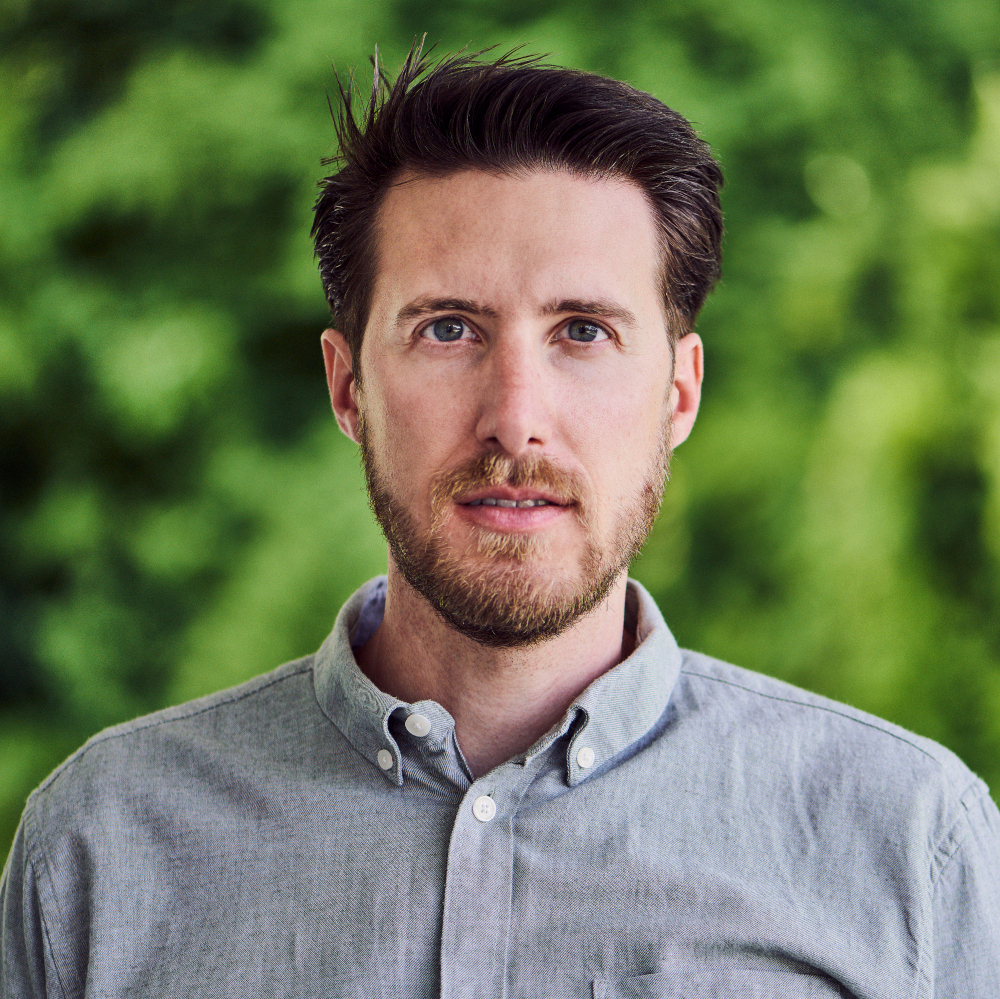
 Christian F. Baumgartner
· 5 previous affiliations
- University of LucerneSince 2024
- Assistant Professor · Since 2024
- Current
- University of Tübingen2021–2025
- Principal Researcher · 2021–2025
- ETH Zurich2009–2019
- Postdoc · 2017–2019
- MS student · 2009–2012
- Imperial College London2016–2017
- Postdoc · 2016–2017
- King's College London2012–2016
- PhD student · 2012–2016
Research Overview
Christian F. Baumgartner focuses on medical image analysis, probabilistic modeling, and generative deep learning. His trajectory spans from early work on automated ultrasound and cardiac MRI segmentation to developing robust, uncertainty-aware frameworks for clinical diagnostics and image reconstruction. Most recently, his research addresses statistical guarantees for medical AI and universal meta-learning architectures capable of cross-domain adaptation.
Research Trajectory
Baumgartner’s early research focused on automating complex clinical imaging tasks using convolutional neural networks. In 2017, he developed SonoNet: Real-Time Detection and Localisation of Fetal Standard Scan Planes in Freehand Ultrasound, a framework designed to assist operators by automatically identifying fetal standard views and localizing structures with bounding boxes. In parallel, he investigated architectural trade-offs in cardiac imaging with An Exploration of 2D and 3D Deep Learning Techniques for Cardiac MR Image Segmentation, demonstrating that slice-by-slice 2D processing often provided practical benefits over fully 3D networks for specific clinical datasets.
Expanding into weakly supervised learning and interpretability, his subsequent work sought to reduce the reliance on dense manual annotations. He contributed to Learning to Segment Medical Images with Scribble-Supervision Alone, which streamlined the training of segmentation models. To better understand model decisions, he introduced Visual Feature Attribution Using Wasserstein GANs in 2018. This method addressed limitations in existing attribution techniques by ensuring a more complete detection of category-specific features, contributing to the broader research area of Object Localization via Weakly Supervised Activation Mapping. This work also intersected with the domain of Scaling 3D Representations Beyond the Memory Wall.
A major theme of his 2019 research involved generative modeling and uncertainty quantification. He collaborated on MR Image Reconstruction Using Deep Density Priors, which utilized Variational Autoencoders (VAEs) to learn explicit prior distributions for magnetic resonance images. This approach enabled high-quality reconstructions from undersampled data without paired training sets, advancing the research direction of Decoupled Generative Priors for Robust Inverse Problems as well as the area of Preserving Structural Fidelity in Generative Medical Imaging. Addressing the computational constraints of volumetric data, he helped develop A Partially Reversible U-Net for Memory-Efficient Volumetric Image Segmentation, which significantly reduced memory footprints by recovering layer outputs during backpropagation. Recognizing that medical image segmentation is inherently ambiguous, he proposed PHiSeg: Capturing Uncertainty in Medical Image Segmentation. This hierarchical probabilistic model captured the conditional probability distribution of segmentations, allowing the system to account for varying expert annotation styles and unclear structural borders.
As deep learning models became more prevalent in clinical reconstruction, Baumgartner investigated their reliability and failure modes. He led research on Adversarial Robustness of MR Image Reconstruction Under Realistic Perturbations, utilizing targeted adversarial attacks to evaluate the worst-case performance of models like E2E-VarNet and U-Net. Continuing his work on generative models, he guided the development of the Multiscale Metamorphic VAE for 3D Brain MRI Synthesis in 2023. By learning to transform a fixed anatomical template rather than generating pixels from scratch, this model achieved superior anatomical realism, contributing significantly to the research direction of The Blurriness Problem in Variational Autoencoders.
His recent trajectory emphasizes statistical guarantees and rigorous quality control for clinical deployment. In Subgroup-Specific Risk-Controlled Dose Estimation in Radiotherapy, his team applied risk-controlling prediction sets to provide model-agnostic uncertainty quantification for deep learning frameworks used in MR-guided radiotherapy. He also oversaw Leveraging Probabilistic Segmentation Models for Improved Glaucoma Diagnosis: A Clinical Pipeline Approach, which demonstrated that propagating uncertainty from the probabilistic segmentation of the optic cup and disc improves overall diagnostic accuracy. To further ensure the reliability of automated systems without relying on ground truth data, he developed Conformal Performance Range Prediction for Segmentation Output Quality Control, a method that predicts performance ranges with statistical guarantees even when network softmax outputs are uncalibrated.
Most recently, Baumgartner has expanded into systematic error discovery and meta-learning architectures. He directed SEG4SEG: Identifying Systematic Failure Modes in Segmentation by Subgroup Discovery Methods, which categorizes sources of systematic errors in medical image segmentation and empirically validates the use of slice discovery methods to identify problematic subgroups without manual annotations. Broadening his methodological scope beyond medical imaging, he also led the development of Universal Algorithm-Implicit Learning. This work introduced TAIL, a transformer-based meta-learner capable of solving new tasks across entirely different domains and modalities without retraining, shifting the paradigm from hard-coded learning rules to an algorithm-implicit approach.
Current Directions
The most recent papers in the evidence indicate a dual focus on rigorous quality control in medical imaging and foundational advances in meta-learning. In the clinical domain, recent work investigates methods for identifying systematic failure modes in segmentation models and providing statistical guarantees for automated outputs. This includes leveraging conformal prediction and subgroup discovery to ensure models degrade gracefully and fail safely in high-risk applications like radiotherapy and glaucoma diagnosis. Concurrently, research in algorithm-implicit learning addresses the challenge of cross-domain adaptation, exploring how transformer-based architectures can achieve practical universality by generalizing across heterogeneous modalities without the need for task-specific retraining.
Profile updated
Loading new papers…
Other researchers whose papers cluster into the same research directions — a proxy for overlapping technical interests and shared intellectual neighborhoods.
See something wrong? Report a mistake