

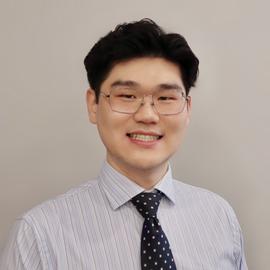
 Pengfei Guo
· 5 previous affiliations
- Nvidia (United States)Since 2023
- Senior Applied Research Scientist · Since 2026
- Researcher · 2023–2026
- Applied Research Intern · 2021
- Johns Hopkins University2018–2023
- Research Assistant · 2020–2023
- MS student · 2018–2020
- Master of Science in Engineering - MSE, Computer Science · 2018–2019
- Research Intern · 2022
- Machine Learning Intern · 2022
- Michigan State University2015–2018
- Undergrad student · 2015–2018
Research Overview
Pengfei Guo focuses on medical image analysis, computer vision, and machine learning. His research trajectory spans from accelerating magnetic resonance imaging reconstruction using physics-guided deep learning to developing privacy-preserving federated learning frameworks for multi-institutional healthcare data. Currently, his work addresses the generation of high-resolution 3D medical volumes and the integration of multimodal foundation models for complex clinical reasoning.
Research Trajectory
Pengfei Guo’s early research concentrated heavily on improving the speed and quality of medical imaging, particularly through the research direction of Physics-Guided Deep Learning for Accelerated MRI Reconstruction. A major focus of this period was addressing the limitations of standard convolutional networks in capturing multi-scale anatomical details. In 2022, he introduced ReconFormer: Accelerated MRI Reconstruction Using Recurrent Transformer, a lightweight architecture designed to iteratively refine images from highly under-sampled MRI data. By utilizing a recurrent pyramid transformer layer, this model advanced the broader area of Overcoming Local Receptive Field Constraints in Visual Models while maintaining parameter efficiency. This foundational work was later expanded and formalized in the 2024 journal publication ReconFormer: Accelerated MRI Reconstruction Using Recurrent Transformer, which demonstrated state-of-the-art reconstruction quality by integrating the research direction of Multi-Scale Spatial Attention Mechanisms within a recurrent framework.
Continuing his work in MRI optimization, Guo explored how auxiliary data could improve image fidelity. In Reference-based MRI Reconstruction Using Texture Transformer (2023), he proposed a novel texture transformer module capable of transferring high-frequency textural details from fully sampled reference data to under-sampled targets within a single MR sequence, bypassing the need for paired auxiliary sequences. Alongside algorithmic development, he also oversaw clinical evaluations of imaging techniques, such as in Radiomic feature reliability of amide proton transfer-weighted MR images acquired with compressed sensing at 3 T (2024), which assessed the stability of radiomic features under compressed sensing protocols.
Parallel to his work in image reconstruction, Guo addressed the critical challenge of data silos in healthcare through federated learning (FL). Because medical institutions are often restricted from sharing patient data due to privacy regulations, FL offers a distributed alternative, though it suffers from instability when client data distributions are heterogeneous. To solve this, he developed Auto-FedRL: Federated Hyperparameter Optimization for Multi-institutional Medical Image Segmentation, a framework that uses reinforcement learning to dynamically optimize hyperparameters during distributed training. This approach, subsequently published at ECCV as Auto-FedRL: Federated Hyperparameter Optimization for Multi-institutional Medical Image Segmentation, significantly improved segmentation performance across diverse institutional datasets. Recognizing that FL also imposes heavy computational burdens on edge devices, he later introduced Towards Federated Learning Under Resource Constraints via Layer-wise Training and Depth Dropout (2023). By training networks one layer at a time and randomly skipping frozen layers, this method achieved a massive reduction in memory usage with negligible drops in downstream performance.
In recent years, following his transition to an Applied Research Scientist role, Guo’s focus has expanded into generative artificial intelligence and foundation models for 3D medical vision. A persistent challenge in medical AI is the lack of large-scale, annotated 3D datasets. Contributing to the research area of Overcoming Volumetric Context Loss in Medical Vision Models, he developed Text2CT: Towards 3D CT Volume Generation from Free-text Descriptions Using Diffusion Model (2025). This framework generates high-resolution, anatomically consistent 3D CT volumes directly from flexible clinical text prompts, utilizing a 3D compression network and a latent diffusion model to avoid common grid artifacts. He further advanced the field of Overcoming the 2D Dimensionality Constraint in Volumetric Imaging with MAISI: Medical AI for Synthetic Imaging (2025), a generative framework that employs a novel tensor splitting technique to synthesize massive, high-fidelity 3D CT volumes for training downstream models in data-scarce environments.
Guo has also worked on creating highly adaptable, universal architectures that can handle diverse clinical protocols. In SDUM: A Scalable Deep Unrolled Model for Universal MRI Reconstruction (2025), he collaborated on a framework that replaces protocol-specific models with a single network. By incorporating universal conditioning and sampling-aware physics, SDUM demonstrated predictable scaling laws and advanced the area of Cross-Modality Generalization in Medical Artificial Intelligence.
Beyond pure imaging, his recent trajectory includes the integration of visual and textual reasoning. He participated in the development of Reasoning Visual Language Model for Chest X-Ray Analysis (2025), which utilizes a reinforcement learning approach based on verifiable medical findings to generate transparent, step-by-step diagnostic reports. Additionally, he collaborated on SurgWorld: Learning Surgical Robot Policies from Videos via World Modeling (2025), a generative world model framework that transforms unlabeled surgical videos into high-fidelity synthetic training data to improve the generalization of surgical robotic policies.
Continuing this generative trajectory into volumetric synthesis, Guo co-developed NV-Generate-Body: 3D Latent Diffusion Model forControllable Anatomy, Tumor, and Demographic Body Mask Synthesis (2026), a 3D latent diffusion model designed to synthesize full-body CT segmentation masks with fine-grained control over organ anatomy, tumor burden, and demographic variables. Expanding further into post-deployment foundation models, Guo contributed to Frozen Models, Evolving Expertise: Model-Agnostic Learning from Deployment Experience for Multimodal Medical AI (2026), presenting a model-agnostic framework that enables frozen vision-language and language models to continuously learn from deployment experience via skills, knowledge memories, and multimodal knowledge bases. Guo also contributed to Reliable and grounded reporting of any computed tomography scan with FORA (2026), which introduces a general-purpose CT architecture combining multiple-instance learning and concept bottlenecks to perform spatially grounded abnormality localization and report generation across diverse examination protocols without lesion-level supervision.
Current Directions
Guo’s most recent work investigates the intersection of generative AI, 3D medical imaging, and multimodal foundation models. A primary focus is the synthesis of high-resolution, anatomically accurate 3D medical volumes from text descriptions and latent diffusion models. By developing techniques like tensor splitting and 3D compression networks, this research aims to overcome the severe data scarcity in clinical machine learning, providing high-quality synthetic data for downstream tasks.
Additionally, his current research explores scalable, universal architectures that generalize across diverse clinical protocols and modalities. Rather than building narrow, task-specific networks, recent projects emphasize models that exhibit predictable scaling laws and adapt to varying physical sampling conditions. Finally, their work is increasingly incorporating complex clinical reasoning and lifelong adaptation, utilizing controllable 3D mask diffusion, generative world models, and deployment-time learning frameworks that let frozen foundation models evolve with incoming clinical experience.
Profile updated
Loading new papers…
Other researchers whose papers cluster into the same research directions — a proxy for overlapping technical interests and shared intellectual neighborhoods.
See something wrong? Report a mistake