

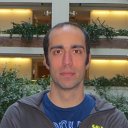
 Ender Konukoglu
· 4 previous affiliations
- ETH ZurichSince 2016
- Associate Professor · Since 2022
- Current
- Assistant Professor · 2016–2022
- Harvard University2012–2016
- Postdoc · 2012–2016
- Microsoft (United States)2009–2012
- Postdoc · 2009–2012
- PhD student · 2005–2009
Research Overview
Ender Konukoglu focuses on medical image analysis, computer vision, and machine learning for healthcare applications. His trajectory spans early biophysical modeling of tumor growth to modern deep learning techniques for unsupervised anomaly detection, robust segmentation, and surgical guidance. Currently, his research investigates foundational video segmentation models, uncertainty estimation, and cross-domain generalization in clinical environments.
Research Trajectory
Ender Konukoglu’s research trajectory began with biophysical modeling for clinical applications. In 2006, he introduced a mathematical formulation to estimate tumor invasion margins by extrapolating low tumor densities in magnetic resonance images using the Fisher-Kolmogorov equation (Extrapolating Tumor Invasion Margins for Physiologically Determined Radiotherapy Regions). His work subsequently expanded into foundational machine learning techniques; in 2012, his lab formalized a unified framework for decision forests, detailing their application across classification, regression, and manifold learning (Decision Forests: A Unified Framework for Classification, Regression, Density Estimation, Manifold Learning and Semi-Supervised Learning). By 2015, he participated in the development of the Multimodal Brain Tumor Image Segmentation Benchmark (BRATS) (The Multimodal Brain Tumor Image Segmentation Benchmark (BRATS)), contributing to the broader area of Bridging the Simulation to Reality Gap in Clinical AI.
During the late 2010s, his research encompassed diverse challenges in medical and industrial vision, including work in the area of Mitigating Specular Reflection Interference in Computer Vision and efforts toward Scaling 3D Representations Beyond the Memory Wall. Moving into the 2020s, his group increasingly focused on deep learning under limited supervision and distribution shifts. They tackled the challenge of limited labeled data by extending self-supervised pre-training to volumetric medical images, advancing the research direction of Dense Contrastive Learning for Dense Prediction (Contrastive learning of global and local features for medical image segmentation with limited annotations). Concurrently, they reframed lesion detection as an image restoration problem, learning a normative prior of healthy anatomy to highlight deviations (Unsupervised lesion detection via image restoration with a normative prior). This approach to modeling healthy distributions aligns with his broader contributions to the area of Unsupervised Anomaly Detection via Generative Reconstruction. To handle distribution shifts at deployment, his team also introduced test-time adaptable neural networks for robust medical image segmentation (Test-time adaptable neural networks for robust medical image segmentation), a method conceptually linked to his ongoing work in the direction of Source Free Domain Adaptation.
In 2023, his research expanded into foundational image restoration and network calibration. His group proposed guiding Deep Image Priors (DIP) with Wiener deconvolution to suppress high-frequency artifacts in unsupervised blind image deconvolution (Wiener Guided DIP for Unsupervised Blind Image Deconvolution). They also addressed the overconfidence of modern neural networks in human-AI collaboration systems, introducing the COC curve to help operators set confidence thresholds that accurately reflect expected mistakes (COC curve: operating neural networks at high accuracy and low manual effort).
Throughout 2024, his lab explored novel representation learning and federated learning paradigms. They developed a decoder-only method using gradient flow and ordinary differential equations to directly encode data into latent spaces, bypassing approximate encoder inversion (Explicit and data-Efficient Encoding via Gradient Flow). To address feature shifts in distributed healthcare data, they proposed a federated feature augmentation and alignment technique (Federated Feature Augmentation and Alignment). His team also made significant strides in surgical guidance and video analysis, developing an unsupervised deep learning method to construct surgical paths and estimate camera poses from endoscopic videos, aiding localization in texture-poor environments (Vision-Based Neurosurgical Guidance: Unsupervised Localization and Camera-Pose Prediction). Additionally, they evaluated the Segment Anything Model 2 (SAM2) on dynamic camouflaged scenarios (When SAM2 Meets Video Camouflaged Object Segmentation: A Comprehensive Evaluation and Adaptation).
In 2025, his group built upon this foundation by proposing CamSAM2, which enhances the model's ability to segment camouflaged objects using a specialized decamouflaged token without modifying the original parameters (CamSAM2: Segment Anything Accurately in Camouflaged Videos). Further advancing surgical AI, his lab introduced a transformer-based approach to forecast surgical instrument trajectories by integrating anatomical context (Anatomy Might Be All You Need: Forecasting What to Do During Surgery). He also collaborated on MedVSR, a framework leveraging State-Space Models to upscale low-resolution medical videos with high spatiotemporal efficiency (MedVSR: Medical Video Super-Resolution with Cross State-Space Propagation). To address the "scanner effect" in medical AI, he participated in creating a massive multi-centric CT phantom benchmark dataset for harmonization (A Multi-Centric Anthropomorphic 3D CT Phantom-Based Benchmark Dataset for Harmonization). Finally, his team developed "Dropsembles," an uncertainty estimation method for fine-tuned implicit functions that combines dropout efficiency with deep ensemble robustness to handle distribution shifts (Uncertainty modeling for fine-tuned implicit functions).
Current Directions
The most recent papers in the evidence address the intersection of surgical artificial intelligence, video foundation models, and robust clinical deployment. Recent work investigates advanced surgical guidance systems, utilizing transformer-based architectures to forecast instrument trajectories based on anatomical context and employing State-Space Models for highly efficient medical video super-resolution. Another major current focus is the adaptation of large vision foundation models for complex, dynamic environments, specifically enhancing models like SAM2 to accurately segment camouflaged objects in video streams without requiring parameter fine-tuning. Additionally, ongoing research emphasizes model reliability under distribution shifts, exploring computationally efficient uncertainty estimation techniques for fine-tuned implicit functions and contributing to large-scale, multi-centric benchmarking efforts to harmonize medical imaging data across different clinical sites and scanner manufacturers.
Profile updated
Loading new papers…
Other researchers whose papers cluster into the same research directions — a proxy for overlapping technical interests and shared intellectual neighborhoods.
See something wrong? Report a mistake