

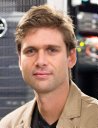
 Benjamin Haibe-Kains
· 1 previous affiliation
- University of TorontoSince 2019
- Associate Professor · Since 2019
Research Overview
Benjamin Haibe-Kains focuses on computational oncology, robust biomarker discovery, and the integration of multimodal clinical data for precision medicine. His trajectory spans the development of scalable pharmacogenomic platforms to advanced machine learning methods for predicting treatment response and cell-cell communication. Currently, his work addresses the standardization of medical imaging pipelines and the application of deep learning to complex survival prediction and spatial transcriptomics.
Research Trajectory
The early foundation of Benjamin Haibe-Kains’s recent work centers on building scalable infrastructure and ensuring statistical rigor in pharmacogenomics. In 2022, his group released PharmacoDB 2.0: improving scalability and transparency of in vitro pharmacogenomics analysis, a platform designed to handle the growing complexity of drug response data. This focus on robust data foundations naturally extended into methodological evaluations of how biological data is processed and interpreted. He established rigorous mathematical frameworks for data transformations in On the distribution of cosine similarity with application to biology, demonstrating that optimizing for isotropic covariance structures minimizes the variance of cosine similarity and maximizes the statistical power of biological discovery.
This commitment to statistical reliability heavily informed his critical evaluations of emerging predictive models, contributing to the broader area of Robust Biomarker Discovery Through Transcriptomic Meta-Analysis. In 2023, he led an independent evaluation of a high-profile few-shot learning method in Reusability Report: Few-shot learning creates predictive models of drug response that translate from high-throughput screens to individual patients. By investigating whether the original model could generalize to new, diverse clinical datasets, he highlighted the challenges of learning from limited data in specialized medical domains. He applied a similarly critical lens to novel biomarker classes in Detection of circular RNAs and their potential as biomarkers predictive of drug response. While circular RNAs are noted for their stability, this study exposed a significant reproducibility crisis tied to systematic technical biases in high-throughput sequencing methodologies.
Parallel to his work in computational biology, he developed core machine learning techniques to improve model reliability over time. Addressing the phenomenon of "predictive churn"—where updated models fail on examples that previous versions handled correctly—he introduced the Accumulated Model Combination (AMC) framework in Maintaining Stability and Plasticity for Predictive Churn Reduction. This approach intelligently fuses old and new models to drastically reduce negative flips, maintaining user trust and temporal prediction stability.
Transitioning into single-cell biology and spatial transcriptomics, he developed novel architectures to capture complex intracellular signaling. He introduced a graph-based deep learning framework in GraphComm: A Graph-based Deep Learning Method to Predict Cell-Cell Communication in single-cell RNAseq data. By integrating massive protein-protein interaction databases with single-cell RNA sequencing data, the method captures nuanced cellular crosstalk that traditional ligand-receptor matching often misses.
In 2024, his focus expanded to the computational infrastructure required for clinical AI, specifically addressing the bottleneck of unstructured medical imaging. He released Med-ImageTools: An open-source Python package for robust data processing pipelines and curating medical imaging data. By automating the extraction and processing of messy clinical DICOM data into analysis-ready formats, the library standardizes heterogeneous medical imaging for deep learning applications.
This standardized imaging infrastructure enabled sophisticated clinical analyses the following year. In 2025, he quantified the heterogeneity of metastatic cancer in Measured intrapatient radiomic variability as a predictor of treatment response in multi-metastatic soft tissue sarcoma patients. By measuring the intrapatient variability of tumors using standard medical imaging, this work provided a roadmap for personalized treatment and advanced the research direction of Decoding Tumor Phenotypes with High-Dimensional Radiomics. During the same period, his single-cell communication framework was formally published as GraphComm predicts cell cell communication using a graph based deep learning method in single cell RNA sequencing data, detailing the use of Graph Attention Networks (GATs) for adaptive feature aggregation in biological networks. He also collaborated on hybrid statistical learning models, developing Lassoed Forests: Random Forests with Adaptive Lasso Post-selection, which adaptively tunes a weighting parameter based on the data's signal-to-noise ratio to outperform traditional random forests in sparse, high-dimensional settings.
Most recently, his trajectory has culminated in the synthesis of diverse data modalities for clinical prognosis, directly contributing to the area of Multimodal Integration for Clinical Risk Stratification. In 2026, he introduced Deep-CR MTLR: A multi-modal approach for cancer survival prediction with competing risks, a novel neural network architecture that leverages both routinely collected clinical data and medical imaging to predict cancer survival. He also provided a comprehensive perspective on the field's evolution and future challenges in Discovery of predictive biomarkers for cancer therapy through computational approaches.
Current Directions
The most recent papers in the evidence indicate a strong focus on the clinical translation of multimodal machine learning. Current work investigates how to effectively combine structured clinical records with high-dimensional medical imaging to predict patient survival, particularly in complex scenarios involving competing clinical risks. Alongside this multimodal integration, recent research continues to refine adaptive ensemble methods—such as combining random forests with Lasso-based selection—to handle the sparse, noisy nature of biological datasets. Furthermore, ongoing efforts in single-cell biology emphasize the use of graph attention networks to model cell-cell communication, moving beyond isolated cellular analysis to understand the spatial and interactive dynamics of the tumor microenvironment.
Profile updated
Loading new papers…
Other researchers whose papers cluster into the same research directions — a proxy for overlapping technical interests and shared intellectual neighborhoods.
See something wrong? Report a mistake