

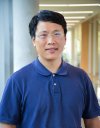
 Fuhai Li
· 8 previous affiliations
- Washington University in St. LouisSince 2018
- Associate Professor · Since 2024
- Associate Professor · Since 2018
- Assistant Professor · 2018–2024
- The Ohio State University2016–2018
- Assistant Professor in Department of Biomedical Informatics · 2016–2018
- Houston Methodist2008–2016
- Assistant Member · 2014–2016
- Researcher · 2008–2016
- Peking University2003–2008
- PhD student · 2003–2008
- Harvard University2006–2007
- Researcher · 2006–2007
- Harvard Medical School2006–2007
- Research Fellow · 2006–2007
- Brigham and Women's Hospital2006–2007
- Research Fellow · 2006–2007
- Yantai University1999–2003
- Undergrad student · 1999–2003
Research Overview
Fuhai Li focuses on the integration of multi-omic data, pharmacogenomics, and biological signaling networks using advanced machine learning techniques. His trajectory spans early computational methods for cancer stratification and drug repositioning to the development of sophisticated graph neural networks for understanding disease mechanisms. Currently, his work emphasizes the creation of multimodal foundation models and AI agents that bridge large language models with biological graphs to accelerate discoveries in precision medicine.
Research Trajectory
Fuhai Li’s early research focused on computational methods for quantitative cancer analysis and systems biology. He introduced automated tracking methods for quantitative cell cycle analysis using integer programming and neighboring graphs in Multiple Nuclei Tracking Using Integer Programming for Quantitative Cancer Cell Cycle Analysis. Moving into network-level modeling, he characterized cancer signaling bridges to enable systematic drug repositioning for distinct breast cancer metastases in Novel Modeling of Cancer Cell Signaling Pathways Enables Systematic Drug Repositioning for Distinct Breast Cancer Metastases. He also collaborated on target network analysis to discover combinations of FDA-approved drugs that could reduce acquired resistance in DrugComboRanker: drug combination discovery based on target network analysis. Building on this systems-level approach, he developed a computational pipeline to identify functional mutation modules from personal genomics profiles in A computational method for clinically relevant cancer stratification and driver mutation module discovery using personal genomics profiles. This work contributed to the broader research direction of Molecular Subtyping for Precision Patient Stratification by comparing patient gene expression against healthy tissue to identify clinically distinct subtypes.
In subsequent years, his lab expanded into network pharmacology to systematically map synergistic therapies. In Diffusion mapping of drug targets on disease signaling network elements reveals drug combination strategies, his team utilized network propagation to identify drug combinations, advancing the area of Computational Mapping of Synergistic Drug Combinations and addressing challenges in the research direction of Neutralizing Compensatory Signaling and Biological Redundancy. Concurrently, he participated in foundational machine learning research, such as theoretically characterizing the expressive power of K-hop message passing in graph neural networks in How Powerful are K-hop Message Passing Graph Neural Networks, which informed the broader area of Multi-Hop Aggregation for Graph Neural Networks.
By 2024, the integration of graph neural networks and transformer architectures became a central theme in his lab's approach to systems biomedicine. His team developed Using DeepSignalingFlow to mine signaling flows interpreting mechanism of synergy of cocktails to predict and explain the efficacy of cancer drug cocktails by modeling signaling flows between disease proteins and drug targets. They also introduced specialized graph transformer models, including Highly Accurate Disease Diagnosis and Highly Reproducible Biomarker Identification with PathFormer, which integrates prior disease knowledge into pathway-enhanced attention mechanisms, and PathFinder: a novel graph transformer model to infer multi-cell intra- and inter-cellular signaling pathways and communications, which maps complex cellular communication cascades from single-cell RNA sequencing data. To scale these insights, his lab proposed mosGraphGPT: a foundation model for multi-omic signaling graphs using generative AI, a generative foundation model pre-trained on multi-omic signaling graphs to classify diseases and reveal molecular pathways. Alongside this genomic focus, his lab also applied transformer architectures to clinical computer vision, developing an end-to-end pose estimation network for neurological monitoring in NICUPose: a robust and efficient end-to-end pose estimation network in neonatal intensive care unit (NICU).
Most recently, his research has bridged biological graph learning with large language models (LLMs) and autonomous agents. His group introduced OmniCellTOSG: The First Cell Text-Omic Signaling Graphs Dataset for Joint LLM and GNN Modeling, a large-scale dataset unifying single-cell transcriptomics with textual biological knowledge to train multimodal foundation models. They also developed MosGraphFlow: a novel integrative graph AI model mining signaling targets from multi-omic data, an integrative GNN that uses biological structural priors to uncover molecular mechanisms in complex diseases like Alzheimer's. To improve natural language processing in biomedical contexts, his lab proposed KoGNER: A Novel Framework for Knowledge Graph Distillation on Biomedical Named Entity Recognition, which distills structured knowledge graphs to enhance entity recognition. Pushing toward autonomous scientific discovery, his team designed OmniCellAgent: Towards AI Co-Scientists for Scientific Discovery in Precision Medicine, a multi-agent framework that coordinates specialized AI agents to mine single-cell omics data and synthesize literature. Finally, they introduced GALAX: Graph-Augmented Language Model for Explainable Reinforcement-Guided Subgraph Reasoning in Precision Medicine, a framework that uses reinforcement learning to build explainable subgraphs, linking numerical multi-omics data with LLMs to identify therapeutic targets in cancer.
Current Directions
Recent work investigates the intersection of large language models, graph neural networks, and autonomous agents to accelerate scientific discovery in precision medicine. The most recent papers in the evidence address the challenge of unifying numerical multi-omics data with textual biological knowledge and signaling network topologies. This involves developing multimodal foundation models and multi-agent frameworks that can act as autonomous "co-scientists," capable of mining single-cell data, querying knowledge graphs, and synthesizing literature. Additionally, current research emphasizes explainable reinforcement-guided reasoning to ensure that AI-driven therapeutic target identification remains biologically interpretable and grounded in established signaling pathways.
Profile updated
Loading new papers…
Other researchers whose papers cluster into the same research directions — a proxy for overlapping technical interests and shared intellectual neighborhoods.
See something wrong? Report a mistake