

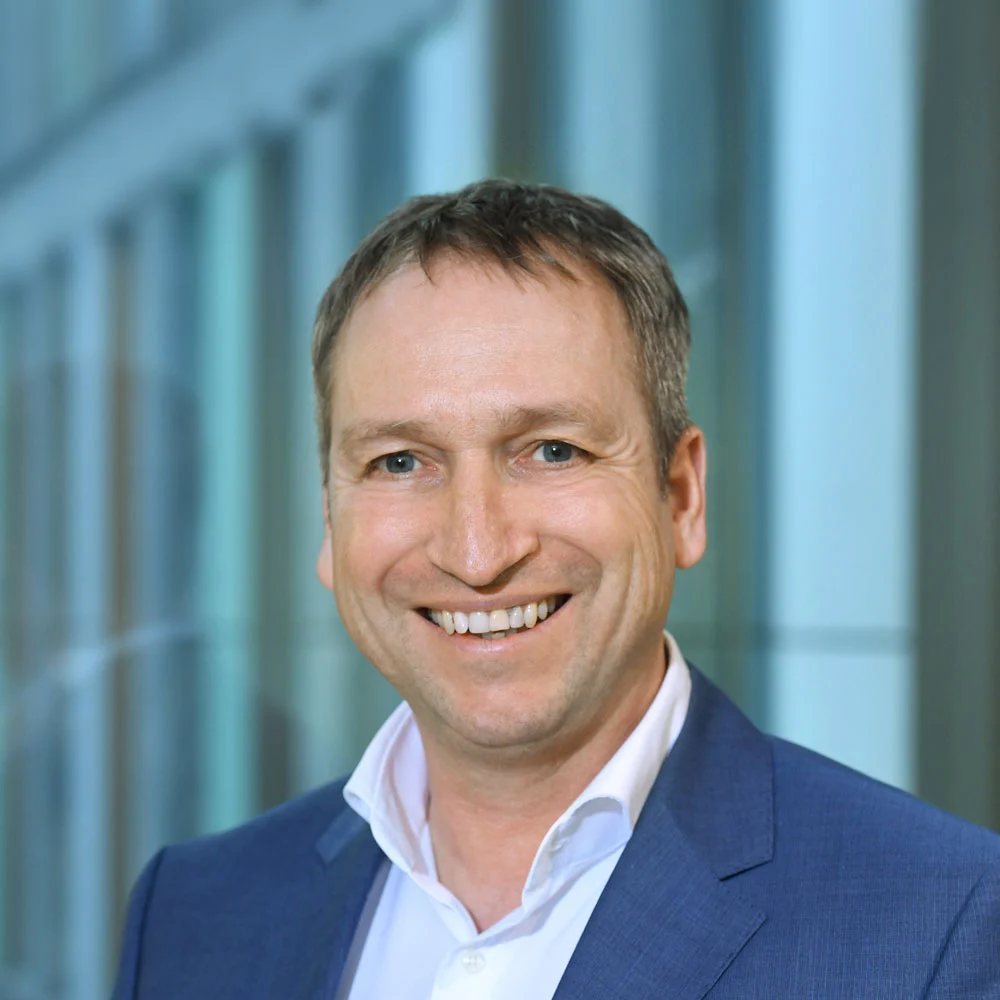
 Roland Eils
· 1 previous affiliation
- Charité - Universitätsmedizin BerlinSince 2004
- Full Professor · Since 2004
Research Overview
Roland Eils focuses on digital health, systems biology, and the application of artificial intelligence to clinical and genomic data. His early work established foundational visualization and analytical tools for multidimensional genomic data, later expanding into high-resolution single-cell transcriptomics to uncover disease mechanisms. Currently, his research centers on multimodal data integration, predictive phenome-wide modeling, and large-scale electronic health record analysis to improve clinical decision-making.
Research Trajectory
Early in his trajectory, Eils contributed to foundational computational biology and bioinformatics, focusing on tools to interpret complex datasets. He participated in the development of widely used visualization packages, including circlize implements and enhances circular visualization in R, and collaborated on Complex heatmaps reveal patterns and correlations in multidimensional genomic data. These tools provided researchers with robust methods for identifying patterns in multidimensional genomic data.
Building on these analytical foundations, his work expanded into the broader area of Resolving Cellular Heterogeneity via Single Cell Transcriptomics. During the COVID-19 pandemic, his laboratory utilized single-cell RNA sequencing to map the molecular pathology of SARS-CoV-2. In COVID-19 severity correlates with airway epithelium–immune cell interactions identified by single-cell analysis, his team demonstrated how hyperactivated immune cells and infected airway cells create a feedback loop driving severe disease. This work advanced the research direction of Decoding Tissue Ecosystems through Ligand-Receptor Signaling Networks and contributed to the field of Intercellular Signaling Inference from Single Cell Transcriptomic Data, while utilizing methods in the area of Pseudotime Trajectory Inference from Single-Cell Snapshots. He also contributed to collaborative studies examining systemic risk factors, such as Hypertension delays viral clearance and exacerbates airway hyperinflammation in patients with COVID-19, which identified primed inflammatory states in hypertensive patients and evaluated the differential impacts of blood pressure medications on viral clearance. Further investigating demographic differences in viral resilience, he participated in research on Pre-activated antiviral innate immunity in the upper airways controls early SARS-CoV-2 infection in children, contributing to the area of Pre-activated Innate Immunity for Viral Defense by showing how pediatric nasal mucosa can rapidly sense and neutralize the virus.
In recent years, Eils has increasingly focused on predictive modeling and the integration of artificial intelligence into healthcare. His group developed a foundation model for risk assessment in A predictive atlas of disease onset from retinal fundus photographs, demonstrating that AI analysis of eye scans can forecast hundreds of systemic conditions, including non-ocular diseases like type 2 diabetes. Expanding this phenome-wide approach to genomics, he directed work on DNA language models identify variants predictive across the human phenome, leveraging biological language models to improve disease risk stratification. This trajectory culminated in Medical history predicts phenome-wide disease onset and enables the rapid response to emerging health threats, where his team trained a multi-task neural network on large-scale electronic health records to simultaneously predict the onset of over 1,700 diseases, providing a framework for identifying vulnerable populations during health crises.
Parallel to these predictive models, Eils's recent work addresses the methodological challenges of multimodal data integration. He led the development of NetworkVI in Biologically Guided Variational Inference for Interpretable Multimodal Single-Cell Integration and Mechanistic Discovery, a deep generative model that embeds biological priors to interpret cellular states and perturbations. He also oversaw the ESPACE Human Pancreas Atlas project, detailed in Latent plasticity of the human pancreas across development, health, and disease, which integrated spatial transcriptomics and single-cell sequencing to uncover regenerative cell populations and epigenetic shifts in diabetes, advancing work in the area of Biological Mechanisms of Developmental Programming. To optimize resource allocation in such multimodal studies, he introduced Cohort-Based Active Modality Acquisition, a framework for identifying which samples in a cohort most benefit from expensive additional data modalities.
Finally, his research addresses the infrastructural and translational hurdles of clinical AI. He contributed to Large Language Models are Powerful EHR Encoders, which showed that general-purpose LLMs can effectively serialize and encode structured medical records to overcome vocabulary mismatches between hospital systems. To further improve data interoperability, his team developed FHIRconnect: Towards a seamless integration of openEHR and FHIR, introducing an open-source engine and domain-specific language to bridge major healthcare data standards. He synthesized these translational efforts in Bridging the gaps: Overcoming challenges of implementing AI in healthcare, outlining the necessary steps to address explainability, bias, and infrastructure for equitable clinical integration.
Current Directions
The most recent papers in the evidence highlight a strong focus on predictive clinical AI and multimodal data integration. Recent work investigates the use of foundation models and language models to predict phenome-wide disease onset, utilizing diverse inputs such as retinal fundus photographs, genomic variants, and longitudinal electronic health records. Alongside these predictive efforts, ongoing research addresses the methodological challenges of multi-omics, developing biologically guided generative models to interpret single-cell data and spatial transcriptomics. Furthermore, current projects emphasize clinical data interoperability, exploring how large language models and novel mapping architectures can harmonize heterogeneous healthcare data standards to facilitate the real-world implementation of medical AI.
Profile updated
| Paper | Venue | Year |
|---|---|---|
| JanusDNA: A Powerful Bi-directional Hybrid DNA Foundation ModelGitHubQihao-Duan/ | NeurIPS | 2025 |
Loading new papers…
Other researchers whose papers cluster into the same research directions — a proxy for overlapping technical interests and shared intellectual neighborhoods.
See something wrong? Report a mistake