

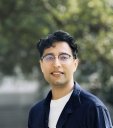
 Akshay Mehra
· 3 previous affiliations
- Dolby (United States)Since 2024
- Researcher · Since 2024
- Tulane University2019–2024
- PhD student · 2019–2024
- The Ohio State University2016–2019
- MS student · 2016–2019
Research Overview
Akshay Mehra focuses on the safety and robustness of machine learning models, particularly under distribution shifts and adversarial conditions. His trajectory spans foundational work in data poisoning and bilevel optimization to recent advancements in test-time adaptation and transferability estimation. Currently, he investigates optimal transport and prompt-based methods for adapting models to continuous environmental changes without forgetting.
Research Trajectory
Mehra’s early research explored scalable systems for computer vision and interactive learning. In collaborative work, he contributed to Fast Interactive Image Retrieval using large-scale unlabeled data (2018), which developed a real-time framework combining graph-based semi-supervised learning with adaptive thresholding to learn complex user concepts from minimal interactions.
By 2021, his focus shifted toward the vulnerabilities of machine learning models, specifically examining data poisoning and unsupervised domain adaptation (UDA). He investigated how malicious data manipulation affects models after training in On the Effectiveness of Poisoning against Unsupervised Domain Adaptation, proposing an upper bound on the test error induced by additive poisoning. He further explored the theoretical constraints of UDA in Understanding the Limits of Unsupervised Domain Adaptation via Data Poisoning, proving a lower bound on target domain error that demonstrated the insufficiency of merely minimizing source error and marginal distribution mismatch to prevent negative transfer. Alongside this, he evaluated the resilience of specific defense mechanisms in How Robust Are Randomized Smoothing Based Defenses to Data Poisoning?.
To address the complex nested optimization problems inherent in tasks like data poisoning and hyperparameter tuning, Mehra developed new algorithmic approaches. Penalty Method for Inversion-Free Deep Bilevel Optimization (2021) introduced techniques that significantly advanced the research direction of Constrained First-Order Bilevel Optimization. This work also contributed to the broader area of First-Order Methods for Scalable Bilevel Optimization by providing solutions for the area of Differentiating Through the Equilibrium of Nested Optimization Tasks.
Continuing his investigation into model robustness, Mehra examined how certified defenses hold up against natural distribution shifts. In A Spectral View of Randomized Smoothing Under Common Corruptions: Benchmarking and Improving Certified Robustness (2022), he and his collaborators revealed vulnerabilities to low-frequency corruptions, such as weather changes, and proposed a FourierMix augmentation scheme. This study contributed to the area of Frequency Domain Perturbations for Robust Generalization.
In 2023 and 2024, Mehra expanded his research to the transferability of large pre-trained models. Analysis of Task Transferability in Large Pre-trained Classifiers analyzed performance dynamics when fine-tuning only the final linear layer on downstream tasks. He formalized this with a theoretical framework in Understanding the Transferability of Representations via Task-Relatedness, which established a provable upper bound on transfer performance by measuring the distance between target and reference tasks. Together, these publications heavily informed the research directions of Data-Free Estimation of Model Transferability and Label Free Transferability Estimation for Model Selection.
Addressing the risks of deploying models in unpredictable environments, he proposed Test-Time Neural Style Smoothing in On the Fly Neural Style Smoothing for Risk-Averse Domain Generalization (2024) to mitigate bias toward domain-dependent information like image style. He also tackled the challenge of evaluating models under distribution shift in Test-time Assessment of a Model's Performance on Unseen Domains via Optimal Transport, utilizing optimal transport to estimate accuracy without target labels.
In his most recent work, Mehra has focused on efficient, continuous adaptation at test time. He explored data selection efficiency in Coreset Selection via LLM-based Concept Bottlenecks (2025), leveraging large language models to identify critical training samples through human-understandable concepts. To address domain shift with minimal computational overhead, he introduced OT-VP: Optimal Transport-Guided Visual Prompting for Test-Time Adaptation, which aligns test and training distributions using lightweight visual prompts. He extended prompt-based adaptation to dynamic environments in DPCore: Dynamic Prompt Coreset for Continual Test-Time Adaptation, maintaining a dynamic coreset of prompts to reduce trainable parameters. Finally, AV-CTTA: Audio-Visual Continual Test-Time Adaptation without Forgetting (2026) broadened this framework to multimodal models, selectively retrieving modality fusion parameters to prevent catastrophic forgetting in continuous streams of changing environments.
Current Directions
The most recent papers in the evidence point toward a sustained focus on Continual Test-Time Adaptation (CTTA) and parameter-efficient fine-tuning. Mehra is actively investigating how to adapt deployed models to shifting real-world distributions without requiring access to the original training data or incurring catastrophic forgetting. This involves developing lightweight mechanisms, such as dynamic visual prompts and modality fusion buffers, to maintain robustness in both unimodal and audio-visual contexts. Additionally, his work explores the intersection of optimal transport and large language models to create more interpretable and computationally efficient methods for data selection and distribution alignment.
Profile updated
Loading new papers…
Other researchers whose papers cluster into the same research directions — a proxy for overlapping technical interests and shared intellectual neighborhoods.
See something wrong? Report a mistake