

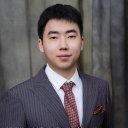
 Yihua Zhang
· 7 previous affiliations
- Michigan State UniversityCurrent
- Current
- PhD student · 2022–2026
- ByteDance (China)2025–2026
- Student Researcher (Seed) | Multimodal Interaction and World Model - Pre-Training · 2025–2026
- Meta (United States)2024–2025
- Research Scientist Intern · 2024–2025
- Cisco Systems (United States)2023–2024
- Research Scientist Intern · 2023–2024
- Applied Scientist Intern · 2023
- RWTH Aachen University2018–2019
- Exchange Program, Mechanical Engineering · 2018–2019
- Undergrad student · 2015–2019
Research Overview
Yihua Zhang focuses on trustworthy and scalable machine learning algorithms for large language models, multimodal systems, and diffusion models. His research bridges theoretical optimization—particularly bi-level and zeroth-order methods—with practical constraints in model efficiency and machine unlearning. Currently, his work addresses the resilience of foundation models against adversarial adaptations and the development of parameter-efficient adaptation strategies.
Research Trajectory
Zhang’s early trajectory established a strong foundation in bi-level optimization to address constraints in deep learning deployment and adversarial robustness. In 2022, he introduced Advancing Model Pruning via Bi-level Optimization, which sought to improve upon iterative magnitude pruning by framing network sparsification as a nested optimization problem. That same year, he applied similar theoretical frameworks to adversarial defense in Revisiting and Advancing Fast Adversarial Training Through the lens of Bi-Level Optimization, addressing the computational bottlenecks of min-max optimization in robust model training. These efforts contributed to the broader research direction of Differentiating Through the Equilibrium of Nested Optimization Tasks. He later synthesized these theoretical underpinnings in a comprehensive 2024 overview, An Introduction to Bilevel Optimization: Foundations and applications in signal processing and machine learning.
Parallel to his work on bi-level methods, Zhang explored memory-efficient training paradigms, particularly advancing the area of Scaling Zeroth-Order Optimization for Large Models. He led the development of Revisiting Zeroth-Order Optimization for Memory-Efficient LLM Fine-Tuning: A Benchmark, which systematically evaluated gradient-free methods for adapting large language models under strict memory constraints. He also participated in collaborative efforts to scale these techniques further, as detailed in DeepZero: Scaling Up Zeroth-Order Optimization for Deep Model Training.
As foundation models grew in scale and capability, Zhang’s focus expanded to trustworthy machine learning, specifically the challenge of machine unlearning—removing sensitive or hazardous information from trained models. He contributed to the research direction of Surgical Machine Unlearning via Parameter Saliency through his involvement in SalUn: Empowering Machine Unlearning via Gradient-based Weight Saliency in Both Image Classification and Generation. This work demonstrated that updating only the most influential weights could achieve high-performance unlearning across both vision and diffusion models. Recognizing the need for rigorous evaluation in this space, he subsequently developed UnlearnCanvas: Stylized Image Dataset for Enhanced Machine Unlearning Evaluation in Diffusion Models to better assess the removal of stylized generative capabilities.
A major theme in Zhang's recent work is addressing the fragility of unlearned models, which can often be "re-taught" forgotten information through adversarial attacks or downstream fine-tuning. Contributing to the area of Preserving Model Utility During Machine Unlearning, he collaborated on Towards LLM Unlearning Resilient to Relearning Attacks: A Sharpness-Aware Minimization Perspective and Beyond, which utilized smoothness-promoting techniques to secure the unlearning process. This aligns with the broader direction of Flattening the Loss Landscape for Resilient Machine Unlearning. He further explored this resilience in Invariance Makes LLM Unlearning Resilient Even to Unanticipated Downstream Fine-Tuning, proposing an invariance regularization framework to immunize models against future adaptations. In 2026, he co-authored Downgrade to Upgrade: Optimizer Simplification Enhances Robustness in LLM Unlearning, which revealed the counter-intuitive finding that using lower-precision, noisier gradient information during the unlearning phase forces the model into more robust regions of the loss landscape.
Beyond unlearning, Zhang has maintained an active research agenda in multimodal modeling and model interpretability, informed by his industrial research experience. During internships at Meta AI and Bytedance Seed, he gained practical experience building and deploying state-of-the-art fusion algorithms and token-efficient pretraining for large-scale multimodal foundation models. In the academic sphere, this expertise is reflected in ReasonRec: A Reasoning-Augmented Multimodal Agent for Unified Recommendation, where he designed an agent that leverages vision-language models for explicit user preference reasoning. To improve the transparency of such models, he introduced The Fragile Truth of Saliency: Improving LLM Input Attribution via Attention Bias Optimization, a method that optimizes attention perturbations to accurately identify causal tokens in long-context scenarios.
Most recently, Zhang has investigated training-free decoding strategies and parameter-efficient adaptations. He collaborated on CyclicReflex: Improving Reasoning Models via Cyclical Reflection Token Scheduling, which improves reasoning accuracy by modulating the likelihood of reflection tokens using a cyclical waveform analogous to learning rate scheduling. Additionally, he advanced the research direction of Parameter Efficient Adaptation of Large Scale Foundation Models with Visual Prompting Reimagined: The Power of Activation Prompts, proposing a method that applies learned perturbations to intermediate feature maps rather than input images to adapt pre-trained vision models more effectively.
Current Directions
The most recent papers in the evidence indicate a strong ongoing focus on the robustness of machine unlearning and the efficient adaptation of large reasoning and vision models. Zhang is actively investigating how optimization choices—such as optimizer simplification and lower-precision gradients—can fundamentally alter the loss landscape to make knowledge erasure in large language models permanent and resistant to adversarial relearning. Concurrently, his work addresses the parameter-efficient adaptation of foundation models, exploring techniques like intermediate activation prompting for vision models and training-free cyclical token scheduling to enhance the self-correction capabilities of large reasoning models. Across these domains, his research continues to bridge theoretical optimization with the practical demands of deploying trustworthy, scalable artificial intelligence.
Profile updated
Loading new papers…
Other researchers whose papers cluster into the same research directions — a proxy for overlapping technical interests and shared intellectual neighborhoods.
See something wrong? Report a mistake