

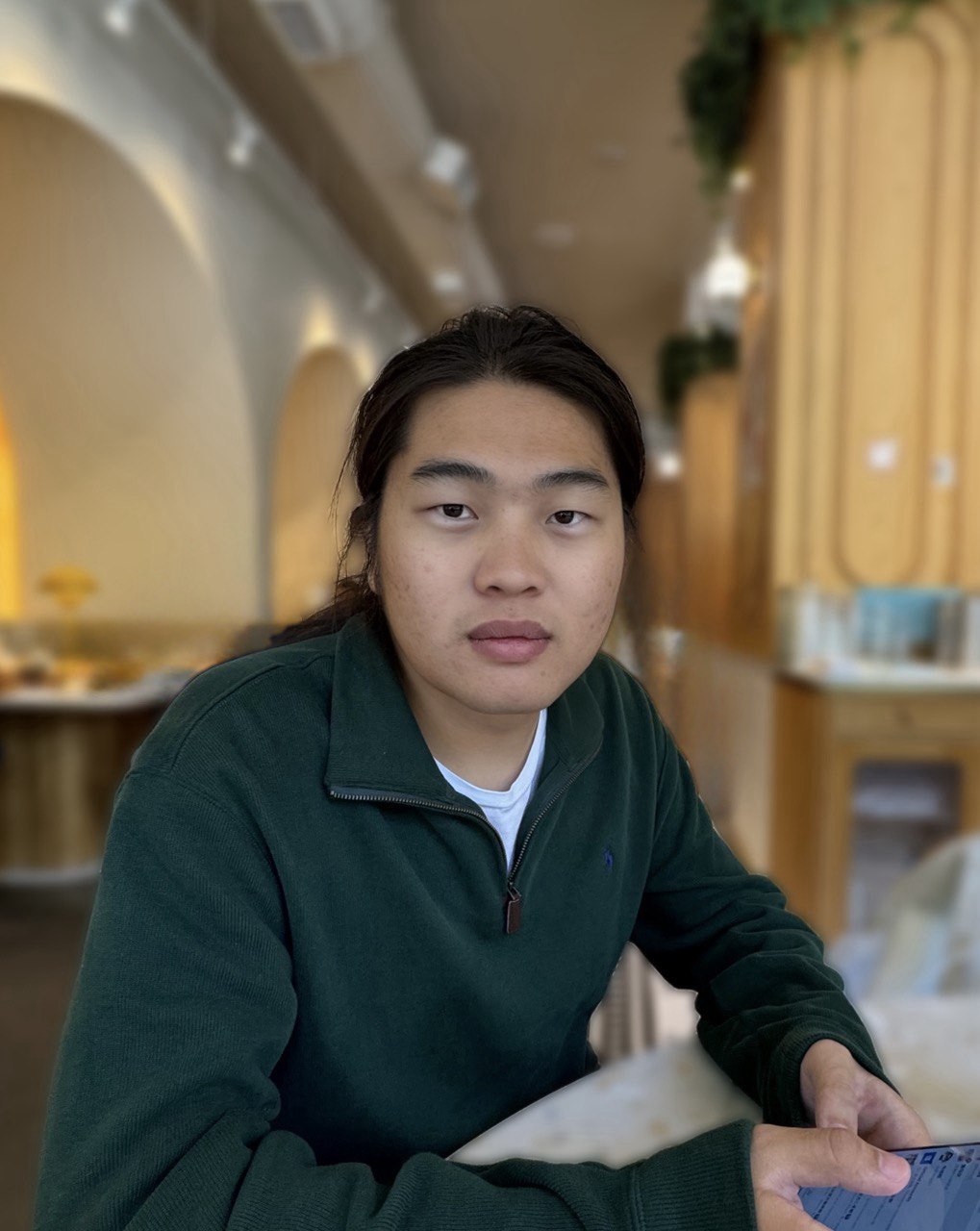
 Yunbei Zhang
· 3 previous affiliations
- Tulane UniversitySince 2022
- PhD student · Since 2022
- The University of Osaka2018–2022
- Undergrad student · 2018–2022
- Peking University2013–2015
- Undergrad student · 2013–2015
Research Overview
Yunbei Zhang focuses on inference-time learning, efficient model adaptation, and the safety of frontier multimodal systems. His research addresses the challenge of deploying models in environments lacking ground-truth labels or verified rewards, spanning from on-device applications to Model-as-a-Service APIs. Recently, his work emphasizes multimodal red-teaming and the social dynamics of autonomous AI agents.
Research Trajectory
The early arc of Zhang's research focused on model generalization and the theoretical mechanisms of knowledge transfer. In 2022, he developed a framework to provide safety guarantees for machine learning models facing distribution shifts. By calculating worst-case performance on unseen data based on distance from training domains, he introduced methods to proactively harden models against these scenarios in On Certifying and Improving Generalization to Unseen Domains. The following year, he established a rigorous mathematical framework to measure and predict how well pre-trained models transfer to new downstream tasks. In Understanding the Transferability of Representations via Task-Relatedness, he decomposed transferability into interpretable gaps—class priors, label sets, and feature distributions—to provide theoretical upper bounds for transfer learning. This work contributed significantly to the broader research areas of Data-Free Estimation of Model Transferability and Label Free Transferability Estimation for Model Selection.
Moving from theoretical bounds to practical deployment challenges, Zhang began addressing unsupervised accuracy estimation and test-time adaptation. In 2024, he tackled the problem of evaluating deployed models experiencing distribution shifts without access to ground-truth labels. His work on Test-time Assessment of a Model's Performance on Unseen Domains via Optimal Transport utilized optimal transport to estimate performance drops in the wild, advancing the methodological area of Scalable Approximation of Optimal Transport.
This focus on optimal transport and adaptation matured into a series of highly efficient prompt-based methods in 2025. He introduced OT-VP: Optimal Transport-Guided Visual Prompting for Test-Time Adaptation, which aligns the distributions of new test data with original training data by learning a small set of visual prompts while keeping the core model frozen. To handle environments where domains shift continually, he developed DPCore: Dynamic Prompt Coreset for Continual Test-Time Adaptation, a lightweight framework that maintains a dynamic coreset of domain-specific prompts to drastically reduce trainable parameters and computation time. Further refining prompt efficiency, he proposed Visual Variational Autoencoder Prompt Tuning (V$^2$APT), which replaces static, one-size-fits-all prompts with a variational autoencoder that dynamically generates instance-dependent prompts tailored to individual images.
Concurrently in 2025, Zhang expanded his research into domain-specific vision-language foundation models. He contributed to automated infrastructure inspection with RoadBench: A Vision-Language Foundation Model and Benchmark for Road Damage Understanding, moving beyond vision-only approaches to incorporate multimodal environmental context. In the medical domain, he developed Describe Anything in Medical Images, a framework designed to generate precise, clinically relevant descriptions of localized findings without relying on expensive region-text datasets.
By 2026, Zhang's trajectory expanded to address the safety, evaluation, and deployment of complex AI agents and black-box systems. Building on his earlier adaptation research, he introduced Adapting in the Dark: Efficient and Stable Test-Time Adaptation for Black-Box Models, a framework that uses a lightweight steering model to adapt APIs to new distributions without requiring access to internal parameters or gradients. During an internship at Amazon, he investigated vulnerabilities in frontier multimodal models, developing Visual Exclusivity Attacks: Automatic Multimodal Red Teaming via Agentic Planning. This work identified a novel threat model where harm emerges strictly through visual reasoning, and proposed an agentic planning framework to synthesize multi-turn exploitation strategies.
His investigation into autonomous agents also extended to their social dynamics and structural evaluation. In Agents in the Wild: Safety, Society, and the Illusion of Sociality on Moltbook, he conducted a large-scale empirical study of agent-to-agent interactions on an AI-only platform, revealing that while agents rapidly form complex structures, their interactions remain shallow and susceptible to philosophical framing attacks. Finally, in Stop Comparing LLM Agents Without Disclosing the Harness, he demonstrated that the software infrastructure managing tools and context is often a larger driver of agent performance than the underlying language model, advocating for new, harness-aware evaluation standards.
Continuing this work on deployment constraints, Zhang introduced BETA in Adapting in the Dark: Efficient and Stable Test-Time Adaptation for Black-Box Models, steering API-only models with a lightweight local white-box model to bypass expensive zeroth-order queries. In multi-agent governance, they presented FlowReview and authorization-paired evaluation in Deny Without Disabling: Authorization-Paired Evaluation and Control for Multi-Agent Systems to prevent composite prohibited actions while preserving authorized collaborative functionality. Extending their focus to embodied systems, Zhang investigated the resilience of robot policies under dynamic environments: they introduced LIBERO-MAX: Do Robot Policies Adapt When the World Changes? to benchmark policy degradation under mid-execution physical and visual events, developed RoboAda: Adapting Frozen Robot Policies at Test Time to Physics They Cannot See to infer execution dynamics and correct commands without gradient updates, introduced RoboLiveMem: Is Robot Memory Solved When the World Does Not Wait? to assess memory degradation when scenes change in real time, and proposed RoboThink: Let the Agent Think, Let the Policy Act, decoupling high-level agent reasoning from low-level policy execution via instruction and feedback channels. In addition, they addressed foundational multimodal bottlenecks with When Can Text Replace Vision? Structural Bottlenecks in Diagram Reasoning, diagnosing when textual extraction impairs diagram understanding, and developed UtoMe: Observation-Uncertainty-Guided Token Merging for Weather Foundation Models to compress weather transformers by combining dynamics saliency with observational uncertainty.
Current Directions
The most recent papers in the evidence point toward two primary research directions. First, recent work investigates the safety, evaluation, and social dynamics of autonomous AI agents and multimodal systems. This includes developing automated red-teaming frameworks that expose vulnerabilities unique to visual reasoning, as well as studying the shallow social structures and philosophical vulnerabilities that emerge when agents interact at scale. Additionally, this line of research emphasizes the critical role of the software "harness"—the infrastructure managing tools, context, and error recovery—in properly evaluating agent performance on long-horizon tasks.
Second, ongoing research addresses the practical challenges of deploying models as services (MaaS). This involves designing stable, efficient test-time adaptation methods for black-box models, allowing systems to adapt to new distributions via API access without requiring visibility into the model's internal parameters or gradients.
Profile updated
Loading new papers…
Other researchers whose papers cluster into the same research directions — a proxy for overlapping technical interests and shared intellectual neighborhoods.
See something wrong? Report a mistake