

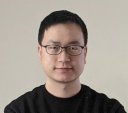
 Jun Wu
· 3 previous affiliations
- Michigan State UniversitySince 2024
- Assistant Professor · Since 2024
- Doctor of Philosophy - PhD, Computer Science · 2019–2024
- Summer Intern · 2022
13 other authors named Jun Wu: Jun Wu (Fudan University · 14 papers), Jun Wu (5 papers), Jun Wu (Amazon (United States) · 5 papers), Jun Wu (4 papers), Jun Wu (4 papers), and 8 more
Research Overview
Jun Wu focuses on trustworthy machine learning, transfer learning, and graph neural networks. His early work addressed representation learning in complex and imbalanced networks before expanding into domain adaptation and robust federated learning under distribution shifts. Currently, his research emphasizes the reliability and reasoning capabilities of large language models, exploring methods to ensure factuality and computational efficiency.
Research Trajectory
Jun Wu’s early research concentrated on graph representation learning, with a particular focus on handling structural complexities and class imbalances in network data. He introduced ImVerde: Vertex-Diminished Random Walk for Learning Imbalanced Network Representation, a framework that employs a novel random walk strategy to encourage the exploration of under-represented nodes, thereby generating more separable embeddings. Continuing in this domain, he developed DEMO-Net: Degree-specific Graph Neural Networks for Node and Graph Classification, which explicitly incorporates degree-specific graph structures into the convolution process to better distinguish structure-aware node neighborhoods.
As his focus expanded toward data heterogeneity and distribution shifts, Wu began investigating the vulnerabilities and adaptive capabilities of machine learning models across different domains. He explored security concerns in transfer learning with Indirect Invisible Poisoning Attacks on Domain Adaptation. To address the challenge of time-evolving relatedness between source and target domains, he proposed A Unified Meta-Learning Framework for Dynamic Transfer Learning and further formalized these concepts in Adaptive Knowledge Transfer on Evolving Domains. This work introduced label-informed divergence measures to bound errors when joint data distributions shift over time. He continued to broaden the scope of domain adaptation techniques by addressing open-set scenarios in Domain Adaptation with Dynamic Open-Set Targets and continuous output spaces in Distribution-Informed Neural Networks for Domain Adaptation Regression.
Concurrently, Wu began addressing the reliability of distributed machine learning systems. With collaborators, he investigated the area of Federated Adversarial Training for Robust Distributed Models, contributing to Adversarial Robustness through Bias Variance Decomposition: A New Perspective for Federated Learning. Recognizing that real-world federated networks rarely feature independent and identically distributed (IID) data, he later developed BOBA: Byzantine-Robust Federated Learning with Label Skewness. This two-stage method mitigates the selection bias and heightened vulnerability to Byzantine attacks that occur when individual clients only have access to a limited subset of data classes.
Bridging his expertise in graph structures and transfer learning, Wu introduced Graph-Structured Gaussian Processes for Transferable Graph Learning. By deriving a Bayesian model from an infinite-width graph neural network, this framework provides a mathematically grounded approach to transferring knowledge between graphs that exhibit fundamentally different connectivity patterns. He subsequently synthesized his broader perspective on model reliability in Trustworthy Transfer Learning: A Survey. This comprehensive taxonomy connects traditional performance metrics with broader concerns in areas such as Mitigating Negative Transfer via Feature Decoupling, Robustness Inheritance in Pretrained Feature Representations, Parameter Efficient Fine Tuning for Large Foundation Models, and the emerging challenge of The Dynamics of Model Collapse in Recursive Synthetic Training.
Most recently, Wu’s research has pivoted toward the evaluation and enhancement of large language models (LLMs). He participated in the development of HalluGuard: Demystifying Data-Driven and Reasoning-Driven Hallucinations in LLMs, which leverages Neural Tangent Kernels to decompose hallucinations into training-time knowledge gaps and inference-time logical breakdowns. Addressing the computational efficiency of LLMs, he collaborated on Plan and Budget: Effective and Efficient Test-Time Scaling on Reasoning Large Language Models, a framework that adaptively allocates token budgets based on estimated query complexity. Further advancing the reliability of online LLM deployments, he co-developed Beyond Reactivity: Proactive Adaptive Conformal Inference for Online LLM Factuality, a system that combines proactive distribution shift detection with reactive error tracking to provide real-time factuality guarantees. Together, these recent works contribute significantly to the research direction of Stepwise Verification for Robust Multi-Step Reasoning.
Current Directions
Recent work investigates the reliability, factuality, and computational efficiency of large language models deployed in dynamic environments. A primary focus is on developing rigorous, mathematically grounded frameworks to detect and mitigate hallucinations. This involves distinguishing between errors caused by fundamental gaps in training data and those resulting from breakdowns in logical reasoning during inference.
Additionally, current research addresses the challenge of test-time scaling and adaptive computation in LLMs. By decomposing complex queries and dynamically allocating computational budgets based on problem difficulty, this work aims to resolve reasoning miscalibration—preventing models from overthinking simple tasks while ensuring sufficient deliberation for complex ones. Finally, there is an ongoing emphasis on providing formal factuality guarantees for LLMs operating over non-stationary data streams, utilizing techniques like proactive adaptive conformal inference to maintain robustness as user queries and underlying data distributions evolve.
Profile updated
Loading new papers…
Other researchers whose papers cluster into the same research directions — a proxy for overlapping technical interests and shared intellectual neighborhoods.
See something wrong? Report a mistake