

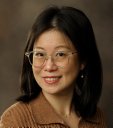
 Jingrui He
· 3 previous affiliations
- University of Illinois Urbana-ChampaignSince 2019
- Full Professor · Since 2023
- Current
- Associate Professor · 2019–2023
- Arizona State University2014–2019
- Associate Professor · 2018–2019
- Assistant Professor · 2014–2018
- Stevens Institute of Technology2013–2014
- Assistant Professor · 2013–2014
Research Overview
Jingrui He focuses on heterogeneous machine learning, graph neural networks, and rare category analysis. Her early work established foundational techniques for active learning in imbalanced datasets and complex network structures. More recently, her research investigates the integration of graph reasoning into large language models, alongside efficient optimization and fine-tuning strategies for foundation models.
Research Trajectory
Her early research addressed challenges in data retrieval and imbalanced learning. This included participation in Manifold-ranking based image retrieval (2004), which explored ranking mechanisms for visual data. Soon after, she introduced foundational methods for identifying scarce data points, notably in Nearest-Neighbor-Based Active Learning for Rare Category Detection (2007). This work contributed significantly to the research direction of Learning with Unknown Class Priors in Weak Supervision, demonstrating how local density changes could drastically reduce the labeling requirements for de-novo rare category detection in applications like fraud detection.
Moving into the era of complex relational data, her research expanded to graph neural networks (GNNs) and sequential decision-making. In Graph Neural Bandits (2023), her lab developed a framework that models fine-grained collaborative effects among users via estimated graphs to balance exploration and exploitation in recommendation systems. Continuing the focus on imbalanced data within network structures, she collaborated on Class-Imbalanced Graph Learning without Class Rebalancing (2024). This research shifted the paradigm from data-level reweighting to a topological approach, addressing structural phenomena like ambivalent message-passing. This aligns with broader efforts in the areas of Topology-Aware Imbalanced Learning on Graphs and Reducing Label Position Bias in Graph Neural Networks. Recognizing the growing intersection of graph theory and large-scale AI, she also co-authored Parametric Graph Representations in the Era of Foundation Models: A Survey and Position (2024), which explored how graph laws can parameterize structure to aid multi-modal representation learning, contributing to the direction of Scaling Graph Reasoning within Finite Context Windows.
By 2025, her group was deeply engaged in optimizing foundation models and extending their capabilities to complex, non-IID data. To address the memory constraints of large architectures, they proposed ResMoE: Space-efficient Compression of Mixture of Experts LLMs via Residual Restoration, a technique that approximates expert parameters using a barycenter expert and residuals to achieve substantial parameter reduction. In the domain of model training, Transformer Copilot: Learning from The Mistake Log in LLM Fine-tuning introduced an auxiliary model designed to predict and rectify a language model's past failures at the logit level. Her work on complex data structures continued with Invariant Link Selector for Spatial-Temporal Out-of-Distribution Problem, which utilized the Information Bottleneck method to identify robust, label-representative components in temporal graphs. Concurrently, she advanced recommendation systems with Bi-level Hierarchical Neural Contextual Bandits for Online Recommendation, reducing computational costs in massive action spaces. Further bridging graphs and language models, her lab published Bring Complex Geometric Information to LLMs: A Positional Survey of Graph Parametric Representation, reinforcing the potential of graph parametric representations to help LLMs reason over complex topologies.
The most recent phase of her trajectory focuses on advanced reasoning, optimization theory, and multi-modal integration in large language models. In TaTToo: Tool-Grounded Thinking PRM for Test-Time Scaling in Tabular Reasoning (2026), her team designed a Process Reward Model that integrates tool-based verification into the reasoning process, significantly improving step-by-step supervision for tabular data. On the theoretical front, Preconditioning Neural Tangent Kernel for Adaptive Optimization bridged the gap between standard Neural Tangent Kernel theory and the real-world use of adaptive optimizers like Adam during foundation model fine-tuning. Her research also explored novel data modalities, as seen in Language in the Flow of Time: Time-Series-Paired Texts Weaved into a Unified Temporal Narrative, which demonstrated that text embeddings paired with time series exhibit periodic patterns that can boost forecasting accuracy. Finally, addressing the computational burden of data curation and few-shot learning, she led the development of Influence-Preserving Proxies for Gradient-Based Data Selection in LLM FineTuning, which compresses target models to efficiently identify impactful training examples, and Auto-regressive In-context Demonstration Selection, which frames the selection and ordering of few-shot examples as a sequential generation problem.
Current Directions
The most recent papers in the evidence indicate a strong focus on the efficiency, reasoning capabilities, and multi-modal extensions of large language models. Current work investigates advanced fine-tuning and data selection strategies, such as using influence-preserving proxies to reduce the computational overhead of gradient-based data curation and framing in-context demonstration selection as an auto-regressive generation task. Additionally, her group is actively exploring how to bridge foundation models with complex, structured data. This includes developing process reward models for tool-grounded tabular reasoning, integrating time-series data with textual narratives for improved forecasting, and establishing theoretical frameworks to adapt Neural Tangent Kernel analysis for modern adaptive optimizers.
Profile updated
Loading new papers…
Other researchers whose papers cluster into the same research directions — a proxy for overlapping technical interests and shared intellectual neighborhoods.
See something wrong? Report a mistake