

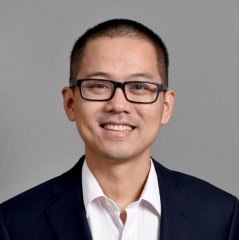
 Hanghang Tong
· 6 previous affiliations
- University of Illinois Urbana-ChampaignSince 2019
- Professor & University Scholar · Since 2024
- Associate Professor · Since 2019
- Current
- Associate Professor · 2019–2024
- Arizona State University2014–2019
- Associate Professor · 2018–2019
- Assistant Professor · 2014–2018
- City University of New York2013–2014
- Assistant Professor · 2013–2014
- IBM2010–2012
- Research Staff Member · 2010–2012
- Carnegie Mellon University2005–2009
- Ph.D, Machine Learning · 2005–2009
- Tsinghua University2002–2005
- MS, Automation · 2002–2005
Research Overview
Hanghang Tong focuses on large-scale data mining, graph machine learning, and network science. His trajectory spans foundational algorithms for subgraph discovery and matrix factorization to modern graph neural networks and network alignment. Recently, his work investigates the intersection of graph reasoning, safety assurance, and the alignment of large language and multimodal models.
Research Trajectory
His early contributions to graph mining focused on foundational algorithms for subgraph discovery and network proximity. He introduced Center-piece subgraphs: problem definition and fast solutions (2006), which developed methods to find central nodes connecting multiple query nodes in social and biological networks. This was followed by Random walk with restart: fast solutions and applications (2008), establishing scalable techniques for measuring node proximity. Expanding into matrix methods, he explored the area of Additive Parts Based Representation Learning with Towards Evolutionary Nonnegative Matrix Factorization (2011). This work presented eNMF, an incremental approach to updating factorized matrices on evolving data streams to reduce computational overhead, contributing to broader efforts in targeted model editing and incremental adaptation.
Moving into the deep learning era, his research expanded into robust and topology-aware graph representation learning, reflecting a long-term interest in the area of Graph Learning with Continuous Node and Edge Attributes. In the specific area of Preserving Semantic Identity in Graph Contrastive Learning, his group developed ArieL: Adversarial Graph Contrastive Learning (2024). This framework generates informative augmented views via adversarial attacks, significantly enhancing model resilience and advancing the broader field of Scalable Adversarial Robustness for Graph Neural Networks. Addressing structural biases, he also investigated the area of Topology-Aware Imbalanced Learning on Graphs with Class-Imbalanced Graph Learning without Class Rebalancing (2024). This work introduced a topological framework to rectify ambivalent and distant message-passing without relying on traditional data resampling. Further refining GNN architectures, he addressed feature-driven graph rewiring for heterophilic networks through Graph homophily booster: Reimagining the role of discrete features in heterophilic graph learning (2026), mitigating the performance degradation of standard GNNs on graphs where connected nodes possess dissimilar features.
His ongoing focus on complex network structures includes advancing standardized evaluation protocols for machine learning research with PLANETALIGN: A Comprehensive Python Library for Benchmarking Network Alignment (2026). In parallel, he explored relational optimal transport for incomparable data spaces by developing AvAtar: Learning to Align via Active Optimal Transport (2026), an active learning framework that queries highly informative pairs to improve global alignment accuracy with minimal manual supervision.
A major recent theme in his trajectory is the intersection of graph structures and foundation models, particularly in the area of Scaling Graph Reasoning within Finite Context Windows. In Language Models are Graph Learners (2024), he and his collaborators demonstrated how off-the-shelf LLMs can achieve competitive performance on node classification tasks through strategic input enrichment, integrating large language models with graph structures without architectural modifications.
His most recent work heavily emphasizes the safety, alignment, and continual adaptation of large language and vision-language models. To improve adversarial robustness and knowledge erasure in aligned language models, he proposed Efficient Inference Scaling for Safety Assurance (2025), introducing an inference scaling technique based on a multifurcation reward model to defend against jailbreaking attempts. He also investigated multi-dimensional moral alignment for language models with MORALISE: A Structured Benchmark for Moral Alignment in Visual Language Models (2026). To enhance multimodal reasoning, he contributed to research on reliability and control via internal model activations through Seeing but Not Believing: Probing the Disconnect Between Visual Attention and Answer Correctness in VLMs (2026), which uses internal signals to align visual evidence with final outputs. Finally, he has explored novel training paradigms for foundation models. Beyond Log Likelihood: Probability-Based Objectives for Supervised Fine-Tuning across the Model Capability Continuum (2026) introduced prior-leaning objectives that outperform standard negative log-likelihood on tasks models already comprehend. In the domain of parameter-efficient architectural expansion for continual learning, he developed Continual Low-Rank Adapters for LLM-based Generative Recommender Systems (2026), utilizing a single evolving LoRA adapter to balance stability and plasticity as user preferences shift.
Current Directions
The most recent papers in the evidence address the safety, alignment, and continual adaptation of large language and vision-language models. Recent work investigates inference-time interventions to improve the adversarial robustness of LLMs against jailbreaking, as well as methods to ensure visual language models accurately utilize their internal attention mechanisms for correct reasoning. Additionally, current research explores parameter-efficient continual learning for generative recommender systems and novel probability-based objectives for supervised fine-tuning. A continuing structural theme is the integration of graph learning paradigms with foundation models, focusing on heterophilic graph rewiring and active optimal transport for network alignment.
Profile updated
Loading new papers…
Other researchers whose papers cluster into the same research directions — a proxy for overlapping technical interests and shared intellectual neighborhoods.
See something wrong? Report a mistake