

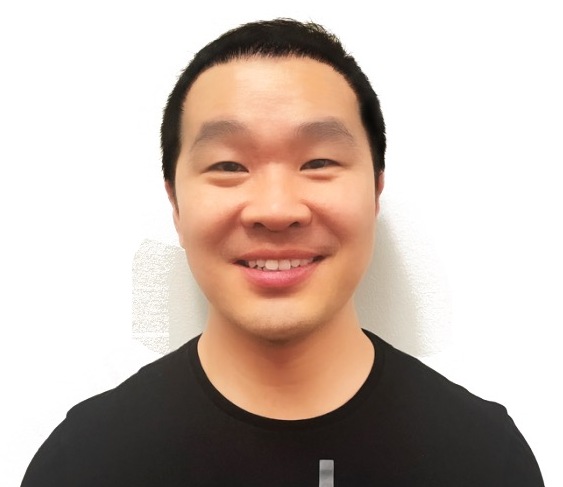
 Zhengzhang Chen
· 3 previous affiliations
- NEC (United States)Since 2014
- Senior Research Scientist · Since 2014
- Northwestern University2012–2014
- Research Assistant Professor · 2013–2014
- Postdoc · 2012–2013
- North Carolina State University2008–2012
- PhD student · 2008–2012
Research Overview
Zhengzhang Chen focuses on graph artificial intelligence, causal discovery, and anomaly detection within complex, dynamic environments. His trajectory spans from early work in spatio-temporal forecasting and data stream learning to the development of robust systems for cybersecurity and root cause analysis. Most recently, he investigates agentic AI and large language model reasoning for multi-modal causal inference and domain specialization.
Research Trajectory
His early research addressed the challenges of modeling complex dynamic systems and extracting actionable insights from highly underdetermined data. In the biological domain, he developed Spice: discovery of phenotype-determining component interplays, a method for identifying critical component interactions in systems biology. Concurrently, he investigated spatio-temporal data, formulating supervised machine learning approaches for the Forecast Oriented Classification of Spatio-Temporal Extreme Events. This work aimed to improve the seasonal forecasting of phenomena such as tropical cyclones and hurricanes by targeting variables directly related to extreme events rather than relying solely on physics-based models. He also contributed to the broader research direction of Learning in Non-Stationary Data Streams, participating in the design of Feedback-driven multiclass active learning for data streams to efficiently query labels in evolving environments.
By 2019, his focus expanded to cybersecurity, where he leveraged graph neural networks to model program behavior and detect malicious activity. He introduced MatchGNet in Heterogeneous Graph Matching Networks for Unknown Malware Detection, a Siamese Graph Neural Network framework that learns benign behavioral patterns to identify deviations. This work advanced the research direction of Detecting Zero Day Exploits Beyond Historical Signatures and contributed to the area of Hierarchical Graph Attention Networks. He further explored this domain with DeepHGNN in Attentional Heterogeneous Graph Neural Network: Application to Program Reidentification, which utilizes attention mechanisms to verify program identities and resist sophisticated malware camouflage. Additionally, he collaborated on NoDoze: Combatting Threat Alert Fatigue with Automated Provenance Triage, addressing the operational challenge of alert fatigue in security operations centers.
Building on his expertise in system behavior, he developed robust methodologies for anomaly detection and root cause analysis (RCA) in complex IT and operational technology systems. He proposed OC4Seq in Multi-Scale One-Class Recurrent Neural Networks for Discrete Event Sequence Anomaly Detection, which maps normal discrete event sequences into tight latent hyperspheres to identify system log anomalies. To pinpoint the origins of system failures, he introduced REASON in Hierarchical Graph Neural Networks for Causal Discovery and Root Cause Localization, a framework that models "networks of networks" to track fault propagation across system layers. Recognizing the need for real-time diagnostics, he subsequently developed CORAL in Disentangled Causal Graph Learning for Online Unsupervised Root Cause Analysis, which disentangles state-invariant and state-dependent causal relationships to enable near-real-time, streaming RCA.
Continuing this trajectory, he explored multi-modal fusion and correlation shifts. He collaborated on RIO-CPD: A Riemannian Geometric Method for Correlation-aware Online Change Point Detection, a lightweight framework that tracks sliding-window correlation matrices on the Riemannian manifold to detect subtle shifts in multivariate time series. He also unified system metrics and unstructured logs into a single causal graph with MULAN, detailed in Multi-modal Causal Structure Learning and Root Cause Analysis, which leverages log-tailored language models and contrastive learning to improve fault identification accuracy.
Most recently, his research has integrated large language models (LLMs) and multi-agent architectures to solve complex reasoning and annotation tasks. He designed TESSA, introduced in Decoding Time Series with LLMs: A Multi-Agent Framework for Cross-Domain Annotation, which employs generalist and specialist agents to automatically generate high-quality descriptions for complex time series data. Addressing the internal mechanics of LLMs, he proposed LOKA in Resolving Editing-Unlearning Conflicts: A Knowledge Codebook Framework for Large Language Model Updating, a modular approach that resolves the tension between adding new information and unlearning unwanted data without degrading model performance. He has also applied these advanced models to fundamental statistical challenges, as seen in Exploring Multi-Modal Data with Tool-Augmented LLM Agents for Precise Causal Discovery, which uses tool-augmented agents to distinguish genuine causal relationships from coincidental correlations. This broader perspective on the future of language models is synthesized in his comprehensive survey, Domain Specialization as the Key to Make Large Language Models Disruptive: A Comprehensive Survey.
Current Directions
Recent work investigates the intersection of large language models, multi-agent systems, and causal inference. The most recent papers in the evidence address how tool-augmented LLM agents can overcome the limitations of traditional statistical methods in causal discovery, particularly by integrating semantic context to distinguish true causes from spurious correlations. Additionally, current research explores the mechanics of LLM knowledge management, focusing on frameworks that allow for simultaneous model editing and unlearning without catastrophic forgetting. This encompasses a broader interest in domain specialization, leveraging multi-agent role specialization to annotate cross-domain time series data and adapt foundational models for precise, real-world applications.
Profile updated
Loading new papers…
Other researchers whose papers cluster into the same research directions — a proxy for overlapping technical interests and shared intellectual neighborhoods.
See something wrong? Report a mistake