

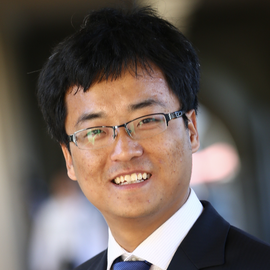
 Dongjin Song
· 3 previous affiliations
- University of ConnecticutSince 2020
- Associate Professor · Since 2025
- Current
- Assistant Professor · 2020–2025
- NEC (United States)2016–2020
- Researcher · 2016–2020
- University of California San Diego2010–2016
- PhD student · 2010–2016
Research Overview
Dongjin Song focuses on time series analysis, graph machine learning, and continual learning. His trajectory spans from early work in binary coding and network analysis to the development of deep learning architectures for anomaly detection and forecasting in complex systems. Currently, he investigates the integration of large language models and foundation models to enhance time series forecasting and zero-shot reasoning.
Research Trajectory
His early research addressed efficiency in large-scale data systems. In 2015, he explored binary coding techniques to optimize visual search in Top Rank Supervised Binary Coding for Visual Search and investigated user behavior analytics through latent link recommendation in Efficient Latent Link Recommendation in Signed Networks. Transitioning toward sequential data, he contributed to the area of Interpretable Neural Time Series Forecasting with A Dual-Stage Attention-Based Recurrent Neural Network for Time Series Prediction, which introduced an attention mechanism to capture long-term dependencies and select relevant driving series. He subsequently developed MSCRED, a deep learning framework for unsupervised anomaly detection and diagnosis in complex sensor data, detailed in A Deep Neural Network for Unsupervised Anomaly Detection and Diagnosis in Multivariate Time Series Data. Continuing with efficient time series processing, he introduced Deep Unsupervised Binary Coding Networks (DUBCNs) to compress complex multivariate data into compact codes for fast retrieval in Deep Unsupervised Binary Coding Networks for Multivariate Time Series Retrieval.
Around 2021, his focus expanded to graph neural networks and the challenges of sparse or evolving data. With collaborators, he developed DGM², a generative model for forecasting with incomplete data, in Dynamic Gaussian Mixture based Deep Generative Model For Robust Forecasting on Sparse Multivariate Time Series, touching upon the broader research direction of Deep Learning for Irregularly Sampled Time Series. Concurrently, he advanced the area of Continual Learning on Evolving Graph Topologies by proposing Hierarchical Prototype Networks to handle emerging node categories without catastrophic forgetting in Hierarchical Prototype Network for Continual Graph Representation Learning. To standardize evaluation in this domain, he helped establish benchmark tasks in CGLB: Benchmark Tasks for Continual Graph Learning, which intersects with the direction of Adapting Homogeneous Graph Learning to Heterogeneous Structures. During this period, he also addressed optimization challenges in distributed environments. His group designed the ASPIRE algorithm for distributionally robust optimization in Distributed Distributionally Robust Optimization with Non-Convex Objectives, and he participated in mitigating straggler effects for the research direction of Single Loop Stochastic Bilevel Optimization through the framework presented in Asynchronous Distributed Bilevel Optimization.
By 2024, his research increasingly integrated large language models with time series analysis. He directed the development of S2IP-LLM, a framework that aligns numerical patterns with semantic anchors, in S2IP-LLM: Semantic Space Informed Prompt Learning with LLM for Time Series Forecasting, advancing the area of Aligning Continuous Modalities with Language Model Latent Spaces. He also synthesized the state of the field through comprehensive surveys, mapping out methodologies in Continual Learning on Graphs: Challenges, Solutions, and Opportunities and Empowering Time Series Analysis with Large Language Models: A Survey.
In recent years, his work has bridged foundational models and critical real-world applications. He applied spatially aware graph neural networks to physical infrastructure, modeling dynamic relationships to predict extreme weather impacts in Empowering Power Outage Prediction with Spatially Aware Hybrid Graph Neural Networks and Contrastive Learning. In the healthcare domain, he explored deep learning for personalized monitoring in Predicting Depression Treatment Outcome Using Daily Step Count Sensory Data. Returning to foundation models, his lab introduced retrieval-augmented generation for zero-shot forecasting in TS-RAG: Retrieval-Augmented Generation based Time Series Foundation Models are Stronger Zero-Shot Forecaster, and developed a lightweight framework to adaptively route tasks to the most appropriate foundation model in TimeRouter: Efficient and Adaptive Routing of Time Series Foundation Models.
Current Directions
The most recent papers in the evidence address the efficiency and adaptability of foundation models for time series analysis, alongside applied machine learning for physical and health systems. Recent work investigates retrieval-augmented generation to enable zero-shot forecasting without fine-tuning, as well as lightweight routing mechanisms that dynamically assign time series tasks to the most suitable foundation models. Additionally, ongoing research applies spatially aware graph neural networks to infrastructure resilience, such as power outage prediction, and leverages deep learning on wearable sensory data for personalized healthcare monitoring.
Profile updated
| Paper | Venue | Year |
|---|---|---|
| From Dense to Sparse: Event Response for Enhanced Residential Load ForecastingGitHubergoucao/ | IEEE Trans. Instrumentation & Measurement | 2026 |
| TS-RAG: Retrieval-Augmented Generation based Time Series Foundation Models are Stronger Zero-Shot ForecasterGitHubUConn-DSIS/ | NeurIPS | 2025 |
Loading new papers…
Other researchers whose papers cluster into the same research directions — a proxy for overlapping technical interests and shared intellectual neighborhoods.
See something wrong? Report a mistake