

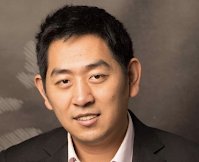
 Wei Cheng
· 8 previous affiliations
- NEC (United States)Since 2015
- Principal Researcher · Since 2015
- Doctor, Computer Science · 2010–2015
- Visiting Student, Computer Science · 2013–2015
- Research Intern · 2014
- Tencent (China)2010
- Research Intern · 2010
- Tsinghua University2007–2010
- MS student · 2007–2010
- Microsoft (United States)2008–2009
- Research Intern · 2008–2009
- Atos (France)2008
- Intern · 2008
5 other authors named Wei Cheng: Wei Cheng (StepFun AI (China) · 16 papers), Wei Cheng (Nanjing University · 2 papers), Wei Cheng (Meta (United States) · Brown University · 2 papers), Wei Cheng (1 paper), Wei Cheng (1 paper)
Research Overview
Wei Cheng focuses on machine learning, data science, and natural language processing, with an emphasis on time series analysis, graph neural networks, and the adaptation of large language models. His trajectory spans early work in bioinformatics and anomaly detection to foundational contributions in graph representation learning. Recently, his research investigates dynamic prompt tuning, inference scaling for reasoning agents, and the robust detection of AI-generated text.
Research Trajectory
Cheng’s early research addressed high-dimensional biological data and complex network structures. In 2012, he developed Learning Transcriptional Regulatory Relationships Using Sparse Graphical Models, which utilized hidden variables to map gene regulation networks while accounting for confounding noise. He subsequently expanded his focus to heterogeneous data integration, introducing Flexible and robust co-regularized multi-domain graph clustering (2013) to handle scenarios where data instances across domains lack strict one-to-one relationships. This interest in complex system behaviors naturally extended to anomaly detection; in Ranking Causal Anomalies via Temporal and Dynamical Analysis on Vanishing Correlations (2016), he leveraged invariant networks to identify system anomalies by analyzing the structural evolution of component interactions.
As his work progressed into the late 2010s, Cheng increasingly focused on deep learning architectures for structured and temporal data, contributing to the broader area of Dynamic Weighting of Historical Sequences via Temporal Attention. He introduced the Spatio-Temporal Attentive RNN (STAR) in Spatio-Temporal Attentive RNN for Node Classification in Temporal Attributed Graphs (2019). This framework combined neighborhood-aware gated recurrent units with dual-attention mechanisms to classify nodes in evolving graphs, simultaneously advancing the research direction of Explaining Predictions in Graph Neural Networks by highlighting influential neighbors and time periods. Recognizing the broader need for global interpretability in graph models, he later developed Parameterized Explainer for Graph Neural Network (2020), which provided inductive, generalizable explanations rather than instance-specific ones, aligning with work in the area of Mutual Information Maximization for Informative Feature Selection.
In parallel, Cheng explored contrastive learning paradigms to improve representation learning without extensive labeled data. He participated in the development of InfoGCL: Information-Aware Graph Contrastive Learning (2021), which formalized how graph information is transformed during contrastive view generation. He later applied similar information-theoretic principles to temporal data in Time Series Contrastive Learning with Information-Aware Augmentations (2023), introducing a meta-learner to automatically select augmentations that balance signal fidelity with task difficulty.
Beginning around 2024, Cheng’s research shifted significantly toward the optimization, adaptation, and security of Large Language Models (LLMs). A major theme of this recent work is parameter-efficient fine-tuning. He proposed Dynamic Prompting: A Unified Framework for Prompt Tuning (2024), which advanced the research direction of Dynamic Input-Aware Prompting and Adaptation by adjusting prompt position, length, and representation based on specific tasks. He refined this approach in Position Really Matters: Towards a Holistic Approach for Prompt Tuning (2025), demonstrating that instance-dependent soft tokens yield substantial performance gains across modalities, a key contribution to the area of Instance Aware Dynamic Prompting. Alongside adaptation, he investigated data privacy during fine-tuning, guiding the development of LARGE LANGUAGE MODELS CAN BE GOOD PRIVACY PROTECTION LEARNERS (2024) to inject domain-specific knowledge while safeguarding personally identifiable information.
Cheng has also made extensive contributions to the security and evaluation of AI-generated content, particularly within the research direction of The Generalization Gap in AI Text Detection. He introduced DNA-GPT (2024), a training-free method that detects machine-generated text by analyzing the divergence between original inputs and LLM continuations. However, recognizing the fragility of such defenses, his group subsequently published Humanizing the Machine: Proxy Attacks to Mislead LLM Detectors (2025), which exposed vulnerabilities in contemporary AI detection systems against adversarial proxy attacks.
Most recently, Cheng’s focus has expanded to LLM inference scaling, autonomous agents, and reinforcement learning. He developed SkillGen: Learning Domain Skills for In-Context Sequential Decision Making (2025), a framework that uses temporal-difference credit assignment to extract high-utility domain skills from raw trajectories, improving the token efficiency of LLM agents. To enhance reasoning and code generation at inference time, his team introduced SFS: Smarter Code Space Search improves LLM Inference Scaling (2025), framing code generation as a black-box optimization problem that diversifies search directions across multiple solution trees. Continuing this focus on software engineering agents, he directed the research in Escaping Whack-a-Mole: Optimizing Documentation as Repo-Specific Playbooks for Coding Agents (2026), which optimizes repository documentation specifically for machine consumption rather than human readers. Concurrently, he collaborated on Actor-Curator: Scalable Policy-driven Curriculum Learning for RL Post-Training (2026), addressing the challenges of curriculum learning when post-training large foundation models with reinforcement learning.
Current Directions
Recent work investigates the deployment of large language models as autonomous reasoning and coding agents. The most recent papers in the evidence address inference-time scaling laws, exploring how search-based optimization and dynamic curriculum learning can improve LLM performance on complex sequential decision-making tasks. This includes developing frameworks that treat code generation as a structured search problem and optimizing repository environments specifically for agentic interaction. Additionally, ongoing research continues to probe the security and reliability of foundation models, focusing on the adversarial robustness of AI-generated text detectors and the privacy implications of domain-specific fine-tuning.
Profile updated
Loading new papers…
Other researchers whose papers cluster into the same research directions — a proxy for overlapping technical interests and shared intellectual neighborhoods.
See something wrong? Report a mistake