

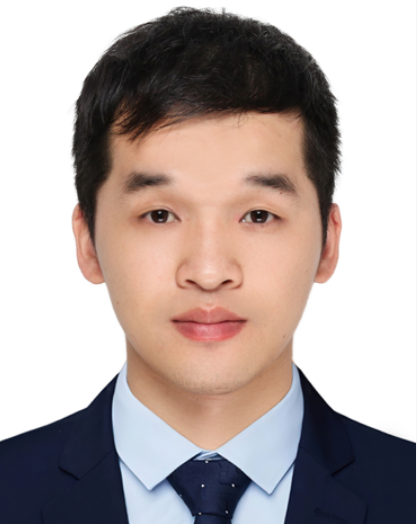
 Zhen Liu
· 3 previous affiliations
- Nanyang Technological UniversitySince 2026
- Postdoc · Since 2026
- South China University of Technology2018–2025
- PhD student · 2021–2025
- MS student · 2018–2021
- PhD student · 2024–2025
9 other authors named Zhen Liu: Zhen Liu (National University of Defense Technology · 215 papers), Zhen Liu (Shenzhen Research Institute of Big Data · 72 papers), Zhen Liu (Georgia Institute of Technology · Université de Montréal · 46 papers), Zhen Liu (University of Electronic Science and Technology of China · 14 papers), Zhen Liu (Genentech · 9 papers), and 4 more
Research Overview
Zhen Liu focuses on deep learning for time series analysis, specifically developing unified, scalable representation-learning frameworks for classification and forecasting. The research addresses fundamental challenges in the field, including label scarcity, noisy supervision, and the complexities of irregularly sampled multivariate data. By integrating domain-specific knowledge with advanced neural architectures such as graph networks and diffusion models, Liu aims to improve the generalization and robustness of time-series models across diverse applications, ranging from industrial automation to clinical informatics.
Research Trajectory
The publication record indicates a significant evolution in research focus, beginning with early contributions to automation and educational technology before specializing in deep learning. Between 1999 and 2011, the work addressed Computer Integrated Manufacturing Systems (CIMS), university textbook reform, and the pedagogical implications of computer-based language testing. A subsequent phase involved the application of statistical methods to genetics, specifically QTL Mapping for Leaf Angle and Leaf Space above Ear Position in Maize(Zea mays L.), which utilized simple sequence repeat markers to analyze the genetic mechanisms of plant architecture.
The current research program, established during doctoral studies at South China University of Technology and continued at Nanyang Technological University, centers on the intersection of time series analysis and deep representation learning. This trajectory began with a focus on robustness and semi-supervised learning, addressing the practical reality that high-quality labeled time-series data is often difficult to obtain. This work explored co-training strategies and the mitigation of Minority Collapse in Imbalanced Deep Learning, where models may fail to capture the nuances of underrepresented classes or patterns.
From 2024 onwards, the focus expanded to include irregular multivariate time series (IMTS) and the integration of external knowledge into neural networks. This period saw the development of dynamic graph networks that leverage textual medical knowledge to model correlations between irregularly sampled health variables. Most recently, the research has moved toward the development of time-series foundation models and highly efficient, interpretable classification frameworks. These efforts aim to overcome Preventing Rank Collapse in Deep Neural Networks by ensuring that learned representations maintain sufficient diversity across multiple scales and domains.
Current Directions
Robust and Semi-Supervised Learning
A primary area of focus is the development of learning paradigms that can function effectively under imperfect supervision. This includes addressing "label noise"—where training samples are incorrectly labeled—and "label scarcity," where only a small fraction of data is annotated. The research utilizes temporal-frequency complementarity to generate high-quality pseudo-labels and employs multi-scale fusion to ensure that discriminative patterns are preserved even when distorted by external noise or frequency perturbations.
Irregular Multivariate Time Series
Modeling irregularly sampled data is a critical challenge in domains like healthcare, where different physiological signals are recorded at varying frequencies. Liu’s work in this area involves creating irregularity-aware fusion mechanisms and recursive multi-scale frameworks. By avoiding traditional resampling methods that can introduce bias, these approaches preserve the original sampling patterns and use graph-based architectures to capture dynamic correlations between variables. This often involves the identification of key drivers within complex systems, similar to the logic of Network Centrality for Identifying Regulatory Hub Genes, applied here to temporal medical data.
Foundation Models and Interpretability
The most recent work focuses on scaling time-series models into unified foundation models capable of handling diverse classification tasks. A key component of this effort is the use of "shapelets"—subsequences that represent local patterns—to enhance both accuracy and interpretability. By moving from "hard" shapelet selection to "soft" sparsification mechanisms, the research achieves state-of-the-art performance while providing clear insights into the features driving the model's decisions.
Representative Work
Temporal-Frequency Co-training for Time Series Semi-supervised Learning This work introduces TS-TFC, a framework designed to address the scarcity of labeled data in time-series classification. The model employs a co-training strategy using two deep neural networks—one operating in the time domain and the other in the frequency domain. By leveraging label propagation and a curriculum-based filtering strategy, the framework generates reliable pseudo-labels for unlabeled samples. This dual-domain approach ensures that the model captures both temporal shapes and periodic patterns, significantly improving performance in low-data regimes.
Scale-teaching: Robust Multi-scale Training for Time Series Classification with Noisy Labels Addressing the vulnerability of deep networks to incorrect labels, this paper proposes the Scale-teaching paradigm. Unlike traditional image-based methods that rely on a simple small-loss criterion, Scale-teaching accounts for the fact that frequency perturbations in time series can lead to high training losses even for correctly labeled samples. The method utilizes a fine-to-coarse cross-scale fusion mechanism to maintain robustness, allowing the model to distinguish between actual label noise and inherent signal variability.
Knowledge-Empowered Dynamic Graph Network for Irregularly Sampled Medical Time Series In this collaborative work, Liu contributed to the development of KEDGN, a framework for modeling irregular health data. The system integrates textual medical knowledge from pre-trained language models to inform the structure of a dynamic graph network. By understanding the semantic meaning of different medical variables, the network can more effectively model the correlations between them, even when they are sampled at irregular intervals. This approach bridges the gap between data-driven neural networks and established clinical knowledge.
Learning Soft Sparse Shapes for Efficient Time-Series Classification This research introduces SoftShape, a model that enhances the interpretability and efficiency of time-series classification. Rather than selecting a fixed set of "hard" shapelets, SoftShape uses a soft sparsification mechanism that fuses less-important subsequences into a unified representation. The architecture employs a Mixture-of-Experts (MoE) approach to learn local features while sharing experts for global patterns. This method achieves high accuracy across extensive benchmark datasets while maintaining a compact and interpretable parameter space.
Learning Recursive Multi-Scale Representations for Irregular Multivariate Time Series Forecasting As a key contributor to the ReIMTS framework, Liu addressed the challenges of forecasting irregular multivariate data. The model uses a recursive splitting strategy that preserves original sampling patterns without the need for data resampling. By passing global context down to local subsamples and employing an irregularity-aware fusion mechanism, the framework achieves significant performance gains over existing multi-scale methods. The approach is particularly effective for capturing long-term dependencies in complex, non-uniformly sampled datasets.
QTL Mapping for Leaf Angle and Leaf Space above Ear Position in Maize(Zea mays L.) This earlier work represents an application of statistical genetics to agricultural science. The study involved constructing a genetic linkage map using 212 simple sequence repeat (SSR) markers to identify quantitative trait loci (QTLs) associated with maize plant architecture. By analyzing the genetic basis of leaf angle and spacing, the research provided insights into the traits that govern light distribution and solar energy utilization in crop canopies, demonstrating a foundational interest in complex pattern identification within structured data.
Profile updated
Loading new papers…
Other researchers whose papers cluster into the same research directions — a proxy for overlapping technical interests and shared intellectual neighborhoods.
See something wrong? Report a mistake