

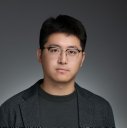
 Zhen Chen
· 9 previous affiliations
- Hong Kong Polytechnic UniversitySince 2026
- Assistant Professor · Since 2026
- Current
- Yale University2024–2025
- Postdoctoral Associate · 2024–2025
- Chinese Academy of Sciences2022–2024
- Assistant Professor · 2022–2024
- Assistant Professor · 2022–2024
- Assistant Professor · 2022–2024
- City University of Hong Kong2019–2022
- Postdoc Fellow · 2022
- PhD student · 2019–2022
- Tencent (China)2020
- Research Intern · 2020
- MS student · 2016–2019
- Xi'an Jiaotong University2012–2016
- Undergrad student · 2012–2016
9 other authors named Zhen Chen: Zhen Chen (Tsinghua University · 47 papers), Zhen Chen (Adobe Systems (United States) · 8 papers), Zhen Chen (Nanchang Hangkong University · 5 papers), Zhen Chen (4 papers), Zhen Chen (Jingdong (China) · 京东 · 4 papers), and 4 more
Research Overview
Zhen Chen focuses on multimodal medical image analysis, surgical intervention assistance, and the development of medical foundation models. His early work addressed deep learning acceleration and weakly-supervised frameworks for pathology and 3D medical diagnosis. Recently, his research has shifted toward agentic AI for clinical applications and automated prompting techniques to build robust, next-generation healthcare systems.
Research Trajectory
Zhen Chen’s early research focused on optimizing deep learning architectures for resource-constrained environments and improving diagnostic frameworks for complex medical imagery. In 2020, he introduced a low-rank approximated channel pruning framework designed to eliminate redundancy within filters, accelerating convolutional neural networks without specialized hardware in Deep Neural Network Acceleration Based on Low-Rank Approximated Channel Pruning. Transitioning toward medical imaging, he developed a weakly-supervised multi-instance learning approach for whole-slide images. Inspired by how pathologists jointly analyze visual fields at multiple scales, this work was detailed in Diagnose Like A Pathologist: Weakly-Supervised Pathologist-Tree Network for Slide-Level Immunohistochemical Scoring. He also explored how inferring high-frequency details from low-resolution images could assist high-level diagnostic tasks, proposing a super-resolution enhanced diagnosis framework in Super-Resolution Enhanced Medical Image Diagnosis With Sample Affinity Interaction.
Between 2022 and 2023, his focus expanded to tackle real-world clinical data challenges, particularly privacy constraints, class imbalance, and label noise in distributed settings. To address performance degradation and imbalanced medical data across institutions, he developed a personalized federated learning framework in Personalized Retrogress-Resilient Federated Learning Toward Imbalanced Medical Data. He continued to advance 3D medical diagnosis using graph convolutional networks in Instance importance-Aware graph convolutional network for 3D medical diagnosis. Concurrently, he maintained an interest in network compression, participating in the development of a gradient flow-based saliency criterion for pruning deep networks in Generalized Gradient Flow Based Saliency for Pruning Deep Convolutional Neural Networks. In the domain of semi-supervised learning, he contributed to a framework designed to amend perception, selection, and confirmation biases inherent in pseudo-labeling, presented in Hierarchical Bias Mitigation for Semi-Supervised Medical Image Classification. He also addressed label noise in distributed medical datasets by devising a joint graph purification approach to generate reliable pseudo-labels in Medical federated learning with joint graph purification for noisy label learning.
In 2024 and 2025, his trajectory shifted significantly toward the adaptation of foundation models for medical applications and the integration of multi-agent systems into clinical workflows. He introduced UN-SAM, a framework that eliminates the need for manual prompts in digital pathology by employing domain-adaptive tuning for zero-shot nuclei segmentation. This system was first presented in UN-SAM: Universal Prompt-Free Segmentation for Generalized Nuclei Images and subsequently expanded in UN-SAM: Domain-adaptive self-prompt segmentation for universal nuclei images. This work aligns with the broader research area of Automated Prompting for Foundation Segmentation Models and the direction of Self-Prompting Mechanisms for Vision Foundation Models, contributing to the overarching field of Overcoming Cross-Institutional Domain Shift in Medical AI.
Continuing his work on foundation models, he collaborated on adapting the DINOv3 architecture specifically for ultrasound image segmentation by explicitly separating high-frequency boundary details from low-frequency anatomical structures in FreqDINO: Frequency-Guided Adaptation for Generalized Boundary-Aware Ultrasound Image Segmentation. His research also addressed the computational cost of deploying powerful models in clinical settings, introducing a lightweight transformer architecture with a contextual synergic enhancement strategy in Harnessing Lightweight Transformer With Contextual Synergic Enhancement for Efficient 3D Medical Image Segmentation.
Expanding into multi-modal and multi-agent systems, he participated in developing a self-prompted framework for chest X-ray lesion detection that uses vision-language models to automatically generate clinical reports, detailed in SP-Det: Self-Prompted Dual-Text Fusion for Generalized Multi-Label Lesion Detection. He also led the development of a multi-agent framework that organizes specialized large language models into a clinical hierarchy to support inpatient care decisions in MAP: Evaluation and Multi-Agent Enhancement of Large Language Models for Inpatient Pathways. This work directly advances the research direction of Integrating AI into Clinical Workflows and Human Collaboration. Finally, he continued to refine federated semi-supervised learning by developing a relation-guided versatile regularization strategy to improve model robustness across privacy-conscious clients in Relation-Guided Versatile Regularization for Federated Semi-Supervised Learning.
Current Directions
Based on his most recent publications, Zhen Chen’s current research is heavily focused on the intersection of medical foundation models and agentic AI. A major ongoing theme is the development of multi-agent large language model (LLM) frameworks designed to navigate complex clinical decision-making, such as inpatient pathway support. By structuring specialized AI agents into clinical hierarchies, this work aims to bridge the gap between general-purpose LLMs and the rigorous demands of hospital care.
Simultaneously, his work investigates the adaptation of vision foundation models (such as SAM and DINO) for specialized medical domains like digital pathology and ultrasound. The most recent papers in the evidence emphasize "self-prompted" or "prompt-free" architectures that achieve zero-shot generalization without relying on manual expert annotations. Alongside these foundation models, he continues to address the practical constraints of clinical deployment, focusing on lightweight transformer architectures for edge inference and robust federated learning frameworks that can handle decentralized, partially labeled, and noisy medical data.
Profile updated
Loading new papers…
Other researchers whose papers cluster into the same research directions — a proxy for overlapping technical interests and shared intellectual neighborhoods.
See something wrong? Report a mistake