

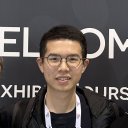
 Zhaoxuan Tan
· 5 previous affiliations
- University of Notre DameSince 2023
- PhD student · 2023–2028
- Graduate Research Assistant · Since 2023
- Google (United States)2025–2026
- Student Researcher · 2025–2026
- Applied Scientist Intern · 2025
- Research Intern · 2025
- Xi'an Jiaotong University2019–2023
- Bachelor of Engineering - BE, Computer Science · 2019–2023
Research Overview
Zhaoxuan Tan focuses on personalizing large language models, preference alignment from user-generated content, and robust anomaly detection in social networks. His trajectory spans from developing graph-based frameworks for identifying evasive social media bots to designing parameter-efficient methods that tailor generative models to individual users. Currently, he investigates scalable preference learning and the evaluation of true personalization in recommendation systems.
Research Trajectory
Tan’s early research addressed the escalating complexity of automated accounts on social media. In 2022, he introduced a framework treating social networks as complex graphs to capture varying interactions in Heterogeneity-Aware Twitter Bot Detection with Relational Graph Transformers, contributing to the broader area of Modeling Heterogeneous Influence in Social Networks. To support this graph-based approach at scale, he developed TwiBot-22: Towards Graph-Based Twitter Bot Detection, a massive heterogeneous dataset of one million users designed to test the generalization limits of detection models against evolving bot tactics.
He expanded on this foundation in 2023 by addressing how bots evade detection through camouflage. The framework HOFA: Twitter Bot Detection with Homophily-Oriented Augmentation and Frequency Adaptive Attention artificially boosts graph homophily to expose bots hiding among genuine users. Recognizing that bot behavior varies across different social environments, he also explored community-specific detection. BotPercent: Estimating Bot Populations in Twitter Communities introduced methods to calibrate bot estimation within specific network contexts, while BotMoE: Twitter Bot Detection with Community-Aware Mixtures of Modal-Specific Experts utilized a Mixture-of-Experts architecture across metadata, text, and network structures to identify evasive accounts. This line of work later culminated in LMBot: Distilling Graph Knowledge into Language Model for Graph-less Deployment in Twitter Bot Detection, which bridged graph-based insights with language modeling for more flexible deployment.
As large language models (LLMs) became central to user interaction, Tan's focus shifted toward their capabilities, safety, and personalization. He co-authored User Modeling in the Era of Large Language Models: Current Research and Future Directions, mapping the intersection of LLMs and user representation. Investigating the fundamental reasoning limits of these models, he participated in evaluating whether they perform genuine reasoning or sophisticated pattern matching in Can Language Models Solve Graph Problems in Natural Language?. He also contributed to methods for improving model reliability, such as an iterative verify-then-correct approach in Large Language Models Can Self-Correct with Minimal Effort, touching upon the research direction of Reasoning via Negative Constraints and Error Reflection.
Concurrently, Tan explored generative AI safety through the lens of the research direction Robustness and Reversibility in Machine Unlearning. He helped synthesize the field in Machine Unlearning in Generative AI: A Survey, proposing an evaluation framework based on accuracy, locality, and generalizability. This theoretical foundation informed practical interventions like Towards Safer Large Language Models through Machine Unlearning, which introduced Selective Knowledge negation Unlearning (SKU). This surgical framework removes harmful behaviors by subtracting specific knowledge deltas without degrading general intelligence, advancing work in the area of Surgical Attribute Erasure in Machine Unlearning.
A major theme in Tan's recent trajectory is tailoring models to individual users, advancing the research direction of Personalizing Large Language Models beyond the Average User. He introduced OPPU in Democratizing Large Language Models via Personalized Parameter-Efficient Fine-tuning, a framework that stores individual behavior patterns in small sets of model weights to preserve privacy while achieving high-quality personalization. He further optimized this with Personalized Pieces: Efficient Personalized Large Language Models through Collaborative Efforts, allowing users to assemble shared fine-tuned parameters for highly efficient customization. To eliminate the computational bottleneck of per-user fine-tuning entirely, he developed the Profile-to-PEFT framework in Instant Personalized Large Language Model Adaptation via Hypernetwork, which maps user profiles directly to personalized LoRA parameters in a single forward pass.
Most recently, Tan has focused on how LLMs learn from and align with user preferences. In Aligning Large Language Models with Implicit Preferences from User-Generated Content, he demonstrated how implicit signals from massive web corpora like Reddit and product reviews can be transformed into references for preference learning, outperforming models trained on human-curated data. He also critically evaluated personalization capabilities in Can Large Language Models Understand Preferences in Personalized Recommendation?, introducing a benchmark that isolates true personalization from universal item quality and rating biases. Extending preference learning to real-world deployment, he collaborated on DRIFT: Learning from Abundant User Dissatisfaction in Real-World Preference Learning, a method that anchors training on natural user dissatisfaction signals to dynamically improve model responses, contributing to the broader area of Preference Optimization for Faithful Reasoning Chains.
Tan has further broadened this focus to agent-based collaboration and unified user representations. In Bridging Textual Profiles and Latent User Embeddings for Personalization, Tan introduced BLUE, a reinforcement learning framework that aligns interpretable LLM-generated textual profiles with latent recommendation embeddings to boost both cross-domain retrieval and question answering. Turning to personalized agent architectures, Tan developed HyperHarness: Learning to Generate Personalized Agent Harnesses from User Histories, synthesizing executable retrieval and guidance code per user in a single pass from interaction histories to amortize adaptation costs without test-time search. In team settings, Tan also addressed multi-agent coordination with Grounding Collaborative Agents in Group Cognition, establishing the GroupBrief benchmark and task-guided briefing framework to recover participant beliefs and group dynamics for ongoing collaborations.
Current Directions
The most recent papers in the evidence indicate a strong focus on scalable preference alignment, personalized agent harnesses, and grounding collaborative agents in group cognition. Recent work investigates how to harness abundant, naturally occurring signals—such as implicit preferences buried in user-generated content and explicit dissatisfaction in real-world interactions—to align large language models more effectively than traditional human-annotated datasets. Additionally, ongoing research addresses the fundamental challenge of measuring true personalization in recommendation systems, developing benchmarks that strip away confounding factors like universal item popularity to reveal whether models genuinely understand individual user preferences.
Profile updated
Loading new papers…
Other researchers whose papers cluster into the same research directions — a proxy for overlapping technical interests and shared intellectual neighborhoods.
See something wrong? Report a mistake