

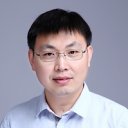
 Shuaiqiang Wang
· 7 previous affiliations
- Baidu (China)Since 2020
- Principal Researcher · Since 2020
- Jingdong (China)2017–2020
- Research Scientist · 2017–2020
- Assistant Professor · 2017
- University of Jyväskylä2014–2017
- Assistant Professor · 2014–2017
- Associate Professor · 2011–2014
- Texas State University2010–2011
- Postdoc · 2010–2011
- Shandong University2004–2009
- PhD student · 2004–2009
1 other author named Shuaiqiang Wang: Shuaiqiang Wang (36 papers)
Research Overview
Shuaiqiang Wang focuses on information retrieval, data mining, and the optimization of large language models for search. His early work explored parallel learning-to-rank algorithms and serendipity in recommender systems, establishing foundations for scalable information access. Currently, his research investigates generative retrieval and the integration of reasoning agents to enhance web-scale search architectures.
Research Trajectory
Early in his career, Wang addressed the computational bottlenecks of learning-to-rank systems, which faced challenges from increasingly large-scale training data. He introduced methods to simultaneously improve the accuracy and efficiency of ranking functions. This work included Parallel learning to rank for information retrieval and the development of a divide-and-conquer framework in CCRank: Parallel Learning to Rank with Cooperative Coevolution, which utilized parallel cooperative coevolution to manage large search spaces and complex structures.
Expanding into exploratory search and recommendation systems, Wang investigated how users navigate complex information landscapes. He guided the development of Etymo: A New Discovery Engine for AI Research, a platform that constructed an adaptive, similarity-based knowledge graph to help researchers filter and visualize the rapidly growing volume of artificial intelligence literature. In the domain of travel search, he formalized a novel tour discovery problem in Finding Tours for a Set of Interests, creating techniques to rank multi-city itineraries that satisfy diverse user queries while minimizing travel distance. His work on recommendation diversity also explored how unexpected but relevant suggestions impact user experience, detailed in How does serendipity affect diversity in recommender systems? A serendipity-oriented greedy algorithm. During this period, he also explored foundational algorithmic optimizations, such as Polygene-based evolutionary algorithms with frequent pattern mining.
As deep pre-trained language models began to transform information retrieval, Wang's research shifted toward neural matching and generative paradigms. At Baidu, where he leads scientific teams optimizing search-oriented large language models, he collaborated on approaches to balance effectiveness and efficiency in semantic matching, such as Fast Semantic Matching via Flexible Contextualized Interaction. He subsequently became deeply involved in the research area of Semantic Identifiers for Generative Retrieval. In this space, he contributed to Learning to Tokenize for Generative Retrieval, which proposed a method to encode complete document semantics into unique identifiers rather than relying on ad-hoc rule-based tokenization. He further advanced this concept with Semantic-Enhanced Differentiable Search Index Inspired by Learning Strategies, refining how sequence-to-sequence models map queries directly to document identifiers. Investigating the direct application of foundation models to ranking, he co-authored Is ChatGPT Good at Search? Investigating Large Language Models as Re-Ranking Agents. This work demonstrated that properly instructed generative models could deliver highly competitive relevance ranking, contributing to the broader direction of Joint Candidate Assessment for Generative Listwise Reranking.
Parallel to his work in natural language processing, Wang has advanced the representation of complex relational data. He led research on robust graph neural networks, introducing a dual-level awareness approach in HetCAN: A Heterogeneous Graph Cascade Attention Network with Dual-Level Awareness that explicitly modeled interactions between individual feature dimensions. To address the practical challenges of missing node attributes and noisy features in real-world data, he developed GraMI, a generative self-supervised framework. This approach, initially shared as a preprint and formally published as Variational Graph Autoencoder for Heterogeneous Information Networks with Missing and Inaccurate Attributes, reconstructs hidden representations to clean and impute data in complex heterogeneous networks without requiring manual labels.
Most recently, Wang has focused on the intersection of generative retrieval, autonomous reasoning agents, and efficient model training. He contributed to ZeroGR: A Generalizable and Scalable Framework for Zero-Shot Generative Retrieval, which enables generative retrieval models to generalize to unseen tasks without task-specific training data via instruction-tuned query generation and reverse annealing. Addressing the challenges of training large language model agents for complex planning, he co-authored Solving the Granularity Mismatch: Hierarchical Preference Learning for Long-Horizon LLM Agents. This work introduced a dual-layer curriculum to guide models from simple sub-tasks to complex planning, advancing the research area of Hyperparameter Sensitivity in Curriculum Learning Schedules. He has also investigated methods to drastically reduce the computational costs of language model reasoning, participating in the development of Efficient Thought Space Exploration through Strategic Intervention and CurES: From Gradient Analysis to Efficient Curriculum Learning for Reasoning LLMs, which dynamically prioritizes moderately challenging prompts to accelerate the convergence of reasoning models. Further refining reasoning evolution under reinforcement learning, Wang contributed to Staying in the Sweet Spot: Boost Reasoning Evolution via Responsive Rollout Difficulty Manipulation, which introduces SEELE to dynamically append hints and maintain optimal problem difficulty during rollout sampling. In addition, Wang participated in developing Tool-Integrated Reasoning via Hierarchical Multi-Agent Reinforcement Learning, introducing HATR to decouple high-level planning from low-level tool execution at inference while aligning their policies through hierarchical multi-agent reinforcement learning.
Current Directions
Wang's most recent work investigates the optimization of large language models for complex reasoning and zero-shot retrieval tasks. A primary focus is on improving the efficiency of reasoning models through strategic intervention and curriculum learning. By mathematically identifying optimal prompt difficulties and using larger models to guide smaller, efficient practitioners at critical decision points, his research aims to reduce the computational overhead of advanced reasoning without sacrificing accuracy.
Additionally, Wang is exploring hierarchical reinforcement learning and preference learning for multi-agent planning and tool-integrated reasoning, ensuring that models coordinate planning and execution across varying levels of decision-making. In the domain of information retrieval, his current efforts address the generalization of generative retrieval frameworks, developing scalable architectures that can adapt to diverse, unseen search tasks without requiring extensive task-specific fine-tuning.
Profile updated
Loading new papers…
Other researchers whose papers cluster into the same research directions — a proxy for overlapping technical interests and shared intellectual neighborhoods.
See something wrong? Report a mistake