

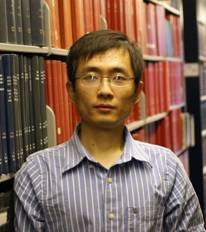
 Dawei Yin
· 7 previous affiliations
- Baidu (China)Since 2019
- General Manager, PaaS Business Unit at Baidu AI Cloud · Since 2025
- Senior Director, Head of Search Science · 2019–2025
- Jingdong (China)2016–2019
- Principal Researcher · 2016–2019
- Yahoo (United States)2013–2016
- Senior Manager, Relevance Science · 2013–2016
- Yahoo (Spain)2013–2016
- Researcher · 2013–2016
- Research Intern · 2012
- Xerox (France)2011
- Research Intern · 2011
- Lehigh University2008–2010
- PhD student · 2008–2010
Research Overview
Dawei Yin focuses on information retrieval, recommender systems, and applied machine learning, with an emphasis on advancing search engine architectures. His trajectory spans early work in temporal data mining and user modeling to large-scale industrial recommendation frameworks. Currently, he investigates the intersection of large language models and search, developing retrieval-augmented generation techniques and autonomous agents for dynamic information environments.
Research Trajectory
Dawei Yin’s early research investigated the temporal dynamics of user behavior in social tagging systems. Recognizing that user preferences in collaborative environments are not static, he introduced A probabilistic model for personalized tag prediction in 2010 to account for incremental tagging behaviors. He expanded on this foundation the following year with Temporal Dynamics of User Interests in Tagging Systems, proposing a user-tag-specific model to track how individual interests evolve over time, thereby improving prediction accuracy in social bookmarking.
As his career progressed through senior relevance and recommendation roles at Yahoo Labs and JD.com, his focus shifted toward large-scale industrial systems and long-term user engagement. He collaborated on research in the area of Mitigating Short-Term Engagement Bias in Recommender Systems, participating in the development of FeedRec, detailed in Reinforcement Learning to Optimize Long-term User Engagement in Recommender Systems (2019). This framework utilized a hierarchical LSTM and a simulator network to optimize for metrics like browsing depth rather than immediate click-through rates. He also guided research into dynamic network structures, presenting Streaming Graph Neural Networks in 2020 to update representations as new nodes and edges continuously emerge, contributing to the broader area of Temporal Graph Learning for Recommendation.
In recent years, as Senior Director of Search Science at Baidu, his work has increasingly centered on generative AI and its application to search and perception. He contributed to the research direction of Semantic Identifiers for Generative Retrieval, exploring how models can directly output document identifiers in Learning to Tokenize for Generative Retrieval (2023). He also explored cross-modal applications, participating in Powerful and Flexible: Personalized Text-to-Image Generation via Reinforcement Learning (2024) to enforce structural consistency in diffusion models, touching upon the research direction of Unified Architectures for Cross-Modal Perception and Generation.
By 2025, his lab produced extensive work on tool-augmented agents and Retrieval-Augmented Generation (RAG). He oversaw the development of DTA-Llama in Divide-Then-Aggregate: An Efficient Tool Learning Method via Parallel Tool Invocation, which transforms sequential tool-use into a parallel structure, advancing the area of Directed Acyclic Graph Planning for Autonomous Agents. He addressed LLM generalization in Task Knowledge Injection via Interpolations and Reinstatement for Large Language Model Generalization, mitigating the spurious correlations often learned during instruction tuning. To modernize traditional search components, he directed From Prompting to Alignment: A Generative Framework for Query Recommendation, moving beyond historical search logs to build more adaptable query suggestion models.
A major theme of his 2025 output is the evolution of AI search products. He led the design of TURA: Tool-Augmented Unified Retrieval Agent for AI Search, which addresses the limitations of static RAG by enabling interactive queries against dynamic sources like databases. He further refined RAG mechanics in Grounding Long-Context Reasoning with Contextual Normalization for Retrieval-Augmented Generation, demonstrating how context formatting and structural markers impact LLM accuracy. These generative retrieval concepts were also applied to recommendation systems in Knowledge Graph Retrieval-Augmented Generation for LLM-based Recommendation.
In 2026, his work continues to push the boundaries of generative retrieval and agentic reasoning. He collaborated on ZeroGR: A Generalizable and Scalable Framework for Zero-Shot Generative Retrieval to enable cross-task generalization without specific training data. He also participated in Solving the Granularity Mismatch: Hierarchical Preference Learning for Long-Horizon LLM Agents to improve Direct Preference Optimization for complex tasks. He directed Efficient Thought Space Exploration through Strategic Intervention, introducing a hint-practice framework that uses a larger model to guide a smaller practitioner model, significantly reducing the computational cost of LLM reasoning. In parallel work on reasoning evolution and training dynamics, Yin guided Staying in the Sweet Spot: Boost Reasoning Evolution via Responsive Rollout Difficulty Manipulation, which introduces SEELE to dynamically modulate problem difficulty using item response theory during verifiable reward reinforcement learning. Yin also led the development of Tool-Integrated Reasoning via Hierarchical Multi-Agent Reinforcement Learning, proposing the HATR framework to align high-level planning and low-level tool execution through hierarchical multi-agent RL. Furthermore, Yin directed research into training trajectory reconstruction in QAM: Quadratic-Accurate Checkpoint Merging via Sequential Consistency, establishing theoretical reconstruction limits and optimal merge coefficients for saved optimization histories.
Current Directions
Based on his most recent publications, Yin’s current research investigates the architecture of next-generation AI search engines, focusing heavily on Retrieval-Augmented Generation (RAG) and autonomous agents. A primary objective is overcoming the limitations of static document indexing by developing tool-augmented agents capable of interacting with dynamic, real-time databases. This includes refining how retrieved context is formatted and normalized to improve the reasoning stability of large language models.
He is also actively contributing to the area of Iterative Retrieval Augmented Generation for Multi Hop Reasoning, exploring how LLM agents can execute complex, long-horizon plans. This involves novel training paradigms, such as hierarchical preference learning to solve granularity mismatches in agent feedback, and strategic intervention frameworks that optimize the computational efficiency of exploring thought spaces. Additionally, his work continues to advance zero-shot capabilities in generative retrieval, ensuring models can generalize to unseen tasks without relying on domain-specific training data.
Profile updated
Loading new papers…
Other researchers whose papers cluster into the same research directions — a proxy for overlapping technical interests and shared intellectual neighborhoods.
See something wrong? Report a mistake