

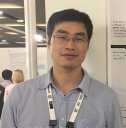
 Zenglin Xu
· 10 previous affiliations
- Vice President for Education · Since 2022
- Shanghai Academy of AI for ScienceSince 2024
- Researcher · Since 2024
- Fudan UniversitySince 2024
- Full Professor · Since 2024
- Elsevier BV (Netherlands)Since 2025
- Senior Action Editor of Neural Networks · Since 2025
- Academia.edu JournalsSince 2025
- Editor in Chief of Academia AI and Applications · Since 2025
- Harbin Institute of Technology2019–2024
- Professor · 2019–2024
- Full Professor · 2020–2024
- Full Professor · 2014–2019
- Purdue University West Lafayette2010–2014
- Researcher · 2010–2014
- Chinese University of Hong Kong2005–2009
- PhD student · 2005–2009
- Xi'an Jiaotong University2002–2005
- M.S., Computer Software and Theory · 2002–2005
Research Overview
Zenglin Xu focuses on trustworthy machine learning, multi-view clustering, and AI for science. His research trajectory spans from early contributions in multiple kernel learning and non-parametric Bayesian tensor decomposition to scalable graph learning and federated learning frameworks. Currently, his work addresses privacy-preserving large language models, multivariate time series forecasting, and generative models for protein design.
Research Trajectory
Xu’s early research addressed optimization challenges in kernel methods, introducing techniques to improve the scalability and efficiency of multiple kernel learning (MKL). In An Extended Level Method for Efficient Multiple Kernel Learning, he adapted the level method for convex-concave optimization to regularize approximate solutions in large-scale MKL. Building on this to further reduce dependency on complex solvers, he formulated a closed-form solution for optimizing kernel weights in Simple and Efficient Multiple Kernel Learning by Group Lasso.
Following his work on kernel methods, Xu shifted focus to multiway data analysis, specifically addressing the limitations of multilinear factorization in handling complex interactions, missing data, and outliers. He developed tensor-variate latent nonparametric Bayesian models, termed InfTucker, which perform Tucker decomposition in an infinite feature space. This framework was first presented in Infinite Tucker Decomposition: Nonparametric Bayesian Models for Multiway Data Analysis and subsequently expanded in Bayesian Nonparametric Models for Multiway Data Analysis to better model noisy observations and various data types in complex multiway datasets.
In subsequent years, Xu’s research group made significant advances in scalable graph learning and multi-view clustering. To address the computational bottlenecks of traditional subspace clustering, his lab developed LMVSC, an algorithm that reduces complexity to linear time by leveraging learned anchor graphs, detailed in Large-scale Multi-view Subspace Clustering in Linear Time. This work advanced the area of Managing Hyperparameter Sensitivity in Multi-View Clustering. He also explored methods to fuse information more robustly across different views. In Multi-view subspace clustering via partition fusion, his team introduced a method that operates in a partition space rather than a graph space, adaptively learning weights for each view to handle inconsistent data. This contributed to the research direction of Adaptive View Weighting for Multi-View Representation Learning. Continuing this theme, he collaborated on Structured graph learning for clustering and semi-supervised classification, which proposed a framework to preserve both local and global data structures. Further refining partition-level fusion, he co-developed a model that treats each view's partition as a rotated perturbation of a shared consensus in Multiple partitions alignment via spectral rotation. Together, these contributions significantly shaped the broader area of Unified Graph Learning for One-Step Clustering.
More recently, Xu has focused on distributed and privacy-preserving machine learning, particularly federated learning (FL). Recognizing the engineering overhead in FL research, his group developed FedLab: A Flexible Federated Learning Framework, an open-source Python toolkit providing modular components for simulation and optimization. To address the performance degradation caused by non-IID data in decentralized systems, he directed the development of StoCFL: A stochastically clustered federated learning framework for Non-IID data with dynamic client participation, which groups clients with similar data distributions and introduces an information-sharing mechanism across clusters. Extending FL to the domain of large language models (LLMs), his team introduced F4LLM in From continuous pre-training to alignment: A comprehensive toolkit for large language models in federated learning, enabling collaborative, privacy-enhancing training pipelines for LLMs without raw data transmission.
In his most recent work, Xu has expanded into advanced transformer architectures, LLM alignment, and AI for science. To tackle scale differences in multivariate time series forecasting, his lab developed PMDformer: Patch-Mean Decoupling Information Transformer for Long-term Forecasting, which separates local trends from residual shapes to improve memory efficiency and accuracy. This was complemented by FDNet: High-frequency disentanglement network with information-theoretic guidance for multivariate time series forecasting, further refining the handling of complex temporal dynamics. In the realm of LLM safety and privacy, he directed research on SecP-Tuning: Efficient Privacy-Preserving Prompt Tuning for Large Language Models via MPC, addressing the regulatory roadblocks of fine-tuning models on sensitive data. Alongside privacy, his team explored robust alignment in DARC: Disagreement-Aware Alignment via Risk-Constrained Decoding, proposing an inference-time method that uses risk-sensitive decoding to avoid controversial outputs. Finally, applying generative AI to biological design, he led the development of LineageFlow: Flow Matching for High-Fidelity Family-Aware Protein Sequence Generation, a model that mimics evolutionary history to generate realistic, functional protein sequences.
Current Directions
The most recent work in the evidence points toward three primary research themes: advanced time series forecasting, trustworthy large language models, and AI for science. In time series analysis, current efforts focus on decoupling complex temporal signals—such as separating local trends from high-frequency noise—to improve the accuracy and memory efficiency of long-term forecasting models.
In the domain of large language models, the focus is heavily on deployment safety and privacy. This involves developing secure, multi-party computation frameworks for prompt tuning that comply with strict data regulations, as well as designing training-free, risk-constrained decoding strategies that account for human disagreement and mitigate the generation of polarizing content. Finally, in AI for science, recent directions explore generative modeling for structure-based protein design, utilizing flow matching and evolutionary history to create high-fidelity, family-aware biological sequences.
Profile updated
Loading new papers…
Other researchers whose papers cluster into the same research directions — a proxy for overlapping technical interests and shared intellectual neighborhoods.
See something wrong? Report a mistake