

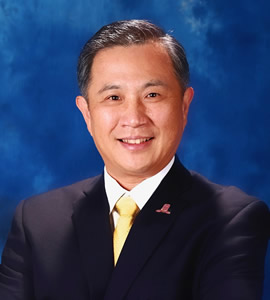
 Irwin King
· 6 previous affiliations
- VeriGuideSince 2005
- Principal Investigator, Chief Technologist, and Co-Founder · Since 2005
- Chinese University of Hong KongSince 1993
- Full Professor · 2010–2030
- Pro-Vice-Chancellor (Education) · Since 2025
- Chairperson · Since 2020
- Director, Centre for eLearning Innovation and Technology (ELITE) · Since 2019
- Associate Professor · 1993–2010
- Principal Investigator · Since 2014
- Association for Computing MachinerySince 2023
- Vice-chair, ACM SIGWEB · Since 2023
- University of Southern California1988–1993
- PhD student · 1993
- M.Sc., Computer Science · 1988
- California Institute of Technology1982–1984
- Undergrad student · 1982–1984
Research Overview
Irwin King focuses on machine learning, social computing, and trustworthy artificial intelligence. His early trajectory spans foundational neural network models and probabilistic matrix factorization for recommender systems, evolving into advanced graph neural networks and natural language processing. Currently, his research emphasizes the security and personalization of large language models, federated learning, and geometric deep learning.
Research Trajectory
King's early work explored temporal processing in neural networks, as seen in his 1988 paper Three neural models which process temporal information. By the 2000s, his focus expanded to robust classification frameworks. He contributed to The Minimum Error Minimax Probability Machine (2004), a distribution-free classifier that minimizes expected error rates across classes by relaxing rigid constraints, advancing methods for asymmetric cost optimization and anomaly detection.
In the late 2000s, King's research shifted toward social computing and recommender systems to address data sparsity and scalability. He introduced SoRec: social recommendation using probabilistic matrix factorization (2008), which integrated social network interactions into collaborative filtering to improve prediction quality for users with few ratings. Continuing his work in location-based social networks, he addressed the area of Spatial Proximity and Distance Decay in Location Aware Recommendation through models like STELLAR: Spatial-Temporal Latent Ranking for Successive Point-of-Interest Recommendation (2016), which captured the time-subtle dynamics of user check-in sequences to improve successive recommendations.
Toward the end of the 2010s, King explored natural language processing and affective computing. He participated in developing HiGRU: Hierarchical Gated Recurrent Units for Utterance-Level Emotion Recognition (2019), contributing to the broader field of Overcoming Unimodal Information Loss in Affective Computing. Concurrently, he investigated educational applications, participating in research on Generating Distractors for Reading Comprehension Questions from Real Examinations (2019). This work advanced the research direction of The Mechanics of Automated Distractor Generation by utilizing hierarchical encoder-decoder models with dynamic and static attention mechanisms to create semantically rich incorrect answer choices.
In 2020, King addressed the complexities of heterogeneous networks with MAGNN: Metapath Aggregated Graph Neural Network for Heterogeneous Graph Embedding, a model designed to capture composite relations and node content features across diverse node types. His attention also turned to model efficiency; he led research in the area of Mitigating the Computational Overhead of Model Quantization with BinaryBERT: Pushing the Limit of BERT Quantization (2021). This work achieved 1-bit weight binarization while preserving near-full-precision performance via ternary weight splitting, bypassing the optimization hurdles of a rugged binary loss landscape.
As large language models proliferated, King became heavily involved in AI security and provenance. He contributed significantly to the research direction of The Statistical Signatures of Machine Generated Text by introducing MarkLLM: An Open-Source Toolkit for LLM Watermarking (2024), a unified framework for implementing and evaluating watermarking techniques. This was complemented by his participation in developing An Unforgeable Publicly Verifiable Watermark for Large Language Models (2024), which tackled challenges in the area of Navigating the Large Language Model Watermarking Trilemma by utilizing asymmetric keys to allow public verification without enabling watermark spoofing. In 2025, his work expanded to audio modalities with VoxEval: Benchmarking the Knowledge Understanding Capabilities of End-to-End Spoken Language Models, exposing the vulnerabilities of speech-to-speech models to environmental noise and pitch variations.
King's most recent trajectory demonstrates a strong focus on geometric deep learning and efficient model adaptation. He introduced FlatLand: Personalized Graph Federated Learning via Tailored Lorentz Space (2026), leveraging hyperbolic geometry to manage structural diversity across federated clients without the computational cost of client-clustering. Similarly, Hyperbolic Multimodal Continual Learning (2026) applied mixed-curvature latent spaces to better represent hierarchical semantic concepts across modalities. In the realm of LLM personalization, he developed PerFit: Exploring Personalization Shifts in Representation Space of LLMs (2026), a highly parameter-efficient tuning method that isolates personalization to a low-rank subspace of hidden representations. He also advanced search-integrated reasoning with Search-R2: Enhancing Search-Integrated Reasoning via Actor-Refiner Collaboration (2026), and applied low-dimensional manifold techniques to medical imaging in Exploiting Low-Dimensional Manifold of Features for Few-Shot Whole Slide Image Classification (2026), utilizing geometric anchors to prevent overfitting in pathology foundation models. In the domain of spoken and interactive multimodal systems, King guided the development of Minimizing Modality Gap from the Input Side: Your Speech LLM Can Be a Prosody-Aware Text LLM (2026), addressing spoken language model bottlenecks with prosody-aware text alignment, and contributed to UUBench: Understanding the Unspoken toward Full-Duplex Multimodal Interaction (2026) to assess how interactive systems interpret implicit communicative needs like gestures and prosody. Furthermore, King targeted language model inference and agent optimization by proposing Ask Before You Answer: A Question-Driven Evidence Reasoning Architecture (QERA) for In-Context Learning (2026) to extract implicit requirements from conversational histories, and CORD: Conflict-Aware Optimization for Joint RL and Distillation in Agents (2026) to resolve gradient interference between reinforcement learning and distillation objectives.
Current Directions
Recent work investigates the intersection of geometric deep learning, parameter-efficient model adaptation, and multimodal reasoning. A major current theme is the application of hyperbolic and mixed-curvature spaces to capture hierarchical relationships in complex data, improving both personalized graph federated learning and multimodal continual learning. Additionally, King is exploring highly efficient personalization techniques for large language models and foundation models, focusing on low-rank representation shifts and manifold preservation to prevent overfitting in domains like medical image analysis. His recent research also addresses the evaluation and enhancement of reasoning capabilities, developing frameworks to repair flawed search-integrated reasoning and in-context evidence extraction in AI agents, balancing multi-objective reinforcement learning, and benchmarking full-duplex spoken and multimodal interactive models.
Profile updated
Loading new papers…
Other researchers whose papers cluster into the same research directions — a proxy for overlapping technical interests and shared intellectual neighborhoods.
See something wrong? Report a mistake