

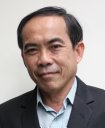
 Tat-Seng Chua
· 1 previous affiliation
- National University of SingaporeSince 2003
- Full Professor · Since 2003
Research Overview
Tat-Seng Chua focuses on multimedia information retrieval, recommender systems, and multimodal foundation models. His early research established foundational techniques for video sequencing and web-scale image annotation before advancing neural collaborative filtering and graph-based recommendation. His current work investigates the integration of large language models with spatial, temporal, and cross-modal reasoning to build unified omnimodal agents.
Research Trajectory
He began his research by addressing the foundational challenges of managing and retrieving multimedia content. In 1995, he developed A Video Retrieval and Sequencing System, introducing semiautomatic tools to segment, index, and sequence video data into meaningful shots. As his focus expanded to text and natural language processing, his group investigated passage retrieval and question answering. This included work on Soft pattern matching models for definitional question answering and the development of novel query expansion techniques. By mining dependency relations rather than relying solely on term co-occurrence, his lab advanced the research direction of Iterative Query Relaxation for Robust Information Retrieval and the broader area of Expanding Short Queries with External Corpora, as detailed in Mining dependency relations for query expansion in passage retrieval. Returning to visual media at the web scale, he led the creation of NUS-WIDE: a real-world web image database from National University of Singapore, a widely used dataset providing hundreds of thousands of annotated images and low-level features to benchmark web image annotation.
Transitioning into recommender systems, his research group made significant contributions to collaborative filtering by replacing traditional matrix factorization with deep neural networks. He oversaw the development of Neural Collaborative Filtering, which modeled implicit user-item feedback through neural architectures. Recognizing that standard embeddings failed to explicitly encode the collaborative signal latent in user-item interactions, he subsequently contributed to Neural Graph Collaborative Filtering. This work integrated user-item bipartite graphs directly into the embedding process, driving progress in the area of High-Order Connectivity for Collaborative Filtering.
In the 2020s, his lab's focus shifted toward complex video understanding and the development of large multimodal models (LMMs). To push video analysis beyond shallow scene description, his team introduced NExT-QA: Next Phase of Question-Answering to Explaining Temporal Actions, a benchmark targeting causal and temporal action reasoning. This initiated a series of "NExT" foundation models. With NExT-Chat: An LMM for Chat, Detection and Segmentation, his group addressed the challenge of Overcoming Quantization Error in Spatial Representations by modeling image coordinates as continuous embeddings rather than text strings, unifying conversation and object detection. They expanded this to universal modality processing in NExT-GPT: Any-to-Any Multimodal LLM, an agent capable of reasoning across text, images, video, and audio using a modality-switching instruction tuning approach.
Concurrently, his lab explored the intersection of large language models and recommendation. To address The Semantic Bottleneck of ID-Based Recommendation, his team developed AlphaRec in Language Representations Can be What Recommenders Need: Findings and Potentials, mapping item titles directly into the LLM embedding space to enable zero-shot recommendation capabilities. They further enhanced LLM-based recommendation efficiency with LatentR³, detailed in Reinforced Latent Reasoning for LLM-based Recommendation, which optimizes internal latent reasoning without the overhead of traditional chain-of-thought methods. This interest in efficient reasoning extended to personalized text generation via FlyThinker, presented in Think-While-Generating: On-the-Fly Reasoning for Personalized Long-Form Generation, which decouples token-level reasoning into a parallel model to reduce sequential latency.
His most recent work addresses diverse challenges in generative AI, cross-modal alignment, and model efficiency. In the domain of audio-visual generation, his lab proposed JavisDiT: Joint Audio-Video Diffusion Transformer with Hierarchical Spatio-Temporal Prior Synchronization to synchronize modalities end-to-end and avoid the disjointed dubbing common in separate generation pipelines, contributing to the area of Exploiting Temporal Redundancy in Video Neural Networks. They also investigated cultural biases in generation, introducing methods to amplify culture-specific neural activations in Where Culture Fades: Revealing the Cultural Gap in Text-to-Image Generation. To improve the computational efficiency of autonomous systems, his team developed Reasoning-VLA: An Efficient and Spatial-Guided General Vision-Language-Action Reasoning Model for Autonomous Driving, which replaces autoregressive token generation with parallel learnable action queries. In model optimization, they introduced a framework utilizing Optimal Transport to align internal activations across heterogeneous architectures in Transport and Merge: Cross-Architecture Merging for Large Language Models. Finally, culminating their work on unified architectures, his group presented NExT-OMNI: Towards Any-to-Any Omnimodal Foundation Models with Discrete Flow Matching, replacing the autoregressive paradigm with Discrete Flow Matching to enable faster, bidirectional information flow across all primary modalities.
Continuing to probe multimodal foundation models, Chua's lab examined the stability of internal representations under varying viewpoints and phrasing in Evaluating Latent Knowledge Stability in Multimodal Large Language Models, introducing margin retention and support-structure metrics on their MMStableBench benchmark. In cross-modal representation learning, they proposed SAVERA: Bridging Frozen Vision and Language Models via Sparse Alignment and Visual Evidence Reuse, aligning frozen vision and language models through shared sparse spaces and residual evidence reuse to mitigate hallucination. Furthermore, tackling visual anomaly inspection without gradient updates, Chua's team introduced UnifiedAD: One-Shot Anomaly Detection across Modalities via Evidence Calibration, identifying anomaly-sensitive neurons and calibrating low-rank projection residuals against a single normal reference across modalities.
Current Directions
The most recent papers in the evidence address the efficiency and alignment of large multimodal models and generative agents. Recent work investigates cross-architecture model merging using Optimal Transport, enabling the transfer of capabilities from high-resource to low-resource models without extensive retraining. Additionally, ongoing research focuses on parallelizing reasoning for autonomous driving and personalized text generation, moving away from strictly autoregressive token generation to reduce inference latency. His group is also actively exploring Discrete Flow Matching to facilitate bidirectional, any-to-any generation across text, image, video, and audio modalities.
Profile updated
Loading new papers…
Other researchers whose papers cluster into the same research directions — a proxy for overlapping technical interests and shared intellectual neighborhoods.
See something wrong? Report a mistake