

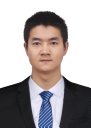
 Xinwang Liu
· 1 previous affiliation
- Full Professor · Since 2020
- Current
- Associate Professor · 2018–2020
- PhD student · 2009–2013
Research Overview
Xinwang Liu focuses on multi-view clustering, graph representation learning, and the analysis of incomplete data. His trajectory spans from early work in object recognition coding schemes to the development of highly scalable, linear-time clustering algorithms using anchor graphs and late fusion techniques. His current research investigates federated graph learning, spatial transcriptomics, and causal frameworks for fair and robust machine learning.
Research Trajectory
Xinwang Liu’s early research investigated object recognition methodologies. In 2011, his work on In defense of soft-assignment coding revisited soft-assignment coding schemes, demonstrating that their classification performance could be significantly improved by properly accounting for underlying manifold structures, thereby bridging the gap between computational efficiency and accuracy.
By 2019, his focus had shifted toward resolving the computational bottlenecks inherent in multi-view clustering. He introduced foundational methods in the area of Late Fusion Multi-view Clustering via Partition Alignment. Specifically, Multi-view Clustering via Late Fusion Alignment Maximization shifted the paradigm from expensive kernel-level fusion to the late fusion of partition matrices. By maximizing the alignment between individual view partitions and a global consensus, this approach reduced computational complexity to linear time, making it viable for large-scale datasets. He concurrently extended these concepts to handle missing information, contributing to the broader field of Unified Imputation and Analysis for Incomplete Data with Late Fusion Incomplete Multi-View Clustering, which effectively integrated incomplete clustering matrices. Continuing this trajectory of optimization, One-pass Multi-view Clustering for Large-scale Data (2021) further streamlined the process by removing traditional non-negativity constraints, allowing for the joint optimization of multi-view matrix factorization and partition generation in a single pass.
Between 2023 and 2024, Liu significantly advanced research directions such as Linear Time Multi View Clustering via Anchor Graphs and Linear Time Multi-View Clustering with Anchor Graphs. To address the rigid, hyperparameter-heavy nature of existing models, he developed Auto-Weighted Multi-View Clustering for Large-Scale Data, a parameter-free matrix factorization approach that maps data views into distinct low-dimensional spaces and automatically weights them. He also refined kernel-based methods with SimpleMKKM: Simple Multiple Kernel K-Means, which directly optimized the kernel alignment criterion via smooth minimization to avoid complex hyperparameter tuning. For incomplete data, Towards Resource-friendly, Extensible and Stable Incomplete Multi-view Clustering replaced massive self-expression matrices with compact prototype-sample affinities, optimizing discrete cluster labels directly to ensure stable, zero-variance results. Concurrently, he expanded his methodological scope to dynamic networks, contributing to research directions like Time Decayed Edge Weighting in Dynamic Graphs. His framework Deep Temporal Graph Clustering moved away from memory-heavy static adjacency matrices, utilizing interaction-sequence batch processing to bring unsupervised clustering to time-stamped graphs efficiently.
In 2025, Liu’s work increasingly addressed distributed systems, lifelong learning, and adversarial robustness. He exposed vulnerabilities in clustering algorithms with On the Adversarial Robustness of Multi-Kernel Clustering, formulating a reinforcement learning-based black-box attack that demonstrated how easily intentional perturbations could disrupt multi-kernel methods. To support privacy-preserving distributed analysis, Efficient Federated Incomplete Multi-View Clustering decoupled local and global optimization using anchor graphs, significantly reducing communication overhead across clients with missing data. He also tackled continual learning challenges with Bit-swapping Oriented Twin-memory Multi-view Clustering in Lifelong Incomplete Scenarios, advancing the area of Linear Scalability via Anchor-based Bipartite Graphs by introducing a twin-memory framework and a novel bit-swapping scheme to align historical knowledge with incremental data.
Most recently, in 2025 and 2026, Liu has applied his scalable clustering and graph learning frameworks to complex interdisciplinary domains and algorithmic fairness. In computational biology, SAINT: Sequence-Aware Integration for Spatial Transcriptomics Multi-View Clustering incorporated DNA sequence priors via a pretrained Nucleotide Transformer to identify functional tissue regions. In medical imaging, PhenoBrain: Phenotype-Conditioned Long-Range Communication for Multi-Modal Brain Network Analysis integrated patient phenotypes directly into the learning mechanism to model brain connectivity and diagnose conditions like Autism. Addressing algorithmic bias, Causal Disentangled Anchor Learning for Scalable Fair Multi-view Clustering utilized structural causal models to physically separate semantic data from sensitive biases in linear time. In the realm of graph security, MV-FGAD: Towards Efficient and Effective Federated Graph Anomaly Detection via Multi-view Learning aggregated global knowledge to repair incomplete local subgraphs and amplify weak signals to detect anomalies. Finally, he synthesized the rapid evolution of these methodologies in A Survey of Deep Graph Clustering: Taxonomy, Challenge, Application, and Open Resource, providing a comprehensive taxonomy of the field.
Current Directions
Xinwang Liu's most recent work investigates the intersection of scalable graph learning with federated systems, algorithmic fairness, and interdisciplinary applications. A major current direction involves designing communication-efficient federated learning frameworks that can handle incomplete multi-view data and detect graph anomalies across distributed, privacy-sensitive clients. Additionally, his research addresses the robustness and equity of clustering algorithms, utilizing structural causal models to disentangle sensitive biases from semantic features and evaluating the adversarial vulnerabilities of multi-kernel methods. Beyond foundational algorithms, he is actively applying these scalable, multi-modal techniques to complex biological and medical domains, including the integration of DNA sequence priors for spatial transcriptomics and the use of phenotype conditioning to model long-range communication in brain networks.
Profile updated
Loading new papers…
Other researchers whose papers cluster into the same research directions — a proxy for overlapping technical interests and shared intellectual neighborhoods.
See something wrong? Report a mistake