

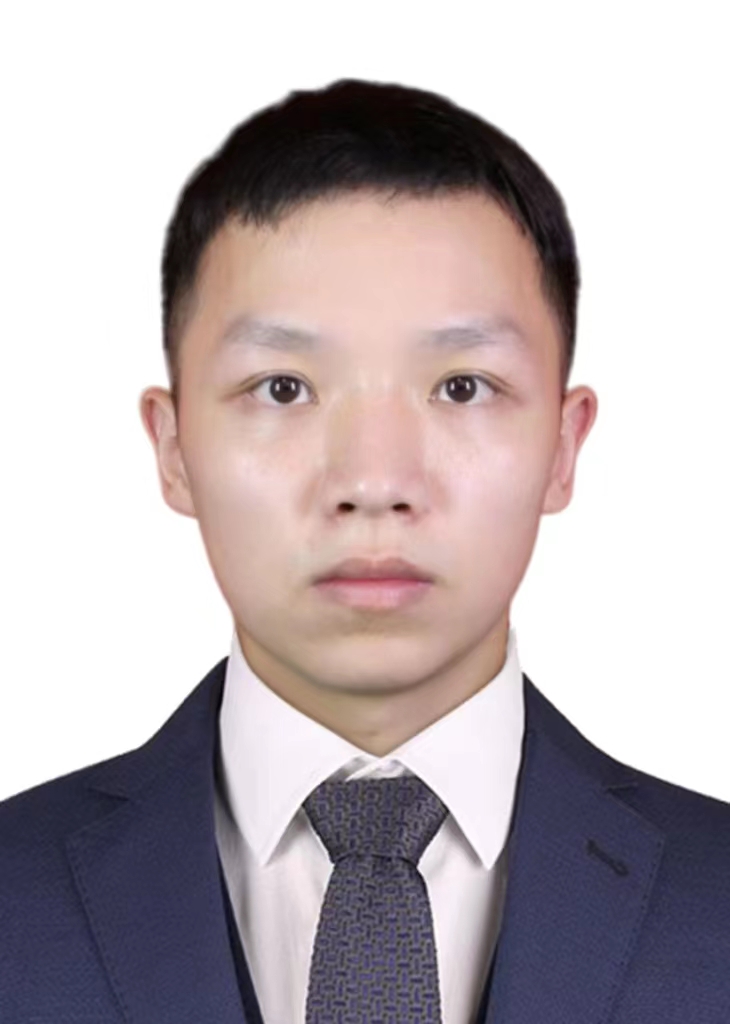
 Suyuan Liu
· 1 previous affiliation
- PhD student · Since 2023
- Current
- MS student · 2021–2023
- Undergrad student · 2016–2020
Research Overview
Suyuan Liu focuses on multi-view learning, scalable data clustering, and graph-based representation learning. His early work developed efficient anchor graph methods to accelerate subspace clustering and handle incomplete data across multiple views. More recently, his research investigates algorithmic fairness and federated optimization within large-scale clustering frameworks.
Research Trajectory
Beginning in 2022, research by Suyuan Liu addressed the computational bottlenecks of multi-view subspace clustering. He introduced Efficient One-Pass Multi-View Subspace Clustering with Consensus Anchors, proposing a scalable, parameter-free method that directly outputs clustering labels. By integrating optimal anchor learning with graph construction, this work eliminated the need for separate post-processing steps and significantly reduced computational complexity. During this early period, he also explored image privacy and security, developing HideSeeker: Uncover the Hidden Gems in Obfuscated Images. This work evaluated the vulnerabilities of on-device obfuscation techniques—such as pixelization and blurring—demonstrating how neural networks could still uncover hidden privacy-related objects and regions.
Returning to his primary focus on clustering in 2024, his work significantly refined anchor graph methodologies to better handle noisy and complex data. In Robust and Consistent Anchor Graph Learning for Multi-View Clustering, he addressed the negative effects of inter-view noise by constructing a consistent anchor graph that captures commonalities across views while filtering out inconsistencies. He further improved anchor quality by leveraging inter-view correlations in Learn from View Correlation: An Anchor Enhancement Strategy for Multi-View Clustering, constructing a view graph to ensure that similar patterns between correlated views were actively utilized rather than ignored.
Simultaneously, he tackled the challenge of missing data across multiple views. He developed Sample-Level Cross-View Similarity Learning for Incomplete Multi-View Clustering to generate unified similarities despite partial data, overcoming the limitations of anomalous similarity values caused by strict column sum constraints. Building on this theme, he also introduced Alleviate Anchor-Shift: Explore Blind Spots with Cross-View Reconstruction for Incomplete Multi-View Clustering, which utilized cross-view reconstruction techniques to mitigate anchor-shift issues and recover missing information.
In 2025, his research expanded into federated learning, algorithmic fairness, and parameter-free optimization. To enable privacy-preserving clustering across distributed clients, he developed Efficient Federated Incomplete Multi-View Clustering. By decoupling local and global optimization and utilizing anchor graphs instead of raw data, this framework reduced communication overhead while achieving state-of-the-art accuracy, advancing the research direction of Linear Time Graph Learning via Anchor Points. He also introduced Parameter-Free Clustering via Self-Supervised Consensus Maximization (Extended Version), a framework that automatically identifies the natural structure of a dataset through a hierarchical merging process, eliminating the need to pre-specify the number of clusters or tune sensitive hyperparameters. Addressing algorithmic bias, he proposed A General Anchor-Based Framework for Scalable Fair Clustering, a plug-and-play solution that achieves linear-time speedups on massive datasets while preserving demographic parity through a fairness-preserving graph.
Alongside his core clustering research in 2025, he contributed to applied machine learning domains. He developed AttenTrack: Mobile User Attention Awareness Based on Context and External Distractions, a lightweight framework for predicting mobile user attention states by analyzing response behaviors and device context without requiring intrusive wearables. He also explored speech synthesis evaluation in Pairwise Evaluation of Accent Similarity in Speech Synthesis, introducing an XAB listening test and objective pronunciation-based metrics—such as vowel formant distances—to mitigate the inherent accent bias found in standard tools like Word Error Rate.
By 2026, his focus synthesized scalability, fairness, and multi-view learning into unified frameworks. In Causal Disentangled Anchor Learning for Scalable Fair Multi-view Clustering, he utilized structural causal models to physically separate semantic data from sensitive biases in linear time, outperforming existing methods on large-scale datasets. Collaborating on Fine-to-Coarse Fairness-Informed Multi-View Clustering, he helped design an algorithm that dynamically allocates anchors based on cluster complexity rather than assuming equal representation. This approach maintained linear scalability while correcting common fairness flaws, contributing to the broader areas of Learning from Incomplete Multi-View Data and Linear Time Multi View Clustering via Anchor Graphs.
Current Directions
The most recent papers in the evidence indicate a strong focus on integrating algorithmic fairness and causal reasoning into large-scale clustering frameworks. Recent work investigates how structural causal models can disentangle semantic representations from sensitive attributes to achieve demographic parity without sacrificing linear-time scalability. Additionally, there is an ongoing emphasis on distributed and privacy-preserving optimization, particularly through federated architectures that handle incomplete multi-view data efficiently while minimizing communication overhead.
Profile updated
Loading new papers…
Other researchers whose papers cluster into the same research directions — a proxy for overlapping technical interests and shared intellectual neighborhoods.
See something wrong? Report a mistake